
Quick Reference
Background
In December 1900, President William McKinley's wife Ida was in New York on her annual Christmas shopping trip. They had been married nearly thirty years, and whenever they were apart — which was rarely, and never by preference — McKinley maintained a near-daily rhythm of telephone calls, telegrams, and letters to maintain their connection. This letter, written on December 1, the first full day of her trip, does not contain any significant news or reflections: he remarks on the weather, mentions he slept well, and hopes she'll enjoy herself. Before any of that, though, he mentions the morning's phone call: her voice had come through the line "clear as a bell."
McKinley generally avoided letter-writing, preferring in-person meetings — he was a private, cautious man, and the telephone suited that instinct perfectly. He had been the first presidential candidate to make extensive use of the telephone to coordinate his front porch campaign in 1896. That same embrace of technological modernity would draw him, in early September 1901, to the Pan-American Exposition in Buffalo, where in his last public speech he declared that "distances have been effaced" and that "modern inventions have brought into close relations widely separated peoples and made them better acquainted."
In April 1898, at the outbreak of the Spanish-American War, McKinley had transformed a second-floor White House office into the first presidential war room — twenty-five telegraph keys and fifteen telephones, large wall maps of Cuba, Puerto Rico, and the Philippines. For the first time in American history, a president was directing a war in something approaching real time without leaving his desk. Two years later, on this quiet December Saturday, the same wires running through the same building were facilitating something far more domestic. No generals, no battle maps, no urgent dispatches. Just a husband, relieved to hear his wife's voice all the way from New York.
Long-distance calls in 1900 were expensive enough that most Americans reserved them for emergencies. Whenever Ida was away, McKinley made them daily — the same instrument he had used to direct a war was now pressed into service every morning she was away simply to hear that she was well.
Physical Description
Autograph Letter Signed, as president, 2 pages, ducodecimo, Executive Mansion, Washington, December 1,1900; to his wife, Ida. With Executive Mansion Autograph Envelope, signed twice: incorporating his name in the addressee, "Mrs. William McKinley," and Free-Franked, "Wm McKinley."
all pages and transcript
Page 1/4
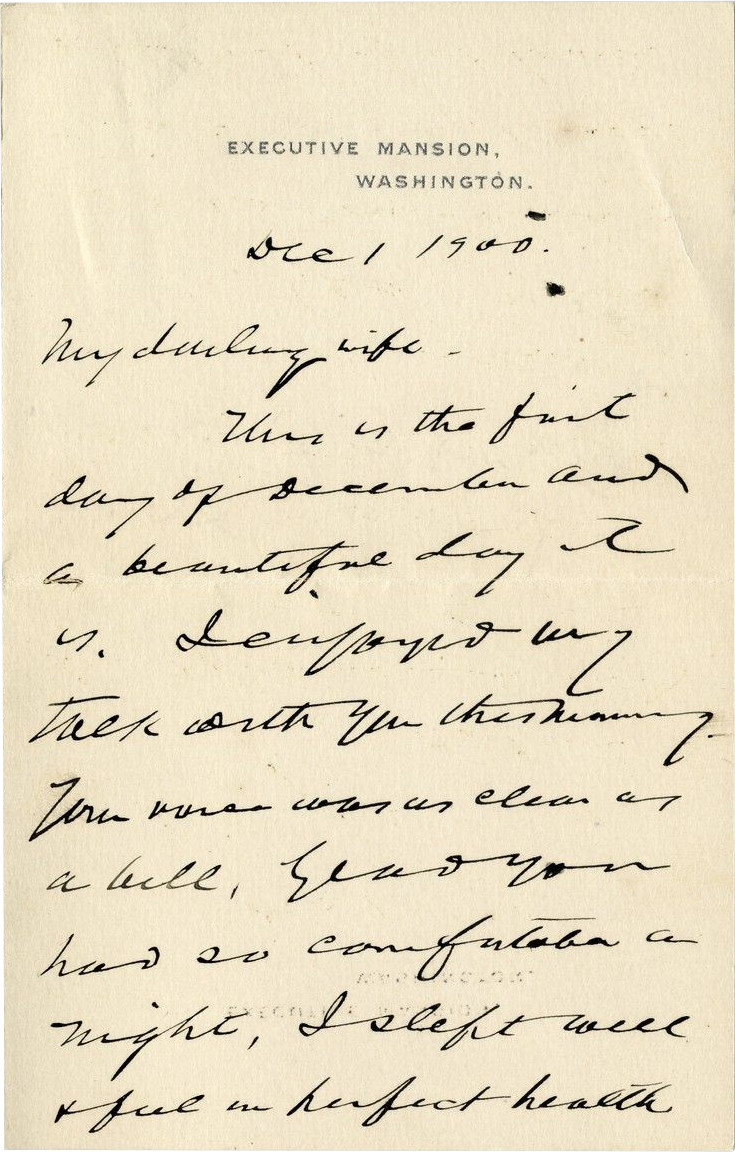
WASHINGTON.
Dec 1 1900.
My darling wife -
This is the first day of December and a beautiful day it is. I enjoyed my talk with you this morning. Your voice was as clear as a bell, [sic] Glad you had so comfortable a night, [sic] I slept well & feel in perfect health
Page 2/4
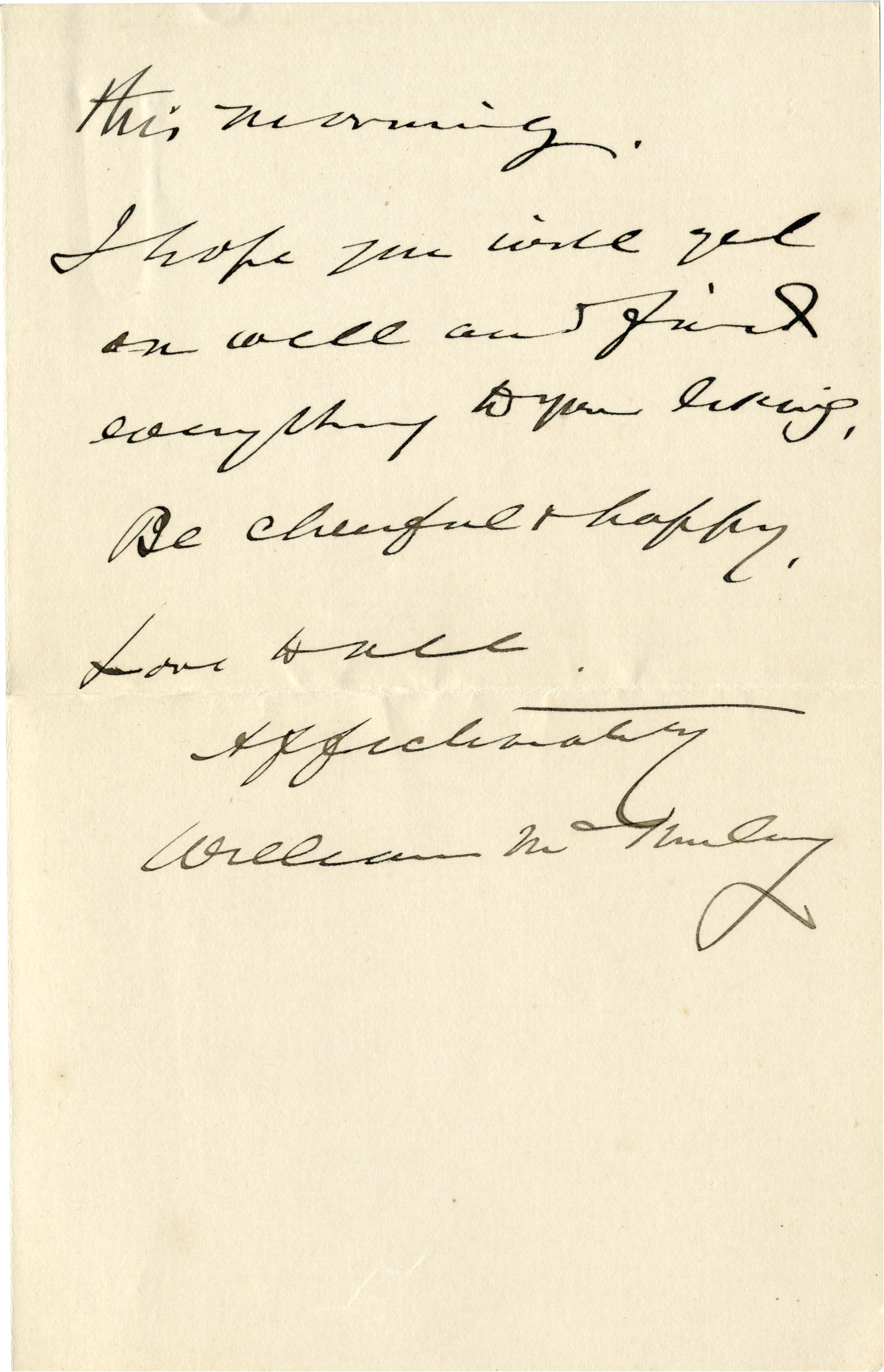
I hope you will get on well and find everything to your liking, [sic]
Be cheerful & happy,
Love to all
Affectionately
WILLIAM MCKINLEY
Page 3/4
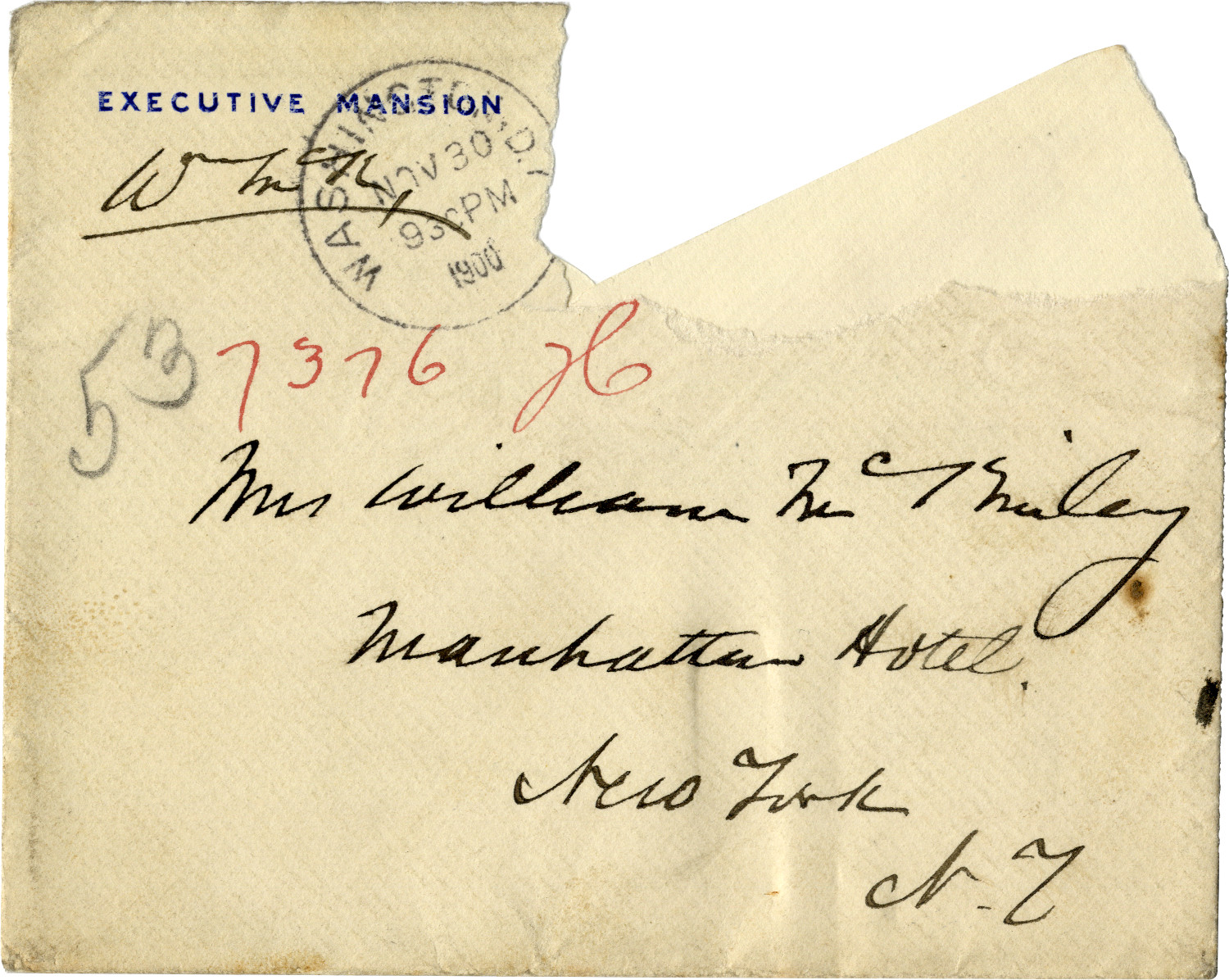
WM MCKINLEY
WASHINGTON, D. [C.]
NOV 30
930 PM
1900
Mrs [sic] William McKinley
Manhattan Hotel,
New York
N. Y [sic]
Page 4/4
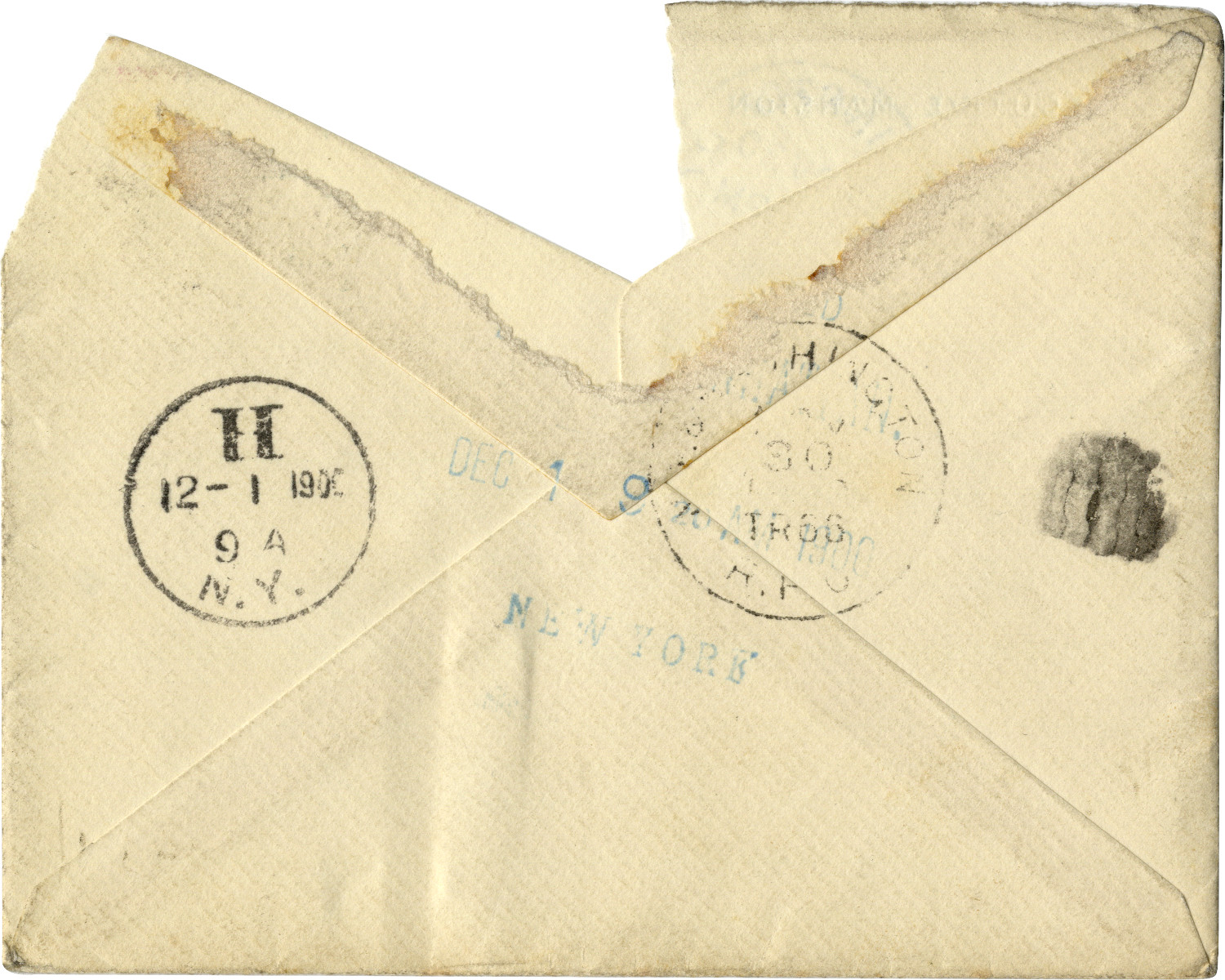
12-1 1900
9 A
N. Y.
[WAS]HINGTON
[NOV]
30
T R 6 6
R. P. O.
DEC 1 9
NEW YORK