
Quick Reference
Background
On the morning of December 3, 1900, President William McKinley was waiting on two things: the arrival of the Joint Committees of the two Houses of Congress that would receive his annual message (the predecessor to the modern State of the Union) and later read it aloud to both chambers — and his wife Ida, who would be returning home the following evening.
McKinley's annual message outlined the major challenges and ambitions that would shape America's expanding role on the world stage in the twentieth century. It dealt at length with the aftermath of the Boxer Rebellion in China, which had drawn the United States into an international military intervention, and it addressed the ongoing Philippine "insurrection," America's war against Filipino independence forces. It called for antitrust legislation to restrain the growing power of industrial monopolies and raised the long-debated question of a canal across Central America that Theodore Roosevelt would soon make a reality.
None of this makes it into his missive to Ida. McKinley was "greatly pleased and made very happy to hear your voice this morning strong and cheerful, showing that you had a good night and felt comfortable thereafter." He was already looking ahead to her return the following evening — and to a formal White House dinner on December 5 honoring the sixteen United States commissioners to the Paris Exposition, which he hoped she would be well enough to attend. An unresolved war in the Philippines, a fragile settlement in China, monopolies tightening their grip on American industry — none of it invades their domestic space, or his anticipation of her return.
Physical Description
Autograph Letter Signed, as President, 2 pages, octavo, Executive Mansion, Washington, December 3, 1900; to his wife, "Mrs. William McKinley." With Autograph Envelope Signed twice, in the address and with initials' Executive Mansion, postmarked Dec. 3, 1900
all pages and transcript
Page 1/4
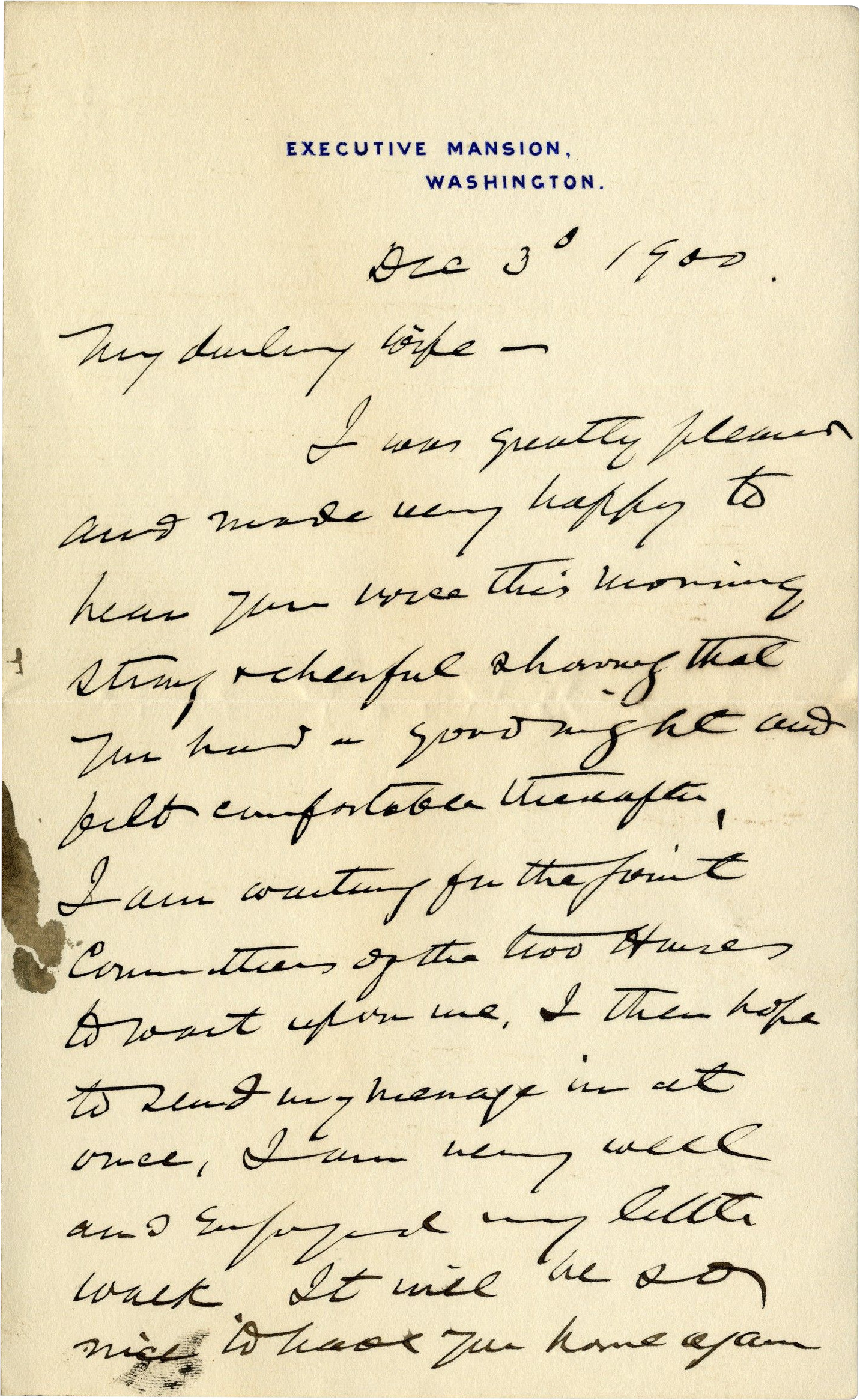
WASHINGTON.
Dec 3d [sic] 1900.
My darling wife --
I was greatly pleased and made very happy to hear your voice this morning strong & cheerful showing that you had a good night and felt comfortable thereafter [sic] I am waiting for the Joint Committees of the two Houses to wait upon me. I then hope to send my message in at once, [sic] I am very well and enjoyed my little walk. It will be so nice to have you home again
Page 2/4
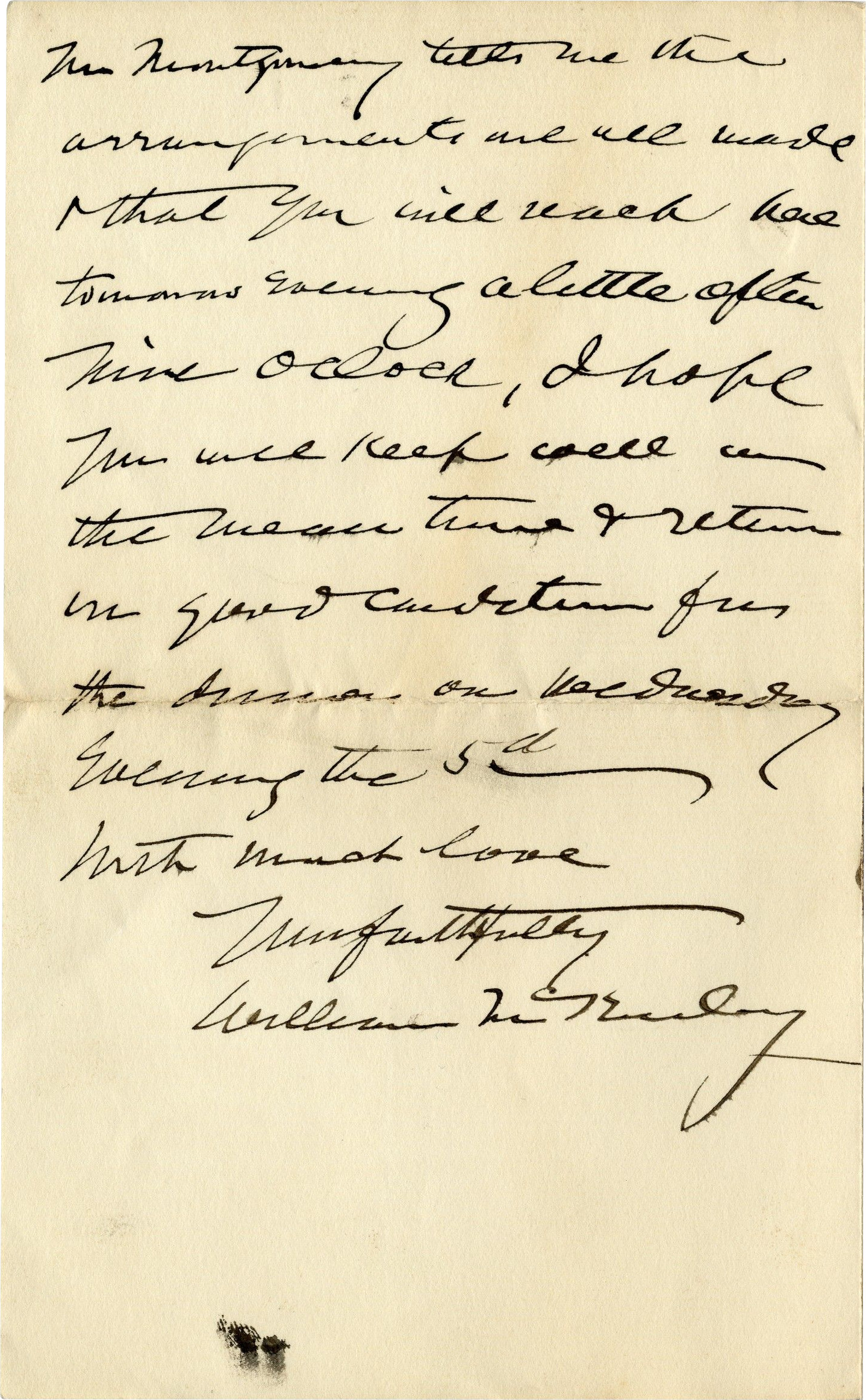
With much love
Yours faithfully
WILLIAM MCKINLEY
Page 3/4
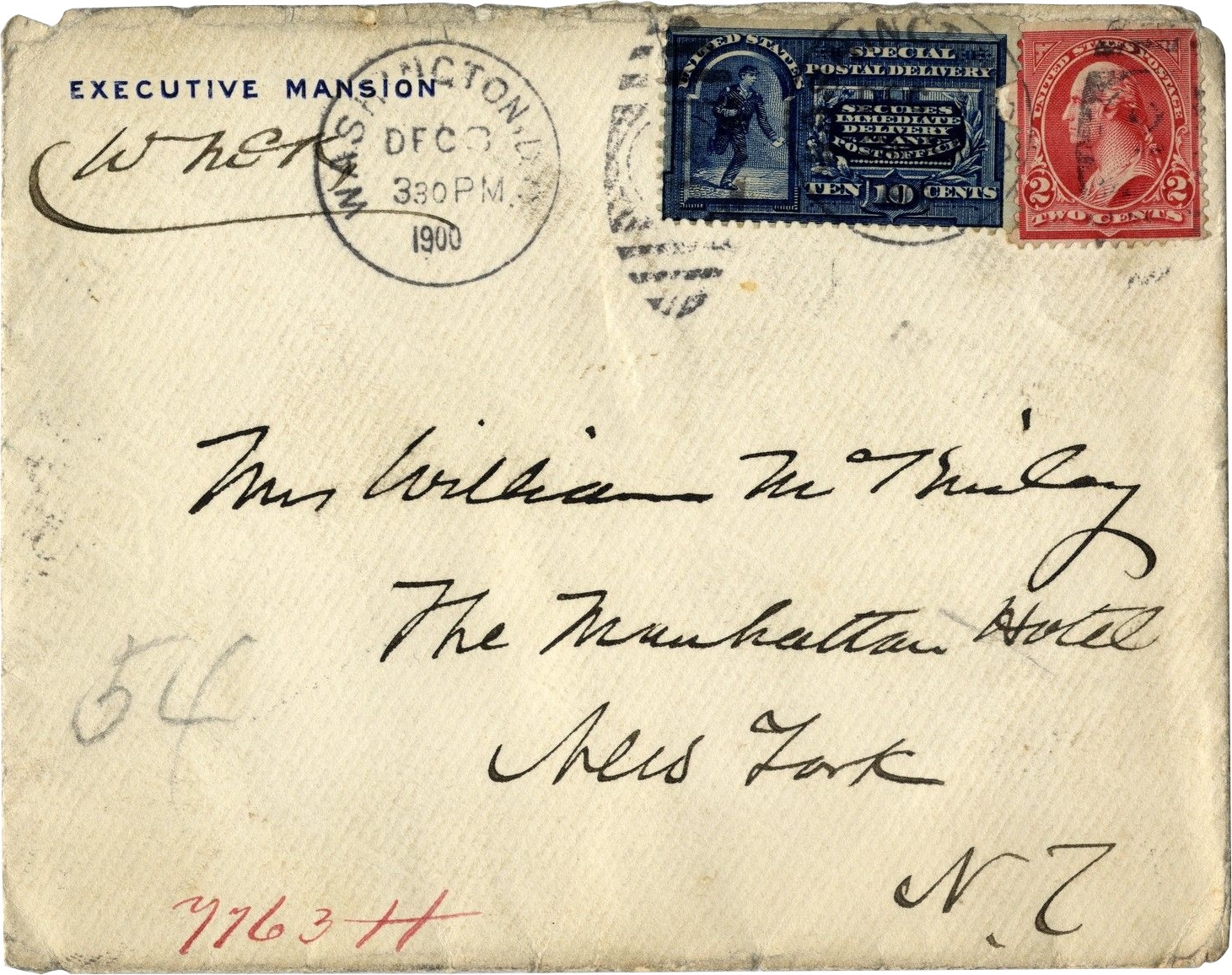
W MCKINLEY
WASHINGTON, D. [C.]
DEC 3
330 PM
1900
Mrs [sic] William McKinley
The Manhattan Hotel
New York
N. Y [sic]
Page 4/4
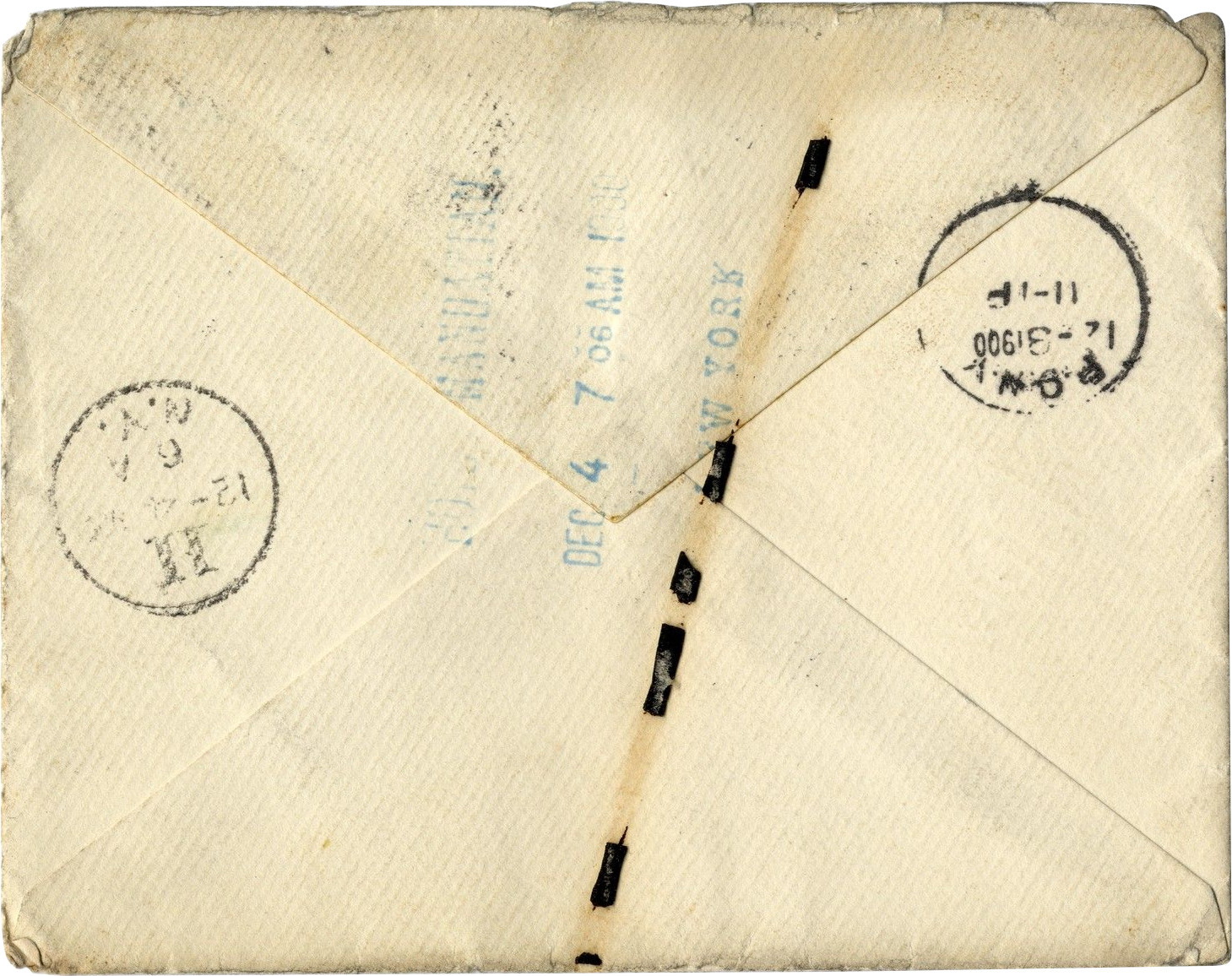
NEW YORK