
US History
ALL (90)
Our stories (63)
Guest writer (1)
- Last Added
- Historic Date


Marching Toward Little Bighorn: What Custer and a Soldier Each Thought Lay Ahead
Before the Battle of Little Bighorn became one of the most famous events in American history, it was an uncertain future. In this short film, Chief Curator Sara Willen examines two letters written in the weeks before the campaign—one by George Armstrong Custer and the other by Private William A. Losey.
Read side by side, these remarkable documents reveal how differently two participants viewed the same expedition, offering a rare glimpse into the hopes, fears, and expectations that preceded a pivotal moment in the American West.
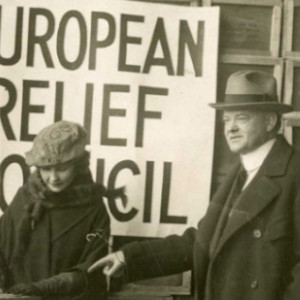
Herbert Hoover: Humanitarian Relief Administration and Jewish Communities Overseas
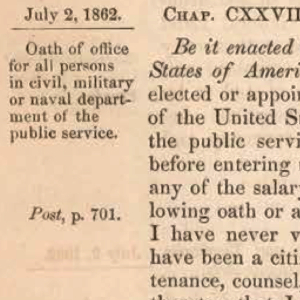


Medical Coverups and Non-Consecutive Terms: Grover Cleveland’s Secret Jaw Surgery
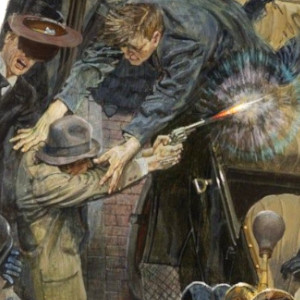
A Former President Is Shot As He Campaigns To Regain The Presidency – It’s Happened Before

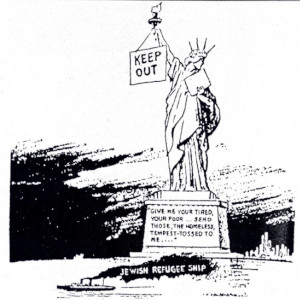


The 60th Anniversary of the Assassination of John F. Kennedy


A New Book By Adam D. Mendelsohn – “Jewish Soldiers in the Civil War: The Union Army”
Jewish Soldiers in the Civil War: The Union Army by Adam D. Mendelsohn (NYU Press—November 15th, 2022) asks, what was it like to be a Jew in Lincoln’s armies? The Union army was as diverse as the embattled nation it sought to preserve, a unique mixture of ethnicities, religions, and identities. Almost one Union soldier in four was born abroad, and natives and newcomers fought side-by-side, sometimes uneasily. Yet though scholars have parsed the trials and triumphs of Irish, Germans, African Americans, and others in the Union ranks, they have remained largely silent on the everyday experiences of the largest non-Christian minority to have served.

Primary sources are vital to historical research. Researchers, both professional and amateur, use them to reconstruct the past.

Arthur surprised everyone. In an America torn by Garfield’s assassination and party politics, he immediately set to work proving he was above partisan squabbles.


VIDEO: History Lessons – Working with Original Manuscripts in the Contemporary Classroom

The Centennial of the Women’s Right to Vote: The Presidential Election of 1920
With the Help of New Women Voters, Harding Wins in a Landslide – But Still Sees the Presidency as a Prison Term

COMPELLING QUESTION: What were Abraham Lincoln’s attitudes toward religious minorities such as Jews and Catholics and how did it differ from others at the time?
Description: Students will work in groups to plan a temporary exhibit intended for visitors to a historic site or museum related to Abraham Lincoln. The exhibit will concern Abraham Lincoln’s attitude toward religious minorities. Students will analyze primary sources and select three they would like to include in their exhibit. From analyzing their sources, students will develop a “thesis” or argument that the exhibit will convey to their audience.

COMPELLING QUESTIONS: How were Americans able to visit the “Holy Land” in increasing numbers in the 1865-1900 period? What reasons did they have for going?
Description: Students take on the role of running a travel business in the United States in the 1880s. Their business will advertise travel itineraries to the “Holy Land,” (then called Ottoman Palestine, present-day Israel and Occupied Palestinian Territory). Using primary sources and secondary sources as their “guide” students will develop a reason for traveling, the route and transportation, and where they will visit. Students will work in groups to create a brochure or other advertisement complete with travel posters, tickets, and maps that will communicate the travelers’ motivation for taking the trip (alternatively, teachers may have students create a digital brochure or advertisement or a tour using Google Earth).

Theodore Roosevelt and the 1912 Election: What Happened & Why Did Roosevelt Run?
COMPELLING QUESTION: What qualities did Teddy Roosevelt possess that made his third party campaign appealing to voters?
Description: It’s October of 1912 and Theodore Roosevelt is in the hospital after being shot while giving a campaign speech. Students will play the role of campaign advisors and work in groups to better understand Roosevelt and the election by analyzing primary sources. Then each group will create a campaign poster promoting Roosevelt’s candidacy. Students will consider what the key issues are in the election and how their poster will attract voters to Roosevelt’s campaign.

Religion in the Civil War: The Jewish High Holidays


Abraham Lincoln’s Famous Civil War Condolence Letter to Young Fanny McCullough

The manuscripts gathered here follow the course of the Kansas-Nebraska Act, from being ratified by President Franklin Pierce to Pierce defending it after his presidency. We also look back to Pierce’s presidential predecessor, Millard Fillmore, ruminating over an impending race war after reading Harriet Beecher-Stowe’s Uncle Tom’s Cabin. Also present in this collection is the reaction of Abraham Lincoln to the bill when he was still an Illinois circuit attorney.

The 50th Anniversary of the Shootings at Kent State

The 20th Anniversary of the Transfer of the Panama Canal
It wasn’t until the turn of the 20th century when the United States, led by the intrepid Theodore Roosevelt – ever mindful of naval power – decided that it was not only a vital matter of American lives, time and money, but national principle, to create an American-controlled waterway across the Panamanian isthmus.

Anniversary of Apollo 11, the Mission That First Put a Man on the Moon
Just three months into his presidency, Kennedy pledged, in his address to Congress on May 25th, 1961, ”that this nation should commit itself to achieving the goal, before this decade is out, of landing a man on the moon and returning him safely to the earth.” To which he added “No single space project in this period will be more impressive to mankind, or more important for the long-range exploration of space; and none will be so difficult or expensive to accomplish.”


Thomas Jefferson’s Birthday: JFK on Jefferson
President Kennedy laments he hasn’t time to write about Thomas Jefferson, and then carefully does so.


The Assassination & Funeral of Robert F. Kennedy

Truman Recognizes Israel: The Anniversary of Israel’s Founding
5 days before recognizing Israel, Truman writes to Clark Clifford, mentioning the pressure of Palestine.

The Anniversary of the Founding of the State of Israel
Palestine, says President Truman in February 1948, is a “matter of considerable disturbance” to be determined by the U.N.

Changing America: The Emancipation Proclamation, 1863 and the March on Washington, 1963
One hundred years separate the Emancipation Proclamation and the March on Washington. Yet, these two events are profoundly linked together in a larger story of liberty and the American experience.

The most dangerous job in America is not, as the U.S. Bureau of Labor Statistics recently announced, fishing. Nor is it logging, flying, or steel manufacturing. The job with the worst mortality rate is the hardest one to get: President of the United States.

An in-depth look at Lincoln’s monumental presidency between two historic points: the enactment of the Emancipation Proclamation and the Congressional passage of the Thirteenth Amendment. Through rare documents and artifacts, look at Lincoln’s legacy through the lens of slavery and the end of the Civil War.

With Malice Toward None: The Abraham Lincoln Bicentennial
The exhibition reveals Lincoln the man, whose thoughts, words, and actions were deeply affected by personal experiences and pivotal historic events. This virtual exhibit includes some select items on display at the traveling exhibition.


It might have been the very instant that the newly sworn-in President declared “the torch has been passed to a new generation of Americans” that the legend was born. For an electrifying 1000 days, the administration of John F. Kennedy would try to confront new challenges and right old wrongs – and with such verve and vigor, that it gave the country, indeed the world, a lift. But as no light burns forever, so in turn the shining moment that was Camelot, began to fade. War abroad, unrest at home, even privately, the death of an infant son – darkness edged in, until noon, in Dallas, on November 22, 1963, when it all turned black.

High Hopes: The Journey of John F. Kennedy
John F. Kennedy powered into the White House on the energy of a country seeking change. Stuck in a recession and dismayed by perceived political stagnation, voters embraced the vibrancy and wit of Kennedy and his young family, emboldening the president to edge toward a new frontier, both on the homefront and internationally – and even to outer space. The fervent hope that Kennedy brought to the White House and to the United States was quickly confronted by broad geopolitical threats, as well as by personal challenges.

He is head of state, Commander-in-chief, and the country’s top legislator. The President of the United States has arguably the toughest job in America, and it turns out, the most deadly.

World War to needs some preview text. Give me some preview text

Theodore Roosevelt was dying to serve in World War I. He was, he reminded all who could hear, an ex-Commander in Chief of the United States Army, and ready to once again lead “his” First United States Volunteer Cavalry – the “Rough Riders” – into the fray. But President Wilson, whom Roosevelt detested, refused the appointment

The Anniversary of the Funeral of the Apollo I Astronauts
President Lyndon B. Johnson writes to the parents of astronauts killed in the Apollo I disaster.

James A. Garfield didn’t want the job, and his arguments from the convention floor to that effect were so eloquent and moving, he was nominated forthwith.

Days Before Leaving to Drive Out the “Indians” from the Bighorn Country, Custer Predicts Mining Fortunes To Be Made There


Schoolteacher Christa McAuliffe Writes About Her Excitement Going into Space on the Ill-Fated Challenger.
On January 28, 1986, the NASA Space Shuttle orbiter Challenger lifted off from Cape Canaveral, Florida at 11:38 EST and, 73 seconds into its flight, exploded nine miles above the Atlantic Ocean. All seven crew members were killed, including 37 year-old McAuliffe, who had been selected from 11,000 applicants to be a “Teacher in Space.” Largely because of her presence, some 17% of Americans watched the live coverage of the launch.

The Charleston Mercury had already given warning. If the “Black Republican” party succeeded in the upcoming presidential election, it declared in the summer of 1860, “loyalty to the Union will be treason to the South.”

Lincoln Assassination Conspirator Mary Surratt Becomes the First Woman Executed by the Federal Government
Mary Surratt’s daughter petitions Andrew Johnson for the return of her mother’s remains.

Theodore Roosevelt’s Damning Charge: Wilson’s Weakness Made the Sinking of the Lusitania Possible
Wilson wanted to ascertain all the facts; he wanted to reach a determination; he wanted, then and only then, to write the Imperial German government, a sharp letter. He was still gathering information when, on May 7th, another German U-Boat torpedoed and sank the British luxury ocean liner RMS Luisitania, killing 1,198 people, including 128 Americans. This time Wilson did voice a protest – but that was all. “Americans must have a consciousness different from the consciousness of every other nation in the world,” he declared. “There is such a thing as a man being too proud to fight. There is such a thing as a nation being so right that it does not need to convince others by force that it is right.” Roosevelt was apoplectic.

Nazi Germany surrenders.
“The other day I visited a German internment camp. I never dreamed that such cruelty, bestiality, and savagery could really exist in this world!” – General Eisenhower.

The Anniversary of the Assassination of Abraham Lincoln


Rare and suspicious John Wilkes Booth letter, written just two months before Lincoln’s assassination.

Robert Todd Lincoln, Witness to Presidential Assassinations
If in the annals of American history, there was ever an expert witness on Presidential assassinations, that person would be Robert Lincoln.

Nixon on Watergate: He Took One for the Team
When the House Judiciary Committee passed Articles of Impeachment, and a tape recording revealed him ordering a cover-up, Nixon had to go – and so left, speaking vaguely of “wrong judgments” but never, his role in Watergate itself.

Through over two hundred years of social upheaval, First Ladies have responded to the evolving burdens and challenges of this unofficial “office.” Some of these women became famous, but most have been forgotten. Yet we should not overlook the importance of these extraordinary women.

California Earthquakes: “The Spirit of Humanity” and Mark Twain
The shock of the earthquake which struck San Francisco on the morning of April 18, 1906 – leveling countless buildings, starting a fire that lasted three days, and taking hundreds of lives – was felt all across the country.

Lincoln Swears to Uphold the Emancipation Proclamation
Abraham Lincoln swears he shall not modify the Emancipation Proclamation, nor return to slavery any person freed by it.

If it had rained that morning; if Jacqueline Kennedy had not been with him; if the crowds to greet them hadn’t been so deep…

The March on Washington for Jobs and Freedom, 1963
In 1864, Governor Michael Hahn pushed through a provision authorizing the legislature to enfranchise non-whites on the basis that Lincoln suggested: military service and intellectual fitness. This was a crucial development: voting rights for Blacks were now – incrementally – possible…

A war that ended in deadlock, starting something that would last for thirty-five years: the Cold War.

170,000 men fought for three days, often hand-to-hand, in encounters so epic they are known by name.

Dreams and Diplomacy in the Holy Land: American Consuls in Jerusalem in the 19th Century
This exhibition deals with the relationship that developed between the United States of America and the Holy Land, starting in 1844.

Who is in charge, when the presidential term ends on noon on the Sunday, but the Oath isn’t taken, until Monday?

The Wright Brothers: Inventing the First Successful Airplane
An Extraordinary Orville Wright Letter: How Watching Birds Led to Manned Flight at Kitty Hawk.

The Gunfight at the O.K. Corral: Shootout & Aftermath
The most famous gunfight in Western history; three men had been killed, and someone, the law said, had to answer.

Lincoln, in a prelude to the Lincoln-Douglas Debates, shadows Douglas around the Illinois.

The Death of McKinley and the Presidency of Roosevelt
On the day he suddenly becomes president, Roosevelt writes of his heavy and painful task.

The afternoon that President McKinley was shot point-blank, his Vice President was on an island, xxxxx miles away. VP Theodore Roosevelt wired for news – and predicted a recovery for McKinley who would succumb to his wounds xxxxx days later.

Assassin Czolgosz, calling himself “Fred Nobody,” writes of Buffalo – the place he will murder McKinley in 5 weeks time.

The United States of America’s Independence Day: A Surprising Parallel 180 Years Later
In 1956, Israel’s Prime Minister looks to George Washington’s army for inspiration.

The assassin Charles Guiteau fired, twice, into his back. “My God!” the President cried, “What is this?”

The Custers, of whom there were five in the 7th Cavalry, lived as a clan, fought as a clique, and died in their matching white buckskins at the Battle of the Little Bighorn on the same afternoon.

The Presidential election of 1912 featured old friends publicly transformed into bitter enemies; the creation of a new political party which out-polled the incumbent president; and an assassination attempt on a former president-turned-candidate, running for an unprecedented third term.

The Cold War may have began the day the Second World War ended, but its greatest battle did not start until the morning of August 13, 1961, when Berliners from both the Western and Soviet sectors awoke to find their city divided by a barbed wire barrier – soon to become a concrete wall 16 feet high and some 96 miles long – which, for the next 28 years would virtually imprison those unlucky enough to be on the Eastern side of the divide.

Lincoln Assassination at Ford’s Theatre: First Responder Reports

When President Kennedy famously challenged Americans “Ask not what your country can do for you – ask what you can do for your country”, thousands of young Americans responded by signing up for the Peace Corps – established just six weeks into his presidency, on March 1, 1961, by executive order.

The Publication of Jonathan Sarna’s “When General Grant Expelled the Jews”
Running for President, Grant tries to lose the antisemite label engendered by his infamous “Jew Order” during the Civil War.

Thomas Edison: “I am busily engaged on the electric light.”
