
All Articles & Videos
Clear All
- "Theodore Roosevelt"
Historical Perspectives (32)
- Last Added
- Historic Date
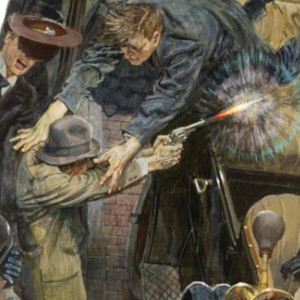
A Former President Is Shot As He Campaigns To Regain The Presidency – It’s Happened Before


VIDEO: History Lessons – Working with Original Manuscripts in the Contemporary Classroom

The Centennial of the Women’s Right to Vote: The Presidential Election of 1920
With the Help of New Women Voters, Harding Wins in a Landslide – But Still Sees the Presidency as a Prison Term

Theodore Roosevelt and the 1912 Election: What Happened & Why Did Roosevelt Run?
COMPELLING QUESTION: What qualities did Teddy Roosevelt possess that made his third party campaign appealing to voters?
Description: It’s October of 1912 and Theodore Roosevelt is in the hospital after being shot while giving a campaign speech. Students will play the role of campaign advisors and work in groups to better understand Roosevelt and the election by analyzing primary sources. Then each group will create a campaign poster promoting Roosevelt’s candidacy. Students will consider what the key issues are in the election and how their poster will attract voters to Roosevelt’s campaign.


The 20th Anniversary of the Transfer of the Panama Canal
It wasn’t until the turn of the 20th century when the United States, led by the intrepid Theodore Roosevelt – ever mindful of naval power – decided that it was not only a vital matter of American lives, time and money, but national principle, to create an American-controlled waterway across the Panamanian isthmus.

Of all the topics that might have engaged young Samuel Langhorne Clemens’ imagination in 1867, none was less likely or less promising than Palestine, the Holy Land. Known for his biting satire and humorous short pieces on California and the West, Clemens (1835–1910) found the subject that would propel him to national acclaim almost by accident. His serendipitous discovery of a “pleasure cruise” to Europe and the Near East, his success at inveigling his way onto the journey, and reactions to his fellow passengers and to the people and places he visited came to happy fruition in The Innocents Abroad, or The New Pilgrims’ Progress. No book of his ever sold more copies in his lifetime.

The 100th Commemoration of the Death of Theodore Roosevelt
Theodore Roosevelt, having wanted his whole life to be the bride at every wedding and the corpse at every funeral, finally got at least half of his wish when, on January 8, 1919, he was buried, quietly, in his parish church in Oyster Bay. Reporters watching as President Wilson read the message that Roosevelt had died, swore he broke into a wide transcendent smile. Why, is the story told here, in one of the very last letters Roosevelt ever wrote…

Dreamland: American Travelers to the Holy Land in the 19th Century

The most dangerous job in America is not, as the U.S. Bureau of Labor Statistics recently announced, fishing. Nor is it logging, flying, or steel manufacturing. The job with the worst mortality rate is the hardest one to get: President of the United States.

The Idea of Lincoln: Man and Memory
This exhibition features letters in Lincoln’s hand, some of which testify to the mythic idea of him – his kindness, honesty, and mercy; and some reflecting the gritty reality of his life – law cases about hogs, choosing pragmatism over principle, crafting an image.


A heart-broken president mourns his teenage son.

Theodore Roosevelt was dying to serve in World War I. He was, he reminded all who could hear, an ex-Commander in Chief of the United States Army, and ready to once again lead “his” First United States Volunteer Cavalry – the “Rough Riders” – into the fray. But President Wilson, whom Roosevelt detested, refused the appointment

Theodore Roosevelt has a suit made, and re-made, for his 1905 inauguration.

Theodore Roosevelt’s Damning Charge: Wilson’s Weakness Made the Sinking of the Lusitania Possible
Wilson wanted to ascertain all the facts; he wanted to reach a determination; he wanted, then and only then, to write the Imperial German government, a sharp letter. He was still gathering information when, on May 7th, another German U-Boat torpedoed and sank the British luxury ocean liner RMS Luisitania, killing 1,198 people, including 128 Americans. This time Wilson did voice a protest – but that was all. “Americans must have a consciousness different from the consciousness of every other nation in the world,” he declared. “There is such a thing as a man being too proud to fight. There is such a thing as a nation being so right that it does not need to convince others by force that it is right.” Roosevelt was apoplectic.

Theodore Roosevelt hated William Howard Taft; Taft hated Roosevelt; Roosevelt hated Woodrow Wilson. Wilson hated…

The Death of McKinley and the Presidency of Roosevelt
On the day he suddenly becomes president, Roosevelt writes of his heavy and painful task.

The afternoon that President McKinley was shot point-blank, his Vice President was on an island, xxxxx miles away. VP Theodore Roosevelt wired for news – and predicted a recovery for McKinley who would succumb to his wounds xxxxx days later.

The Presidential election of 1912 featured old friends publicly transformed into bitter enemies; the creation of a new political party which out-polled the incumbent president; and an assassination attempt on a former president-turned-candidate, running for an unprecedented third term.

Theodore Roosevelt: the First President to Ride in an Automobile
Theodore Roosevelt, horseman, disparages the motor car.

President William Howard Taft, heartbroken at the loss on the Titanic of his military aide, writes an emotional eulogy.

National Handwriting Day: Herbert Hoover’s “One per Annum” Autograph Letter
The conundrum of the President who is at once both the most common and the rarest in manuscript material, is solved.

“What Education Teaches” is an exhibit of the original letters of famous people discussing, explicitly or implicitly, what they’ve learned, why they’ve learned it, and how that knowledge has informed their actions. The exhibit featured the autograph material of Mark Twain, John F. Kennedy, Ronald Reagan, Franklin Roosevelt, and others.