
All Articles & Videos
Clear All
- "Painting"
Historical Perspectives (13)
- Last Added
- Historic Date
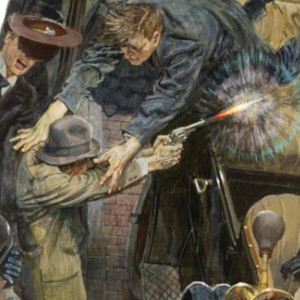
A Former President Is Shot As He Campaigns To Regain The Presidency – It’s Happened Before

The Rivalry Between Napoleon and Britain’s Most Famous Admiral You’ve Never Heard Of
This was a low point, even for Napoleon. The trauma of the defeat at Acre was exacerbated by ego in a confrontation that started at Toulon. Napoleon’s pride and spat with Smith magnified the cruelty of which Napoleon was capable.


Napoleon’s attempt to take the Holy Land, and the later Egyptian occupation of Palestine (1831-1840), also opened up the floodgates for modern diplomacy and travel to the Holy Land.

Theodore Roosevelt and the 1912 Election: What Happened & Why Did Roosevelt Run?
COMPELLING QUESTION: What qualities did Teddy Roosevelt possess that made his third party campaign appealing to voters?
Description: It’s October of 1912 and Theodore Roosevelt is in the hospital after being shot while giving a campaign speech. Students will play the role of campaign advisors and work in groups to better understand Roosevelt and the election by analyzing primary sources. Then each group will create a campaign poster promoting Roosevelt’s candidacy. Students will consider what the key issues are in the election and how their poster will attract voters to Roosevelt’s campaign.

The French Impressionists were a tight-knit group of artists centered in Paris in the latter part of the nineteenth century. Though there were other factors which contributed to their parting of ways, the Dreyfus Affair seemed to signal a point of no return for this once-intimate group of painters.

Of all the topics that might have engaged young Samuel Langhorne Clemens’ imagination in 1867, none was less likely or less promising than Palestine, the Holy Land. Known for his biting satire and humorous short pieces on California and the West, Clemens (1835–1910) found the subject that would propel him to national acclaim almost by accident. His serendipitous discovery of a “pleasure cruise” to Europe and the Near East, his success at inveigling his way onto the journey, and reactions to his fellow passengers and to the people and places he visited came to happy fruition in The Innocents Abroad, or The New Pilgrims’ Progress. No book of his ever sold more copies in his lifetime.

It might have been the very instant that the newly sworn-in President declared “the torch has been passed to a new generation of Americans” that the legend was born. For an electrifying 1000 days, the administration of John F. Kennedy would try to confront new challenges and right old wrongs – and with such verve and vigor, that it gave the country, indeed the world, a lift. But as no light burns forever, so in turn the shining moment that was Camelot, began to fade. War abroad, unrest at home, even privately, the death of an infant son – darkness edged in, until noon, in Dallas, on November 22, 1963, when it all turned black.

High Hopes: The Journey of John F. Kennedy
John F. Kennedy powered into the White House on the energy of a country seeking change. Stuck in a recession and dismayed by perceived political stagnation, voters embraced the vibrancy and wit of Kennedy and his young family, emboldening the president to edge toward a new frontier, both on the homefront and internationally – and even to outer space. The fervent hope that Kennedy brought to the White House and to the United States was quickly confronted by broad geopolitical threats, as well as by personal challenges.

A recently acquired letter offers new revelations.

When young bride Jacqueline Kennedy bought her husband a paint set for Christmas 1953, all the Kennedys descended on it, competing to see who could produce the most paintings in the shortest amount of time. Jacqueline was appalled: her idea had been to allow Jack to emulate his great hero, Winston Churchill, who found in painting a serene distraction from political pressure.

The Custers, of whom there were five in the 7th Cavalry, lived as a clan, fought as a clique, and died in their matching white buckskins at the Battle of the Little Bighorn on the same afternoon.

The Presidential election of 1912 featured old friends publicly transformed into bitter enemies; the creation of a new political party which out-polled the incumbent president; and an assassination attempt on a former president-turned-candidate, running for an unprecedented third term.