
Featured Jewish Soldiers And Sailors In The Civil War
Discover Civil War soldiers with exceptional personal and military stories
Featured Soldiers (89)
SORT BY
Last Name
- Last Name
- Last Added
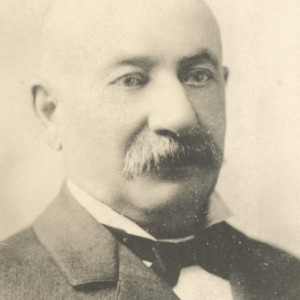
Simon Adamsky was born in Prussia in 1843 to orthodox Jewish parents. He immigrated to New York around 1855.
Adamsky enlisted as a Private in the 7th CT Infantry on November 29, 1864, under the alias "Patrick H. Hamilton." In an affidavit, he explained he used an alias to "avoid being taken home by his parents." He was discharged in Goldsboro, NC, on July 20, 1865.
After the war, Adamsky became a member of the Hebrew Union Veterans Association. He and his brother Isaac—who served in an OH regiment—provided affidavits for fellow Jewish soldier Myer Raphael's pension claim.
Adamsky was married three times. The legality of his latter two marriages would come into question in his pension claim. He died on February 9, 1907, in Brooklyn, NY. An obituary described him as a prominent Hebrew Civil War soldier, a Metropolitan police officer for fifteen years, and a lifelong Republican. He was a member of the Rankin Post, Grand Army of the Republic, the Independent Order of B'nai B'rith, and the State Street Temple. He is buried in the Washington Cemetery in Brooklyn.
Adamsky enlisted as a Private in the 7th CT Infantry on November 29, 1864, under the alias "Patrick H. Hamilton." In an affidavit, he explained he used an alias to "avoid being taken home by his parents." He was discharged in Goldsboro, NC, on July 20, 1865.
After the war, Adamsky became a member of the Hebrew Union Veterans Association. He and his brother Isaac—who served in an OH regiment—provided affidavits for fellow Jewish soldier Myer Raphael's pension claim.
Adamsky was married three times. The legality of his latter two marriages would come into question in his pension claim. He died on February 9, 1907, in Brooklyn, NY. An obituary described him as a prominent Hebrew Civil War soldier, a Metropolitan police officer for fifteen years, and a lifelong Republican. He was a member of the Rankin Post, Grand Army of the Republic, the Independent Order of B'nai B'rith, and the State Street Temple. He is buried in the Washington Cemetery in Brooklyn.
Michael Mitchell Allen
Chaplain
Union
PA
5th PA Cavalry
1st Jewish Chaplain in the US Army during the Civil War
Preview
Michael Mitchell Allen, a Philadelphian liquor dealer, made history as the first Jewish chaplain in the US Army during the Civil War. Enlisting in the 5th PA Cavalry, he led troops in spiritual matters but faced controversy due to his faith.
Congress required chaplains to be Christian at the time, leading Allen to resign—he claimed, because of poor health—after just a month. In response, the regiment (which included many Jewish soldiers) then elected another Jewish man, Arnold Fischel, as his successor, but the Secretary of War rejected him for not being Christian. Fischel's determination led him to Lincoln, prompting a constitutional correction allowing chaplains of any religious denomination.
Despite his short tenure, Allen's impact reshaped military chaplaincy. He later moved to Germany with his wife Julia, where he died in 1907. Unfortunately, Julia was ineligible for a widow's pension due to the brief nature of Allen's service.
Congress required chaplains to be Christian at the time, leading Allen to resign—he claimed, because of poor health—after just a month. In response, the regiment (which included many Jewish soldiers) then elected another Jewish man, Arnold Fischel, as his successor, but the Secretary of War rejected him for not being Christian. Fischel's determination led him to Lincoln, prompting a constitutional correction allowing chaplains of any religious denomination.
Despite his short tenure, Allen's impact reshaped military chaplaincy. He later moved to Germany with his wife Julia, where he died in 1907. Unfortunately, Julia was ineligible for a widow's pension due to the brief nature of Allen's service.
Justinian Alman, born in Ohio in 1841, enlisted in the 1st PA Cavalry in 1862 as a 2nd Lieutenant, rising to the rank of Major by his discharge in 1865. Following the close of the war, Alman continued to serve in the US Cavalry. Alman married Augusta J. Davidson in 1867, their wedding performed by Rabbi Bettleheim of the House of Israel Congregation, in Philadelphia.
Just four months after his marriage, Alman died in a boat collision while serving as 1st Lieutenant with the 4th US Cavalry. Alman was killed while on board a small boat crossing the Black Cypress Bayou in Texas. He was struck by the wheel of the steamboat “J. M. Sharp” when his boat collided with the vessel, and drowned. The Jewish Messenger reported on the soldier's military career and death, publishing a tribute to him following the accident.
Alman's mother, Alice Marks kept many newspaper articles and letters from her son during the war, and submitted many interesting documents to the pension bureau following her son's death. In a letter, Alicia discusses a drawing she includes in the packet she mails in that depicts a colored lithograph of a soldier memorial. She painstakingly recreated the lithograph in order to send a copy to the Secretary of War so she could keep the original.
Just four months after his marriage, Alman died in a boat collision while serving as 1st Lieutenant with the 4th US Cavalry. Alman was killed while on board a small boat crossing the Black Cypress Bayou in Texas. He was struck by the wheel of the steamboat “J. M. Sharp” when his boat collided with the vessel, and drowned. The Jewish Messenger reported on the soldier's military career and death, publishing a tribute to him following the accident.
Alman's mother, Alice Marks kept many newspaper articles and letters from her son during the war, and submitted many interesting documents to the pension bureau following her son's death. In a letter, Alicia discusses a drawing she includes in the packet she mails in that depicts a colored lithograph of a soldier memorial. She painstakingly recreated the lithograph in order to send a copy to the Secretary of War so she could keep the original.
Samuel Alman
Ordinary Seaman
Union
Navy
USS Vermont
Grand Chaplain of the Grand Army of the Republic in New York; National Association of Naval Veterans
Preview
Samuel Alman was born in Swansea, Wales, and served in the US Navy in 1865—the last year of the Civil War. He was present at the Washington Naval Yard when Abraham Lincoln was shot. According to an obituary, Alman knew the final disposition of John Wilkes Booth's body but never revealed it due to a vow of secrecy, a fact confirmed by his son in a 1911 letter to the Department of the Navy.
Alman enlisted as an Ordinary Seaman on the USS Vermont on January 31, 1865, and rose to the rank of Cockswain by the time of his discharge on January 13, 1868. Despite claims in newspaper articles that he joined the Navy in 1854, his pension records do not support this, as he would have been only ten years old. His son suggested that he might have enlisted under an alias, "Charley Smith," but the Navy could not find any records under that name.
Alman's brother Justinian and brother-in-law Sigmund Hofheimer also served the Union. Alman married Amelia B. Cary in 1869, and their children continued the family's military tradition, with his son serving in World War I.
Samuel converted to Baptism in the 1860s and founded the Emanuel Baptist Church in New York City. He was elected commanding officer of the National Association of Naval Veterans in 1895 and served as Grand Chaplain of the Grand Army of the Republic in New York. Alman died in June 1911 and is buried in the Cypress Hills Cemetery in Brooklyn.
Alman enlisted as an Ordinary Seaman on the USS Vermont on January 31, 1865, and rose to the rank of Cockswain by the time of his discharge on January 13, 1868. Despite claims in newspaper articles that he joined the Navy in 1854, his pension records do not support this, as he would have been only ten years old. His son suggested that he might have enlisted under an alias, "Charley Smith," but the Navy could not find any records under that name.
Alman's brother Justinian and brother-in-law Sigmund Hofheimer also served the Union. Alman married Amelia B. Cary in 1869, and their children continued the family's military tradition, with his son serving in World War I.
Samuel converted to Baptism in the 1860s and founded the Emanuel Baptist Church in New York City. He was elected commanding officer of the National Association of Naval Veterans in 1895 and served as Grand Chaplain of the Grand Army of the Republic in New York. Alman died in June 1911 and is buried in the Cypress Hills Cemetery in Brooklyn.

Dr. Morris Joseph Asch, born on July 4, 1833, in Philadelphia, PA, earned his bachelor's degree in 1852 from the University of Pennsylvania and his doctorate from Jefferson Medical College in 1855.
On August 5, 1861, Asch was commissioned as an Assistant Surgeon in the US Army. Initially stationed at the Surgeon General's Office, he moved to field duty with the Army of the Potomac in 1863, participating in battles like Chancellorsville and Gettysburg. In 1865, he was promoted to Brevet Captain and Brevet Major for his service. Asch continued his Army career through the Indian wars before resigning in 1873. His older brother, Myer J. Asch, also served in the Union Army.
After resigning, Asch practiced in New York City, specializing in diseases of the nose and throat. He was a member of the Grand Army of the Republic. Dr. Asch died on October 5, 1902, and is buried in the Salem Fields Cemetery in Brooklyn, NY.
On August 5, 1861, Asch was commissioned as an Assistant Surgeon in the US Army. Initially stationed at the Surgeon General's Office, he moved to field duty with the Army of the Potomac in 1863, participating in battles like Chancellorsville and Gettysburg. In 1865, he was promoted to Brevet Captain and Brevet Major for his service. Asch continued his Army career through the Indian wars before resigning in 1873. His older brother, Myer J. Asch, also served in the Union Army.
After resigning, Asch practiced in New York City, specializing in diseases of the nose and throat. He was a member of the Grand Army of the Republic. Dr. Asch died on October 5, 1902, and is buried in the Salem Fields Cemetery in Brooklyn, NY.
Morris Asher was born in New York City to Michael Asher, a “Dyer & Scourer” from England, and Sophia Hart of Holland. In 1860, Morris worked as a printer.
He enlisted as a Private in Company B, 71st PA Infantry, on May 21, 1861, in a unit originally known as Baker’s 1st California Regiment. The regiment, raised under Oregon Senator Edward Baker, was renamed after Pennsylvania assumed command following Baker's death at Ball’s Bluff. Asher was promoted to Corporal in January 1863 and injured that summer at Gettysburg when his company encountered Confederate fire during a night march. He was discharged on July 2, 1864, in Philadelphia. His brothers Solomon and Asher Asher also served in the Union Army.
Asher married Della Voorsanger on July 22, 1875, in Philadelphia, with Rabbi Sabato Morais officiating. He died on January 18, 1920, in Philadelphia and is buried in Hebrew Mutual Cemetery.
He enlisted as a Private in Company B, 71st PA Infantry, on May 21, 1861, in a unit originally known as Baker’s 1st California Regiment. The regiment, raised under Oregon Senator Edward Baker, was renamed after Pennsylvania assumed command following Baker's death at Ball’s Bluff. Asher was promoted to Corporal in January 1863 and injured that summer at Gettysburg when his company encountered Confederate fire during a night march. He was discharged on July 2, 1864, in Philadelphia. His brothers Solomon and Asher Asher also served in the Union Army.
Asher married Della Voorsanger on July 22, 1875, in Philadelphia, with Rabbi Sabato Morais officiating. He died on January 18, 1920, in Philadelphia and is buried in Hebrew Mutual Cemetery.
Charles Louis Bernays
Major and Additional Paymaster
Union
US Army, Pay Department
Promoted to Lieutenant Colonel by brevet in 1865 for "faithful and meritorious service
Preview
Charles Louis Bernays was born in Mainz, Germany, to Clemens and Therese Bernays, who raised their children as Lutherans despite their Jewish heritage. A revolutionary inspired by Karl Marx, Bernays fled to the U.S. after the failed uprisings of 1848. He became a newspaper editor in St. Louis, Missouri, and a delegate to the 1860 Republican convention. His advocacy for Abraham Lincoln led to his appointment as U.S. consul to Zurich, Switzerland. Even though he was Lutheran, some Swiss opposition to his Jewish ancestry prompted his reassignment to Elsinore, Denmark.
On December 4, 1862, Bernard joined the Union Army when Lincoln authorized his commission as a Major Additional Paymaster. Promoted to Lieutenant Colonel by brevet in 1865 for "faithful and meritorious service," he was discharged on December 1, 1865. Bernays’ brothers and sons also served the Union.
Known for his sharp political, scientific, and philosophical writings, Bernays was remembered as a profound thinker. A staunch supporter of labor rights, he once protested an order banning unionization in a letter to Lincoln himself. Bernays died in 1879, survived by his wife and three children, and was buried in the Bellefontaine Cemetery in St. Louis, MO.
On December 4, 1862, Bernard joined the Union Army when Lincoln authorized his commission as a Major Additional Paymaster. Promoted to Lieutenant Colonel by brevet in 1865 for "faithful and meritorious service," he was discharged on December 1, 1865. Bernays’ brothers and sons also served the Union.
Known for his sharp political, scientific, and philosophical writings, Bernays was remembered as a profound thinker. A staunch supporter of labor rights, he once protested an order banning unionization in a letter to Lincoln himself. Bernays died in 1879, survived by his wife and three children, and was buried in the Bellefontaine Cemetery in St. Louis, MO.
Leopold Blumenberg
Major; Brevet Colonel; Brevet Brigadear General
Union
MD
5th MD Infantry
President Abraham Lincoln appointment him as provost marshal; President Johnson appointed him Brevet Lieutenant Colonel, Colonel, and Brigadier General.
Preview
Leopold Blumenberg was born in Frankfurt an der Oder, Prussia. He served in the Prussian army during the First Schleswig War (1848-1852) and married Emilie Pauline Agnes Knorre in 1853. Blumenberg, a former umbrella factory foreman, immigrated to Baltimore, MD, in 1854. A successful manufacturer and ardent abolitionist, he was influenced by Rabbi David Einhorn and joined the Republican Party.
On September 26, 1861, Blumenberg joined the Union Army as a Captain in Company C of the 5th MD Infantry, quickly rising to Major. He played a significant role in raising the 5th MD Infantry and faced threats from pro-slavery factions in Baltimore. Blumenberg was severely wounded at the Battle of Antietam and lived with the injury for the rest of his life.
In May 1863, President Lincoln appointed Blumenberg as provost marshal for the 3rd District of Maryland. Despite a strong service record, he was dismissed on January 17, 1865, due to the strict enforcement of conscription laws and allegations of mistreatment of deserters. Lincoln supported Blumenberg, securing him a new position at the Baltimore customhouse.
After Lincoln's assassination, President Andrew Johnson honored Blumenberg's Civil War service, appointing him Brevet Lieutenant Colonel, Colonel, and Brigadier General. Blumenberg died on August 12, 1876, and is buried in Har Sinai Cemetery in Baltimore, MD.
On September 26, 1861, Blumenberg joined the Union Army as a Captain in Company C of the 5th MD Infantry, quickly rising to Major. He played a significant role in raising the 5th MD Infantry and faced threats from pro-slavery factions in Baltimore. Blumenberg was severely wounded at the Battle of Antietam and lived with the injury for the rest of his life.
In May 1863, President Lincoln appointed Blumenberg as provost marshal for the 3rd District of Maryland. Despite a strong service record, he was dismissed on January 17, 1865, due to the strict enforcement of conscription laws and allegations of mistreatment of deserters. Lincoln supported Blumenberg, securing him a new position at the Baltimore customhouse.
After Lincoln's assassination, President Andrew Johnson honored Blumenberg's Civil War service, appointing him Brevet Lieutenant Colonel, Colonel, and Brigadier General. Blumenberg died on August 12, 1876, and is buried in Har Sinai Cemetery in Baltimore, MD.
August Bondi
Sergeant
Union
KS
5th KS Cavalry
Joined abolitionist John Brown; his home served as an Underground Railroad stop in 1860 and 1861.
Preview
August Bondi was born in Vienna, Austrian Empire. After participating in the 1848 revolutions, his family immigrated to Missouri.
In 1855, Bondi moved to Kansas and joined abolitionist John Brown, riding with him for a year. Brown's 1859 Harpers Ferry raid failed, and he was executed. Bondi praised Brown's principles in his autobiography.
Bondi married Henrietta Einstein on July 27, 1860. Their home served as an Underground Railroad stop in 1860 and 1861.
Bondi enlisted as a Private in the 5th Kansas Cavalry on November 13, 1861, and was promoted to Sergeant in 1862. He was wounded in a skirmish in Monticello, AR, in 1864 and discharged that December.
Identifying himself as Jewish in his autobiography, Bondi mentioned other Jewish members in his unit as well. Bondi served as a probate judge and postmaster in Salina County, KS, and was active in various organizations. He died in 1907 and is buried in Gypsum Hill Cemetery in Salina, KS.
In 1855, Bondi moved to Kansas and joined abolitionist John Brown, riding with him for a year. Brown's 1859 Harpers Ferry raid failed, and he was executed. Bondi praised Brown's principles in his autobiography.
Bondi married Henrietta Einstein on July 27, 1860. Their home served as an Underground Railroad stop in 1860 and 1861.
Bondi enlisted as a Private in the 5th Kansas Cavalry on November 13, 1861, and was promoted to Sergeant in 1862. He was wounded in a skirmish in Monticello, AR, in 1864 and discharged that December.
Identifying himself as Jewish in his autobiography, Bondi mentioned other Jewish members in his unit as well. Bondi served as a probate judge and postmaster in Salina County, KS, and was active in various organizations. He died in 1907 and is buried in Gypsum Hill Cemetery in Salina, KS.
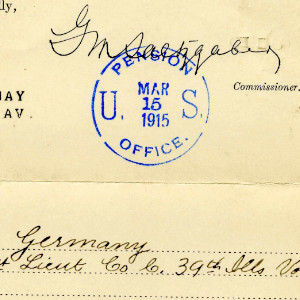
Simon S. Brucker hailed from Alzey, Grand Duchy of Hesse (present-day Germany) but made his mark in Chicago, IL after immigrating at the age of fifteen. Joining the 39th IL Infantry in 1861, he rose to 1st Lieutenant before resigning to care for his ailing parents in 1864.
Brucker's wartime letter to The American Israelite shines a light on his observance of Rosh Hashanah and Yom Kippur in 1862, revealing a rare glimpse into Jewish life amid conflict.
At age ninety-two, Brucker alleged to a newspaper reporter that he had met Abraham Lincoln multiple times. He had been part of a reception committee to Welcome both Lincoln and Stephen Douglass to debate the Dread Scott case in Pontiac, IL. He said he met Lincoln a second time while on the staff of General Thomas Osborne. According to Brucker, Lincoln "remembered me and called me his boy from Illinois."
Brucker died in 1930 and is buried alongside his wife Barbara in Mount Mayriv Cemetery.
Brucker's wartime letter to The American Israelite shines a light on his observance of Rosh Hashanah and Yom Kippur in 1862, revealing a rare glimpse into Jewish life amid conflict.
At age ninety-two, Brucker alleged to a newspaper reporter that he had met Abraham Lincoln multiple times. He had been part of a reception committee to Welcome both Lincoln and Stephen Douglass to debate the Dread Scott case in Pontiac, IL. He said he met Lincoln a second time while on the staff of General Thomas Osborne. According to Brucker, Lincoln "remembered me and called me his boy from Illinois."
Brucker died in 1930 and is buried alongside his wife Barbara in Mount Mayriv Cemetery.
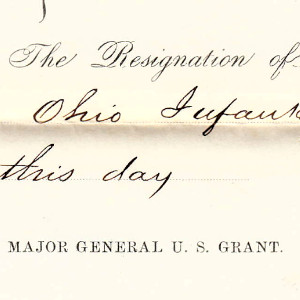
Jacob Charles Cohen
Captain and Assistant Adjutant General
Union
OH; TN
27th OH Infantry; Memphis TN Militia, Merchant Home Guard
Promoted to Captain and later served as Assistant Adjutant General and Chief of Staff.
Preview
Jacob Charles Cohen was born in New York, NY. By the 1860 census, he was living with his brothers and fellow future soldiers, Jacob Stanwood Menken and Nathan Davis Menken.
Cohen enlisted as a Corporal in Company B of the 27th OH Infantry on July 11, 1861. His military career included promotions to Sergeant Major and 2nd Lieutenant Aide-de-Camp. He wrote several letters to The Jewish Messenger during his service, noting the presence of many Jewish officers. Cohen was discharged in Vicksburg, MS on July 24, 1863, by order of General Ulysses S. Grant.
After his discharge, Cohen joined the "Merchant Home Guard" of the "Enrolled Militia of Memphis" on December 7, 1863. He was promoted to Captain and later served as Assistant Adjutant General and Chief of Staff.
Cohen married Henrietta Myers Cohen on April 26, 1865, with Rabbi Dr. Max Lilienthal officiating. They had three children. Cohen died at 28 on November 2, 1870, in Cincinnati, OH, from lung issues believed to have originated during his service. He is buried in the Walnut Hills Jewish Cemetery in Evanston, OH.
Cohen enlisted as a Corporal in Company B of the 27th OH Infantry on July 11, 1861. His military career included promotions to Sergeant Major and 2nd Lieutenant Aide-de-Camp. He wrote several letters to The Jewish Messenger during his service, noting the presence of many Jewish officers. Cohen was discharged in Vicksburg, MS on July 24, 1863, by order of General Ulysses S. Grant.
After his discharge, Cohen joined the "Merchant Home Guard" of the "Enrolled Militia of Memphis" on December 7, 1863. He was promoted to Captain and later served as Assistant Adjutant General and Chief of Staff.
Cohen married Henrietta Myers Cohen on April 26, 1865, with Rabbi Dr. Max Lilienthal officiating. They had three children. Cohen died at 28 on November 2, 1870, in Cincinnati, OH, from lung issues believed to have originated during his service. He is buried in the Walnut Hills Jewish Cemetery in Evanston, OH.
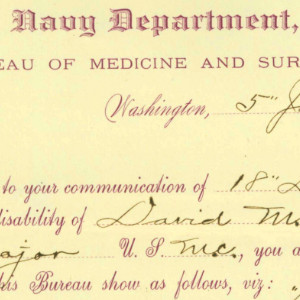
David Mendes Cohen was born in Norfolk, VA, in 1826.
Cohen was commissioned as a 2nd Lieutenant in 1855 by President Franklin Pierce and President Lincoln endorsed his promotion to 1st Lieutenant in March 1861. He was then promoted to Captain in April 1862 and he became a Major on December 5, 1867, after the Civil War.
Cohen was court-martialed twice post-war. In 1866, he was suspended from rank and duty for two years, returning to duty in August 1867. In 1868, he was suspended again for three years but was relieved from suspension by President Grant in March 1869 and retired for medical reasons later that year.
Cohen married Mathilde Stern in 1877 in New York City, and they had a daughter, Lillie, in 1879. Cohen's obituary mentioned he was a Civil War prisoner of war, but this incident is not documented in official records. He died in 1891 and is buried in Beth Olom Cemetery in Queens, NY.
Cohen was commissioned as a 2nd Lieutenant in 1855 by President Franklin Pierce and President Lincoln endorsed his promotion to 1st Lieutenant in March 1861. He was then promoted to Captain in April 1862 and he became a Major on December 5, 1867, after the Civil War.
Cohen was court-martialed twice post-war. In 1866, he was suspended from rank and duty for two years, returning to duty in August 1867. In 1868, he was suspended again for three years but was relieved from suspension by President Grant in March 1869 and retired for medical reasons later that year.
Cohen married Mathilde Stern in 1877 in New York City, and they had a daughter, Lillie, in 1879. Cohen's obituary mentioned he was a Civil War prisoner of war, but this incident is not documented in official records. He died in 1891 and is buried in Beth Olom Cemetery in Queens, NY.
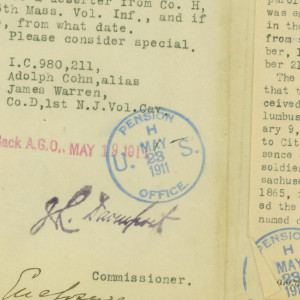
Born in Berlin, Prussia, in 1838, Adolph Cohn had a tumultuous military career.
Cohn enlisted under aliases (Simon Wood and Samuel Wood) in the 13th MA Infantry on July 28, 1863, to escape personal troubles. Captured at the Battle of Bristoe Station, he was mistakenly marked as a deserter. Cohn was imprisoned in Belle View, Andersonville, and Savannah before escaping to Union lines.
Cohn was re-enlisted under another alias (James Warren/Warner) in the 1st NJ Cavalry but claimed he never received his enlistment pay. His first enlistment led to a second desertion charge when he failed to return to his original regiment. Discharged from the 1st NJ Cavalry on July 24, 1865, Cohn sought an honorable discharge and back pay with the help of fellow prisoners Gustav Newman and Lewis Zelner, who provided testimonies under their aliases.
Despite a favorable first investigation, a second examiner doubted Cohn’s claims due to prejudices. Cohn’s service was further complicated by biased scrutiny from the Bureau of Pensions.
Cohn married Dora Levi in New York City on December 10, 1865. He was a member of the Hebrew Union Veterans Association (HUVA). He died in Manhattan in 1930 and is buried in the Mount Neboh Cemetery in Queens, NY.
Cohn enlisted under aliases (Simon Wood and Samuel Wood) in the 13th MA Infantry on July 28, 1863, to escape personal troubles. Captured at the Battle of Bristoe Station, he was mistakenly marked as a deserter. Cohn was imprisoned in Belle View, Andersonville, and Savannah before escaping to Union lines.
Cohn was re-enlisted under another alias (James Warren/Warner) in the 1st NJ Cavalry but claimed he never received his enlistment pay. His first enlistment led to a second desertion charge when he failed to return to his original regiment. Discharged from the 1st NJ Cavalry on July 24, 1865, Cohn sought an honorable discharge and back pay with the help of fellow prisoners Gustav Newman and Lewis Zelner, who provided testimonies under their aliases.
Despite a favorable first investigation, a second examiner doubted Cohn’s claims due to prejudices. Cohn’s service was further complicated by biased scrutiny from the Bureau of Pensions.
Cohn married Dora Levi in New York City on December 10, 1865. He was a member of the Hebrew Union Veterans Association (HUVA). He died in Manhattan in 1930 and is buried in the Mount Neboh Cemetery in Queens, NY.

Abraham Cohn was born in Guttentag, Prussia in 1832. He received the Congressional Medal of Honor, the highest U.S. military award for valor.
Cohn enlisted as a Sergeant in the 68th NY Infantry on July 22, 1861, and quickly rose to Captain by October 17, 1862. He participated in every engagement until hospitalized in November, resigning on December 17, 1862, after being noted for bravery at the Battle of Manassas.
He re-enlisted in the 6th NH Infantry on January 5, 1864, where his gallantry at the Battle of the Wilderness and the Battle of the Crater earned him the Medal of Honor. Despite severe injuries, he was promoted to 1st Lieutenant and discharged on July 17, 1865.
Major General John G. Parke recommended Cohn for the Medal of Honor with the notation: “For conspicuous gallantry displayed in battle of Wilderness, in rallying and forming, under heavy fire, disorganized and flying troops of different regiments; also for bravery and coolness in carrying orders to the advanced line, under murderous fire, at the explosions of the “Mines,” July 30, 1864, when he was severely wounded.” Cohn received his award on August 24, 1865.
Cohn married Fanny Zeller in 1867 and had four children. He died in 1897 and is buried in the Beth Olam Cemetery in Queens, NY. His Medal of Honor is displayed at the National Museum of American Jewish Military History in Washington, DC.
Cohn enlisted as a Sergeant in the 68th NY Infantry on July 22, 1861, and quickly rose to Captain by October 17, 1862. He participated in every engagement until hospitalized in November, resigning on December 17, 1862, after being noted for bravery at the Battle of Manassas.
He re-enlisted in the 6th NH Infantry on January 5, 1864, where his gallantry at the Battle of the Wilderness and the Battle of the Crater earned him the Medal of Honor. Despite severe injuries, he was promoted to 1st Lieutenant and discharged on July 17, 1865.
Major General John G. Parke recommended Cohn for the Medal of Honor with the notation: “For conspicuous gallantry displayed in battle of Wilderness, in rallying and forming, under heavy fire, disorganized and flying troops of different regiments; also for bravery and coolness in carrying orders to the advanced line, under murderous fire, at the explosions of the “Mines,” July 30, 1864, when he was severely wounded.” Cohn received his award on August 24, 1865.
Cohn married Fanny Zeller in 1867 and had four children. He died in 1897 and is buried in the Beth Olam Cemetery in Queens, NY. His Medal of Honor is displayed at the National Museum of American Jewish Military History in Washington, DC.
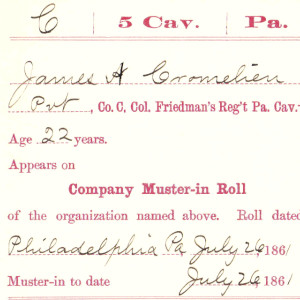
James Monroe Cromelien, a New York native, served as an officer in the 5th PA Cavalry during the Civil War. He was commissioned as a 2nd Lieutenant in August 1861, and promoted to 1st Lieutenant Regimental Quartermaster in September 1861. By August 1862, he was being dishonorably discharged for selling government revolvers and pocketing the proceeds. Cromelien denied the charges, but a petition for his resignation instead of dismissal was rejected by President Lincoln based on General Henry Halleck's advice.
An investigation also implicated Cromelien in padding regiment rolls by mustering in twice under different names. His military records are divided into files for both James and Monroe Cromelien.
Cromelien had significant familial connections in the Civil War: his cousin Alfred Cromelien served with him in the 5th PA Cavalry, and his brother-in-law Max Friedman was his commanding officer. Other relatives included Confederate soldier Lewis J. Salomon and Adolphus Salinger of the 27th PA Infantry. Cromelien died in New York on January 23, 1900.
An investigation also implicated Cromelien in padding regiment rolls by mustering in twice under different names. His military records are divided into files for both James and Monroe Cromelien.
Cromelien had significant familial connections in the Civil War: his cousin Alfred Cromelien served with him in the 5th PA Cavalry, and his brother-in-law Max Friedman was his commanding officer. Other relatives included Confederate soldier Lewis J. Salomon and Adolphus Salinger of the 27th PA Infantry. Cromelien died in New York on January 23, 1900.
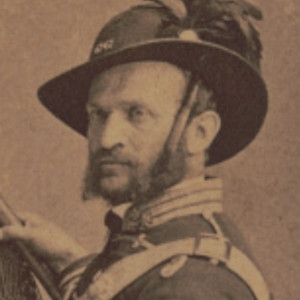
Frederick George D'Utassy was born in Pest, Hungary. After the failed Revolutions of 1848, he deserted the Austrian army and immigrated to the United States. He helped form the 39th NY Infantry, or “Garibaldi Guard,” and served as its Colonel starting May 17, 1861. He served with his brothers, Carl and Anton, who were also officers in the regiment.
D'Utassy was known as "Strasser" in Hungary and recognized in the U.S. by this name as well. His brother Carl’s marriage certificate confirmed the family name was changed from Strass or Strasser.
His military career ended in disgrace in 1863 when he was court-martialed and found guilty of various charges, including selling government horses for personal gain and conduct prejudicial to good order. He was cashiered and sentenced to a year of hard labor at Sing-Sing Prison. Appeals for a pardon to President Lincoln were unsuccessful.
After prison, D'Utassy ran a photographic gallery on Broadway in New York City. He died on May 2, 1892. He was listed as an "Insurance Manager" on his death certificate. He is buried in the Loudon Park Cemetery in Baltimore, MD.
D'Utassy was known as "Strasser" in Hungary and recognized in the U.S. by this name as well. His brother Carl’s marriage certificate confirmed the family name was changed from Strass or Strasser.
His military career ended in disgrace in 1863 when he was court-martialed and found guilty of various charges, including selling government horses for personal gain and conduct prejudicial to good order. He was cashiered and sentenced to a year of hard labor at Sing-Sing Prison. Appeals for a pardon to President Lincoln were unsuccessful.
After prison, D'Utassy ran a photographic gallery on Broadway in New York City. He died on May 2, 1892. He was listed as an "Insurance Manager" on his death certificate. He is buried in the Loudon Park Cemetery in Baltimore, MD.

Born into a Sephardic Jewish family in New York City, Dr. Jacob Da Silva Solis-Cohen earned his medical degree from the University of Pennsylvania in 1860.
Solis-Cohen joined the Union cause during the Civil War, initially as an Assistant Surgeon in the 26th PA Infantry before transferring to the Navy. Serving aboard various vessels, including the USS Florida, he displayed exceptional skill, performing life-saving surgeries under challenging conditions.
After the war, Solis-Cohen emerged as a leading authority in laryngology, pioneering groundbreaking surgeries and contributing extensively to medical literature. Notably, in 1867, he performed what is believed to be the first successful operation for laryngeal cancer, marking a pivotal moment in medical history. His expertise earned him prestigious positions at institutions like Jefferson Medical College and the Philadelphia Polyclinic Hospital.
Beyond medicine, Solis-Cohen was engaged in his community, serving as a trustee for Gratz College, contributing to Jewish publications, and participating in Zionist Congresses. Though falsely claimed to have received the Congressional Medal of Honor, his legacy is undiminished. He was laid to rest with honors, his coffin draped in a flag, and Jerusalem earth placed within, a testament to a life dedicated to healing and service.
Solis-Cohen joined the Union cause during the Civil War, initially as an Assistant Surgeon in the 26th PA Infantry before transferring to the Navy. Serving aboard various vessels, including the USS Florida, he displayed exceptional skill, performing life-saving surgeries under challenging conditions.
After the war, Solis-Cohen emerged as a leading authority in laryngology, pioneering groundbreaking surgeries and contributing extensively to medical literature. Notably, in 1867, he performed what is believed to be the first successful operation for laryngeal cancer, marking a pivotal moment in medical history. His expertise earned him prestigious positions at institutions like Jefferson Medical College and the Philadelphia Polyclinic Hospital.
Beyond medicine, Solis-Cohen was engaged in his community, serving as a trustee for Gratz College, contributing to Jewish publications, and participating in Zionist Congresses. Though falsely claimed to have received the Congressional Medal of Honor, his legacy is undiminished. He was laid to rest with honors, his coffin draped in a flag, and Jerusalem earth placed within, a testament to a life dedicated to healing and service.
Solomon Samuel Dreifus
Private
Union
PA
13th PA Reserve Infantry (42nd PA Volunteers and 1st PA Rifles); 190th PA Infantry
Preview
Solomon Samuel Dreifus was born in Switzerland to Samuel and Rose Dreifus (née Goldsmith). In a 1912 letter, Dreifus recalled emigrating to America at age one. At 15, after an argument with his father, Dreifus ran away to enlist in the army, lying about his age to join the Pennsylvania "Bucktails." He became a Private in Company H, 13th PA Reserves (42nd PA Volunteers and 1st PA Rifles) on August 15, 1862. Later, he transferred to the 190th PA Infantry and served at Army of the Potomac Headquarters by order of General Meade. Dreifus was discharged on June 1, 1865.
Dreifus married Rosa Goldschmidt in Cincinnati on March 16, 1873. An obituary noted he served as an aide-de-camp to President Lincoln shortly before Lincoln’s assassination. He died in 1920 and was survived by four children. He is buried at the Mount Sinai Cemetery in Affton, MO.
Dreifus married Rosa Goldschmidt in Cincinnati on March 16, 1873. An obituary noted he served as an aide-de-camp to President Lincoln shortly before Lincoln’s assassination. He died in 1920 and was survived by four children. He is buried at the Mount Sinai Cemetery in Affton, MO.
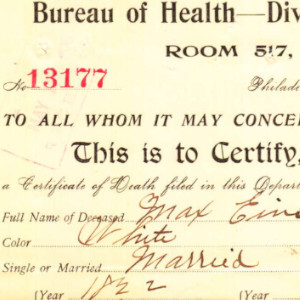
Max Einstein was born in Buchau, Württemberg, and immigrated to the U.S. in 1844, establishing a successful ribbon and silk store in Philadelphia, PA. He married Helene Gugenheim on December 26, 1848, and by 1860, they had four children: Joseph, Louis, Harry, and Teresa.
Einstein served in the Pennsylvania Militia during the 1850s and organized the 27th PA Volunteers during the Civil War. Backed by President Lincoln, he was commissioned as Colonel on May 5, 1861. His service ended after five months, reportedly due to clashes with military leaders. Some accounts claim he abandoned his unit at the First Battle of Manassas, while others suggest an injury sustained during the Union retreat contributed to his discharge. His regiment was notable for its high number of Jewish soldiers
- at least 46.
Despite his controversial military tenure, Lincoln nominated Einstein as U.S. Consul to Nuremberg in December 1861, though the Senate rejected him. He later worked as an internal revenue agent in Philadelphia. A founder of Keneseth Israel Congregation, Einstein remained active in Jewish community affairs. He died in 1906 and is buried at the Mount Sinai Cemetery in Philadelphia.
Einstein served in the Pennsylvania Militia during the 1850s and organized the 27th PA Volunteers during the Civil War. Backed by President Lincoln, he was commissioned as Colonel on May 5, 1861. His service ended after five months, reportedly due to clashes with military leaders. Some accounts claim he abandoned his unit at the First Battle of Manassas, while others suggest an injury sustained during the Union retreat contributed to his discharge. His regiment was notable for its high number of Jewish soldiers
- at least 46.
Despite his controversial military tenure, Lincoln nominated Einstein as U.S. Consul to Nuremberg in December 1861, though the Senate rejected him. He later worked as an internal revenue agent in Philadelphia. A founder of Keneseth Israel Congregation, Einstein remained active in Jewish community affairs. He died in 1906 and is buried at the Mount Sinai Cemetery in Philadelphia.
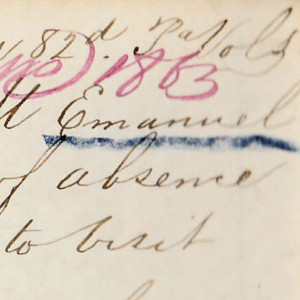
Dr. Louis Manly Emanuel was born in London, England, and immigrated to the United States as an infant with his family, settling near Philadelphia. His father, Dr. Manly Emanuel, was a physician, Justice of the Peace, and President of the Delaware County Medical Society. Like his father, Louis pursued medicine, earning his degree from the University of Pennsylvania, possibly alongside Dr. Jacob da Silva Solis-Cohen.
Emanuel joined the 82nd PA Infantry during the Civil War, serving as Assistant Surgeon from July 1861 and later as Surgeon. He treated soldiers wounded in key battles, including Fredericksburg, Antietam, and Gettysburg, before his discharge in September 1864. Two of his brothers, Jonathan and Lyon, also served the Union.
After his discharge, Emanuel worked as a Medical Inspector at Winchester Hospital and Medical Director of Transportation at Harpers Ferry. Returning to Philadelphia, he practiced at Charity Hospital and later as a general practitioner in Linwood, PA.
Emanuel died of pneumonia, worsened by diabetes, on December 27, 1868, at just 34 years old. He is buried at Beth El Emeth Cemetery in Philadelphia.
Emanuel joined the 82nd PA Infantry during the Civil War, serving as Assistant Surgeon from July 1861 and later as Surgeon. He treated soldiers wounded in key battles, including Fredericksburg, Antietam, and Gettysburg, before his discharge in September 1864. Two of his brothers, Jonathan and Lyon, also served the Union.
After his discharge, Emanuel worked as a Medical Inspector at Winchester Hospital and Medical Director of Transportation at Harpers Ferry. Returning to Philadelphia, he practiced at Charity Hospital and later as a general practitioner in Linwood, PA.
Emanuel died of pneumonia, worsened by diabetes, on December 27, 1868, at just 34 years old. He is buried at Beth El Emeth Cemetery in Philadelphia.
Frank Marx Etting, a Jewish Civil War-era lawyer turned Major and Additional Paymaster in the US Army, was praised by Paymaster General Benjamin W. Brice for his "long, faithful, & highly valuable services." Post-war, he became Chief Paymaster and was awarded the title of Brevet Lieutenant Colonel. After the war, Etting dedicated himself to preserving Philadelphia's Independence Hall.
Leading up to the Centennial in 1876, Frank passionately sought and restored artifacts related to Independence Hall. His efforts culminated in the publication of "An Historical Account of the Old State House Now Known as the Hall of Independence." Upon his death, he left a significant part of his estate to maintain Independence Hall as a national museum and donated his impressive collection to the Hall.
Despite family disputes over his will, Frank's vision prevailed. Today, Independence Hall stands as a revered national museum and historical site, a testament to Frank's enduring legacy in preserving history.
Leading up to the Centennial in 1876, Frank passionately sought and restored artifacts related to Independence Hall. His efforts culminated in the publication of "An Historical Account of the Old State House Now Known as the Hall of Independence." Upon his death, he left a significant part of his estate to maintain Independence Hall as a national museum and donated his impressive collection to the Hall.
Despite family disputes over his will, Frank's vision prevailed. Today, Independence Hall stands as a revered national museum and historical site, a testament to Frank's enduring legacy in preserving history.
Jacob Flonacher
Sergeant
Served Both Sides
LA
Cole's Company, LA Cavalry; 1st LA Cavalry (CS)
Galvanized Yankee
Preview
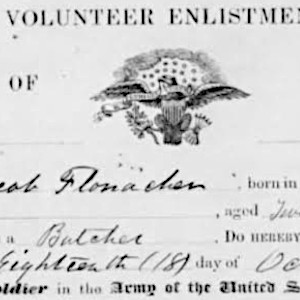
Jacob Flonacher was born in Bavaria and immigrated to the United States in 1856. Living near Baton Rouge when the Civil War began, he enlisted as a sergeant in Cole’s Louisiana Cavalry in 1861 and later transferred to the 1st Louisiana Cavalry. Captured near Monticello, Kentucky, he spent over a year as a prisoner at Point Lookout, Maryland.
To secure his release, Flonacher joined the Union Army, enlisting in the 4th U.S. Volunteer Infantry—one of six regiments of former Confederate POWs known as “Galvanized Yankees.” He served for nearly two years, mostly on frontier duty in the West, and was discharged at Fort Leavenworth in 1866.
Returning to Louisiana, Flonacher ran a dry goods store, famously attracting customers with “ice-cold soda water.” He married three times, the last to Babette Freshman of Natchez, sister of Jewish Confederate veteran Samuel L. Benjamin. Flonacher died in Natchez on May 28, 1900, and was buried in the city’s Jewish Hill Cemetery.
To secure his release, Flonacher joined the Union Army, enlisting in the 4th U.S. Volunteer Infantry—one of six regiments of former Confederate POWs known as “Galvanized Yankees.” He served for nearly two years, mostly on frontier duty in the West, and was discharged at Fort Leavenworth in 1866.
Returning to Louisiana, Flonacher ran a dry goods store, famously attracting customers with “ice-cold soda water.” He married three times, the last to Babette Freshman of Natchez, sister of Jewish Confederate veteran Samuel L. Benjamin. Flonacher died in Natchez on May 28, 1900, and was buried in the city’s Jewish Hill Cemetery.
Jacob Frankel
Hospital Chaplain
Union
US Army
Chaplain Service
The first Jewish military chaplain in American history, appointed by President Abraham Lincoln
Preview
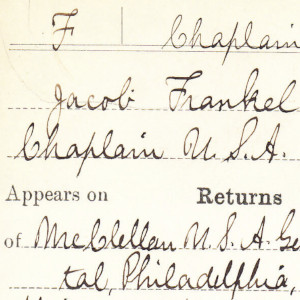
In 1862, Frankel became the US Army’s first "official" Jewish chaplain. His appointment to the position –from Abraham Lincoln himself – came on the heels of a constitutional dilemma regarding freedom of religion. Rabbi Jacob Frankel was born in Grünstadt, Bavaria, into a musically gifted family. After a concert tour with his brothers in Alsace-Lorraine, he established himself as a cantor and emigrated to the United States in 1848, becoming minister of Philadelphia’s Congregation Rodeph Shalom. Known for his beautiful voice, he earned the nickname “sweet singer of Israel.”
In 1862, Frankel became the first Jewish chaplain in U.S. military history. His appointment by President Lincoln followed a constitutional challenge to a law requiring chaplains to be Christian. The law had sparked controversy when Jewish soldiers in the 5th Pennsylvania Cavalry elected Michael Allen and later Arnold Fischel as chaplains, only to have their nominations rejected. Fischel lobbied Congress and Lincoln, leading to a revised law allowing chaplains of any denomination. Lincoln then appointed Frankel as chaplain to a Philadelphia military hospital.
Frankel served from September 1862 until July 1865, with a brief interruption in 1863 due to a technicality requiring Senate confirmation. His commission, signed by Lincoln and Secretary of War Edwin Stanton, became a cherished family heirloom and was later donated to Rodeph Shalom. Frankel died in 1887, remembered for his service and his remarkable voice, which he retained into old age.
In 1862, Frankel became the first Jewish chaplain in U.S. military history. His appointment by President Lincoln followed a constitutional challenge to a law requiring chaplains to be Christian. The law had sparked controversy when Jewish soldiers in the 5th Pennsylvania Cavalry elected Michael Allen and later Arnold Fischel as chaplains, only to have their nominations rejected. Fischel lobbied Congress and Lincoln, leading to a revised law allowing chaplains of any denomination. Lincoln then appointed Frankel as chaplain to a Philadelphia military hospital.
Frankel served from September 1862 until July 1865, with a brief interruption in 1863 due to a technicality requiring Senate confirmation. His commission, signed by Lincoln and Secretary of War Edwin Stanton, became a cherished family heirloom and was later donated to Rodeph Shalom. Frankel died in 1887, remembered for his service and his remarkable voice, which he retained into old age.
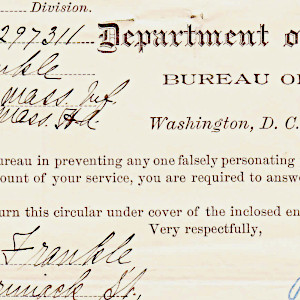
Jones Frankle
Colonel
Union
MA
17th MA Infantry
Brevetted Brigadier General in 1867 for "gallant and meritorious services"
Preview
Jones Frankle was born in Zulz, Prussia, to Jacob Frankle and Sarah N. Zedinck. A former lieutenant in the Prussian Army (1848–1851), he immigrated to the U.S. in 1854.
Frankle was appointed Major in the 17th MA Infantry on August 1, 1861. Promoted to Colonel in 1863, he later commanded the 2nd MA Heavy Artillery and was brevetted Brigadier General in 1867 for "gallant and meritorious services in North Carolina." His military career was later celebrated in The Israelite and The American Israelite.
On March 8, 1866, Frankle married Annie W. Blaisdell in Amesbury, MA, where he started an insurance business before relocating to Boston. He played a key role in designing and funding a soldiers’ monument in New Bern, NC, delivering the dedication speech.
Frankle died in 1909 and is buried in the Union Cemetery in Amesbury, MA.
Frankle was appointed Major in the 17th MA Infantry on August 1, 1861. Promoted to Colonel in 1863, he later commanded the 2nd MA Heavy Artillery and was brevetted Brigadier General in 1867 for "gallant and meritorious services in North Carolina." His military career was later celebrated in The Israelite and The American Israelite.
On March 8, 1866, Frankle married Annie W. Blaisdell in Amesbury, MA, where he started an insurance business before relocating to Boston. He played a key role in designing and funding a soldiers’ monument in New Bern, NC, delivering the dedication speech.
Frankle died in 1909 and is buried in the Union Cemetery in Amesbury, MA.

Max Friedman
Colonel
Union
PA
5th PA Cavalry
One of the highest-ranking Jewish officers to serve in the US Civil War
Preview
Max Friedman was among the highest-ranking Jewish officers in the US Civil War. As Colonel of the 5th Pennsylvania Cavalry, also known as the Cameron Dragoons, he led a unit that included many Jewish soldiers after enlisting in August 1861.
The Cameron Dragoons, named after Simon Cameron, Lincoln’s Secretary of War, were known for their distinctive identity. Friedman's service was cut short by an injury at the Battle of Vienna in February 1862, which led to his resignation which was accepted on March 9, 1862. His brief military career was marred by controversy, as he was investigated—though never charged—for alleged fraud by the US government. Later, he claimed a service-related rheumatism diagnosis in his pension files, corroborated by affidavits from fellow soldiers. Despite his early departure, the 5th PA Cavalry served until the war’s end.
Friedman’s birth details are unclear. Likely born in Bavaria in the mid-1820s, records vary on dates and locations, with some suggesting Muhlhausen or Nuremberg as his birthplace. He arrived in the US by 1849, marrying Adeline J. Cromelien in a Jewish ceremony in Philadelphia, PA, where he was also involved in Pennsylvania's militia before the war.
Post-war, Friedman worked as a Wall Street stockbroker. He and Adeline had five children. He died in New York City on February 10, 1900.
The Cameron Dragoons, named after Simon Cameron, Lincoln’s Secretary of War, were known for their distinctive identity. Friedman's service was cut short by an injury at the Battle of Vienna in February 1862, which led to his resignation which was accepted on March 9, 1862. His brief military career was marred by controversy, as he was investigated—though never charged—for alleged fraud by the US government. Later, he claimed a service-related rheumatism diagnosis in his pension files, corroborated by affidavits from fellow soldiers. Despite his early departure, the 5th PA Cavalry served until the war’s end.
Friedman’s birth details are unclear. Likely born in Bavaria in the mid-1820s, records vary on dates and locations, with some suggesting Muhlhausen or Nuremberg as his birthplace. He arrived in the US by 1849, marrying Adeline J. Cromelien in a Jewish ceremony in Philadelphia, PA, where he was also involved in Pennsylvania's militia before the war.
Post-war, Friedman worked as a Wall Street stockbroker. He and Adeline had five children. He died in New York City on February 10, 1900.
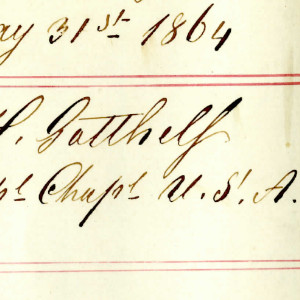
Rabbi Bernard Henry Gotthelf became the third Jewish chaplain of the US Army in 1863. President Lincoln appointed Gotthelf to be a hospital chaplain in Louisville, KY, where he prayed for wounded and dying Jews and Christians alike. Gotthelf requested a leave of absence in 1864 so that he could “collect means and books for the establishment of German libraries in the different hospitals of this district[.]” He happily informed the Surgeon General on April 1 that he had “succeeded in procuring about One Thousand volumes of good German books for the hospitals, and have good cause to expect the receipt of many more.” He continued to serve as hospital chaplain until he was discharged on August 21, 1865.

Louis Alexander Gratz
Major
Union
PA; KY
15th PA Infantry (3 Months,1861); 9th PA Cavalry; 6th KY Cavlary (US)
After the war, he became a prominent lawyer and politician in Knoxville, TN.
Preview
Louis Alexander Gratz was born in Bentschen, Prussia, and immigrated to the U.S. with little money, working as a peddler while studying English. He joined the military for a better life, becoming a decorated soldier, lawyer, and politician.
Gratz enlisted as a 1st Corporal in the 15th PA Infantry on April 22, 1861. He was later promoted to Major in the 6th KY Cavalry (US) and served in key roles, including Acting Assistant Adjutant General on General Samuel Carter’s staff. After the war, he became a prominent lawyer and politician in Knoxville, TN.
He married Elizabeth Bearden in 1865, had five children, and later married Marion Fidler. Gratz was city attorney and mayor of North Knoxville (1889-1892). He died of a heart attack in 1907 and is buried in Old Gray Cemetery, Knoxville.
Gratz enlisted as a 1st Corporal in the 15th PA Infantry on April 22, 1861. He was later promoted to Major in the 6th KY Cavalry (US) and served in key roles, including Acting Assistant Adjutant General on General Samuel Carter’s staff. After the war, he became a prominent lawyer and politician in Knoxville, TN.
He married Elizabeth Bearden in 1865, had five children, and later married Marion Fidler. Gratz was city attorney and mayor of North Knoxville (1889-1892). He died of a heart attack in 1907 and is buried in Old Gray Cemetery, Knoxville.
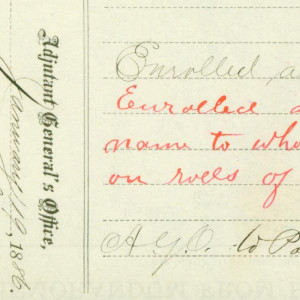
Samuel Greenthal, born in Germany to Abraham Greenthal and Bertha Neustadt, enlisted as a Private under the alias Gustav Schroeder in the 15th New York Heavy Artillery on October 5, 1861. He deserted at Fort Ethan Allen on March 4, 1862, returned over two years later on March 29, 1864, and was captured at the Battle of the Wilderness on May 6, 1864, according to his account. However, military records list him as deserting on May 17, 1864, and again on September 16, 1864.
In 1865, Greenthal sought unsuccessfully to clear his military record of his desertion charges, claiming imprisonment at Andersonville and Salisbury until escaping near the war's end. His request was dismissed, and he was dishonorably discharged retroactive to May 31, 1864. A subsequent investigation in 1875 found records of his capture and imprisonment but upheld his status as a deserter due to his failure to report upon release. In 1903, the War Department voided his dishonorable discharge but retained his deserter status.
Greenthal married Rebecca Masur on March 7, 1875, in New York City. They had two children, Millie and Harry. Greenthal died in 1917 and is buried in Mount Judah Cemetery in Queens, NY.
In 1865, Greenthal sought unsuccessfully to clear his military record of his desertion charges, claiming imprisonment at Andersonville and Salisbury until escaping near the war's end. His request was dismissed, and he was dishonorably discharged retroactive to May 31, 1864. A subsequent investigation in 1875 found records of his capture and imprisonment but upheld his status as a deserter due to his failure to report upon release. In 1903, the War Department voided his dishonorable discharge but retained his deserter status.
Greenthal married Rebecca Masur on March 7, 1875, in New York City. They had two children, Millie and Harry. Greenthal died in 1917 and is buried in Mount Judah Cemetery in Queens, NY.
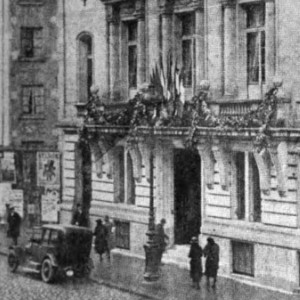
Reuben N. Hershfield was born in Utica, NY, and married Sarah Hershfield. He operated jewelry factories and retail stores in Leavenworth, KS, and later Kansas City, MO. During the Civil War, he briefly served as Lieutenant Colonel in the 7th KS State Militia, helping defend Kansas City during General Sterling Price's Raid in 1864.
An active member of the Jewish community, Hershfield helped found a synagogue in Leavenworth in 1866 and later spoke at a Soldiers' Memorial service at Congregation B’nai Jehudah. He was also a member of the Independent Order of Free Sons of Israel and served on the original board of regents for the University of Kansas.
Hershfield died in 1922 in Atlantic City, NJ, while visiting his daughter. He was survived by seven children and buried with his wife in Elmwood Cemetery, Kansas City, MO.
An active member of the Jewish community, Hershfield helped found a synagogue in Leavenworth in 1866 and later spoke at a Soldiers' Memorial service at Congregation B’nai Jehudah. He was also a member of the Independent Order of Free Sons of Israel and served on the original board of regents for the University of Kansas.
Hershfield died in 1922 in Atlantic City, NJ, while visiting his daughter. He was survived by seven children and buried with his wife in Elmwood Cemetery, Kansas City, MO.
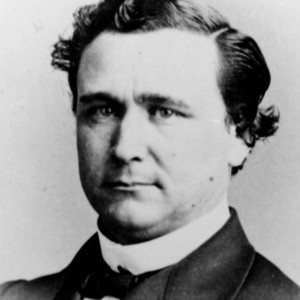
Phineas Jonathan Horwitz
Lieutenant Commander and Surgeon
US Navy
Appointed by President Abraham Lincoln. Gunshot wound expert.
Preview
Surgeon Phineas Jonathan Horwitz received a commission as Surgeon, with the rank of Lieutenant Commander, on April 19, 1861. His appointment came from President Lincoln. Horwitz was a leading expert in the treatment of gunshot wounds, composing an early wartime treatise in January 1862, which described in detail the variety of these wounds, and their treatment. This was essential, as the Union medical corps then consisted of 83 surgeons and assistant surgeons, few if any of whom had ever treated a gunshot wound before.
Philip Moritz Horwitz
Major
Union
WI
1st WI Infantry; 26th WI Infantry
Mexican-American War veteran.
Preview
Philip Moritz Horwitz was born in Gardelegen, Prussia, to Sarah and Philip Moritz Horwitz. A veteran of the Mexican-American War, Horwitz served as a 1st Lieutenant in the 1st WI Infantry (3 Months, 1861) during the Civil War, mustering in on April 16, 1861, and out in August. He was promoted to Major in 1862, joining the 26th WI Infantry. That October, Milwaukee’s Jewish community gifted him a horse in recognition of his service. Horwitz resigned on February 5, 1863, citing illness, though pension records suggest he left due to antisemitism within his regiment.
Horwitz married twice, first to Sophia Magius (divorced in 1874) and later to Rosa Strand. He died in Milwaukee in 1886 and is buried in the city’s Jewish Spring Hill Cemetery.
Horwitz married twice, first to Sophia Magius (divorced in 1874) and later to Rosa Strand. He died in Milwaukee in 1886 and is buried in the city’s Jewish Spring Hill Cemetery.
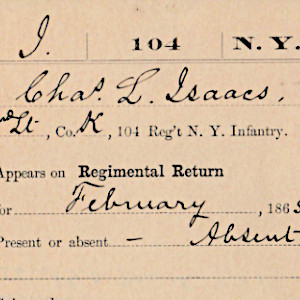
Charles Lawton Isaacs, the youngest child of Jacob Isaacs and Magdalen Sidell, began his Civil War service as a Private in Company A of the 5th NY Infantry on May 9, 1861. Over time, he earned multiple promotions, including Fife Major, Acting Ordnance Sergeant, and 2nd Lieutenant, serving in both the 5th and 104th NY Infantry. His distinguished roles included Acting Ordnance Officer for Major General Lew Wallace, the future author of Ben-Hur.
Isaacs was discharged in December 1865 and later died of heart disease in 1882. His funeral took place at St. George’s Church in Manhattan. In a tribute published following his death, Jacob was listed as treasurer of "the Society for the Education of Orphan Children and the Relief of Indigent Persons of the Jewish Persuasion." He is buried in the Green-Wood Cemetery in Brooklyn.
Isaacs was discharged in December 1865 and later died of heart disease in 1882. His funeral took place at St. George’s Church in Manhattan. In a tribute published following his death, Jacob was listed as treasurer of "the Society for the Education of Orphan Children and the Relief of Indigent Persons of the Jewish Persuasion." He is buried in the Green-Wood Cemetery in Brooklyn.

Jacob Jacobs
Captain
Union
NY
83rd NY Infantry
A founding members of the Hebrew Union Veterans Association
Preview
Jacob Jacobs was born in Posen, Prussia and immigrated to the United States in 1845. He enlisted in the 83rd NY Infantry in May 1861 and rose to the rank of Captain by October 1863. He was wounded at the Battle of Gettysburg. He was honorably discharged in June 1864.
After the war, Jacobs married Sarah Goldsmith in 1868, and they had four children: Robert, Hattie, Saul, and Hannah. Jacobs is best remembered as a founding member of the Hebrew Union Veterans Association (HUVA), which united Jewish Civil War veterans and supported widows and orphans of comrades.
Jacobs worked as an appraiser and was a member of Mount Vernon Lodge No. 71, Free Sons of Israel. He died in Astoria, NY, and is buried in Washington Cemetery, New York City.
After the war, Jacobs married Sarah Goldsmith in 1868, and they had four children: Robert, Hattie, Saul, and Hannah. Jacobs is best remembered as a founding member of the Hebrew Union Veterans Association (HUVA), which united Jewish Civil War veterans and supported widows and orphans of comrades.
Jacobs worked as an appraiser and was a member of Mount Vernon Lodge No. 71, Free Sons of Israel. He died in Astoria, NY, and is buried in Washington Cemetery, New York City.
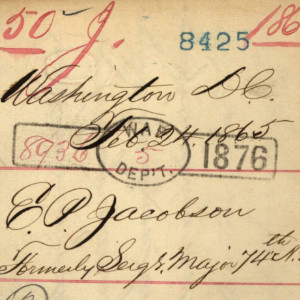
"Jewish Civil War Soldier Eugene Philip Jacobson (1841-1881) earned the Congressional Medal of Honor for his gallantry at the Battle of Chancellorsville. Rising through the ranks, he became a 1st Lieutenant and received the Medal of Honor on March 29, 1865.
After the war, Jacobson worked in the State Department, passed the bar exam, and practiced law in Washington, DC. He later served as the U.S. district attorney in Mississippi before relocating to Denver, CO. Elected to the State Senate in 1880, Jacobson led an unsuccessful campaign to regulate the railroad industry, a precursor to the federal regulation implemented in 1887.
He died in 1881 in Denver, CO, leaving behind a legacy that extended beyond his military service, influencing the regulation of the railroad industry and shaping federal oversight.
After the war, Jacobson worked in the State Department, passed the bar exam, and practiced law in Washington, DC. He later served as the U.S. district attorney in Mississippi before relocating to Denver, CO. Elected to the State Senate in 1880, Jacobson led an unsuccessful campaign to regulate the railroad industry, a precursor to the federal regulation implemented in 1887.
He died in 1881 in Denver, CO, leaving behind a legacy that extended beyond his military service, influencing the regulation of the railroad industry and shaping federal oversight.
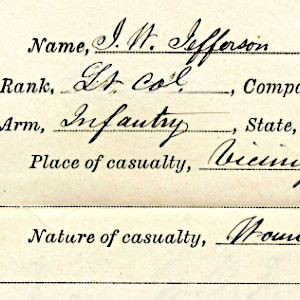
John Wayles Jefferson was born in Charlottesville, VA, the son of Eston Hemmings (son of President Thomas Jefferson and Sally Hemmings) and Julia Ann Hemmings. His maternal grandfather, David Isaacs, a Jewish merchant, was buried in Richmond’s Hebrew Cemetery, and his family is noted in Malcolm Stern’s First American Jewish Families.
Jefferson joined the 8th Wisconsin Infantry as a major on August 26, 1861, recruiting soldiers and rising to Lieutenant Colonel and Colonel. Wounded during the Siege of Vicksburg, he later served as Provost Marshal at Young's Point, Louisiana. His promotion to Colonel on June 16, 1864, was later contested due to insufficient regimental size, but records and post-war sources affirm his rank.
Jefferson submitted a resignation the day before his promotion, but it was not accepted, possibly due to pending charges against him. While Jefferson acknowledged being under arrest in August 1864, no formal charges or court-martial records have been found.
Jefferson died in Memphis in 1892 and is buried in the Forest Hill Cemetery in Madison, WI.
Jefferson joined the 8th Wisconsin Infantry as a major on August 26, 1861, recruiting soldiers and rising to Lieutenant Colonel and Colonel. Wounded during the Siege of Vicksburg, he later served as Provost Marshal at Young's Point, Louisiana. His promotion to Colonel on June 16, 1864, was later contested due to insufficient regimental size, but records and post-war sources affirm his rank.
Jefferson submitted a resignation the day before his promotion, but it was not accepted, possibly due to pending charges against him. While Jefferson acknowledged being under arrest in August 1864, no formal charges or court-martial records have been found.
Jefferson died in Memphis in 1892 and is buried in the Forest Hill Cemetery in Madison, WI.

Philip Joseph Joachimsen
Lieutenant Colonel
Union
NY
59th NY Infantry
Honorable discharge signed by General George B. McClellan
Preview
Philip Joseph Joachimsen was born in Germany to Louis and Johanna Joachimsen. He married Priscilla J. Godfrey on August 31, 1842, at Congregation B'nai Jeshurun in New York City.
Joachimsen received a commission as Paymaster and Lieutenant in the 1st NY Infantry on July 4, 1861, to date back to May 1861; however, he was not mustered in as such. He received a higher ranked appointment, as Lieutenant Colonel of the 59th NY Infantry, on July 26, 1861. During the war, he assisted with recruiting in New York City and resigned his commission on February 24, 1862, with an honorable discharge signed by General George B. McClellan. From 1864 to 1868, he served as Judge Advocate for the 2nd Brigade, NY State National Guard, while practicing law in New York and London.
Joachimsen died in Manhattan and is buried in the Cypress Hills Cemetery, NY.
Joachimsen received a commission as Paymaster and Lieutenant in the 1st NY Infantry on July 4, 1861, to date back to May 1861; however, he was not mustered in as such. He received a higher ranked appointment, as Lieutenant Colonel of the 59th NY Infantry, on July 26, 1861. During the war, he assisted with recruiting in New York City and resigned his commission on February 24, 1862, with an honorable discharge signed by General George B. McClellan. From 1864 to 1868, he served as Judge Advocate for the 2nd Brigade, NY State National Guard, while practicing law in New York and London.
Joachimsen died in Manhattan and is buried in the Cypress Hills Cemetery, NY.
Joseph A. Joel
Private
Union
OH
23rd OH Infantry
Served under and became close friend of President Rutherford B. Hayes; Freemason
Preview
Joseph A. Joel was born in Plymouth, England and immigrated to Chicago, IL, where he enlisted in the 23rd OH Infantry under future President Rutherford B. Hayes. Joel is perhaps best remembered as being one of the (at least) four soldiers to request leave to hold a Passover Seder in 1862. Joel suffered multiple severe injuries at Fox’s Gap during the Battle of South Mountain in 1862, ultimately leading to his discharge in 1863.
Despite the war’s end, the friendship between Joel and Hayes flourished, evident in Joel’s naming his son after Hayes, which prompted Hayes to gift the child a special cup, a tradition in English custom.
Hayes wrote several letters to Joel, including one from 1870 wherein Hayes vowed, more than six years before becoming president, that he was finished with public life: "I retire absolutely. I shall make no attempt to go higher. If I ever accept public employment again, it will be incidental and for special reasons not as falling within the line of my life as now chosen." Other letters included an invitation to a 25th wedding anniversary celebration and a thank you note for condolences after the passing of his wife.
Post-war, Joel ventured into farming and later became a writer, editor, and publisher of war-themed journals. His son, Rutherford B. Hayes Joel aka Ruddy, continued the family military tradition by serving in the Spanish-American War.
Joel died in 1906, remembered as a Freemason, Grand Army of the Republic member, and buried in Mokom Sholom Cemetery in Queens, NY.
Despite the war’s end, the friendship between Joel and Hayes flourished, evident in Joel’s naming his son after Hayes, which prompted Hayes to gift the child a special cup, a tradition in English custom.
Hayes wrote several letters to Joel, including one from 1870 wherein Hayes vowed, more than six years before becoming president, that he was finished with public life: "I retire absolutely. I shall make no attempt to go higher. If I ever accept public employment again, it will be incidental and for special reasons not as falling within the line of my life as now chosen." Other letters included an invitation to a 25th wedding anniversary celebration and a thank you note for condolences after the passing of his wife.
Post-war, Joel ventured into farming and later became a writer, editor, and publisher of war-themed journals. His son, Rutherford B. Hayes Joel aka Ruddy, continued the family military tradition by serving in the Spanish-American War.
Joel died in 1906, remembered as a Freemason, Grand Army of the Republic member, and buried in Mokom Sholom Cemetery in Queens, NY.
Ephraim M. Joel,
Lieutenant Colonel and Chief Quartermaster
Union
MO; US Army
4th US Reserve Corps, MO Infantry (3 Months, 1861); 29th MO Infantry; US Army, Quartermaster Department
Preview
Ephraim M. Joel Sr. was born in Edinburgh, Scotland. His father was Rabbi Moses Joel, the first rabbi of Edinburgh's first synagogue. He married Mary L. Mathews on December 28, 1859, in St. Louis, MO, where he later lived, worked, and raised five children.
Joel enlisted in the Union Army on May 24, 1861, serving as Sergeant Quartermaster in the 4th Missouri US Reserve Corps. He rose to 1st Lieutenant and Regimental Quartermaster of the 29th Missouri Infantry on August 2, 1862. Despite initial delays in receiving a presidential commission, he was appointed Assistant Quartermaster with the rank of Captain on April 21, 1863.
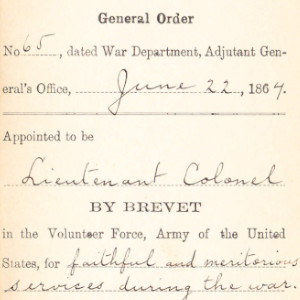
Praised for his role in the Siege of Vicksburg, President Lincoln promoted Joel to Corps Quartermaster with the rank of Lieutenant Colonel at General Francis Blair’s request in 1864. He earned brevet ranks of Lieutenant Colonel and Major in December 1865 for his meritorious service. Joel was discharged in 1866 after waiting months for reassignment. His brother, Benjamin J. Joel, was also a Union veteran, wounded at Wilson’s Creek.
Joel died on January 18, 1884, in St. Louis, MO, and is buried in the Cavalry Cemetery.
Joel enlisted in the Union Army on May 24, 1861, serving as Sergeant Quartermaster in the 4th Missouri US Reserve Corps. He rose to 1st Lieutenant and Regimental Quartermaster of the 29th Missouri Infantry on August 2, 1862. Despite initial delays in receiving a presidential commission, he was appointed Assistant Quartermaster with the rank of Captain on April 21, 1863.
Praised for his role in the Siege of Vicksburg, President Lincoln promoted Joel to Corps Quartermaster with the rank of Lieutenant Colonel at General Francis Blair’s request in 1864. He earned brevet ranks of Lieutenant Colonel and Major in December 1865 for his meritorious service. Joel was discharged in 1866 after waiting months for reassignment. His brother, Benjamin J. Joel, was also a Union veteran, wounded at Wilson’s Creek.
Joel died on January 18, 1884, in St. Louis, MO, and is buried in the Cavalry Cemetery.
Edgar Mayer Johnson
2nd Lieutenant
Union
OH
6th OH Infantry (3 Months, 1861)
Attended an audience with President Abraham Lincoln in the aftermath of Gen. Grant's Orders No. 11
Preview
Edgar Mayer Johnson, a Cincinnati native, became one of Ohio’s leading lawyers. His parents, David Israel Johnson and Eliza Davis, immigrated from England in 1816. David was noted as the first Jew to settle in Ohio with his family and co-founded the Hebrew Synagogue "Holy Congregation of Israel" in Cincinnati. Edgar, the youngest of seven children, graduated high school at 13 and passed the state bar exam at 17, beginning his legal career as a junior partner in the firm Jackson and Johnson.
Johnson briefly left his law practice to serve in the Civil War as a 2nd Lieutenant in the 6th Ohio Infantry. During his partner John P. Jackson’s military service, Johnson ran their practice, which flourished during and after the war. In 1863, he joined Rabbi Isaac Mayer Wise in meeting President Lincoln to thank him for rescinding General Ulysses S. Grant’s expulsion order against Jews.
By 1866, Johnson secured Judge George Hoadly as a partner, forming one of the most prominent firms in the West, which later expanded to New York City. Johnson ran for Lieutenant Governor of Ohio in 1881 but was unsuccessful. He remained a prominent figure in both law and politics until his death in Manhattan on December 10, 1893.
Johnson’s funeral was held at the Mound Street Temple in Cincinnati, and he was buried at Walnut Hills United Jewish Cemetery.
Johnson briefly left his law practice to serve in the Civil War as a 2nd Lieutenant in the 6th Ohio Infantry. During his partner John P. Jackson’s military service, Johnson ran their practice, which flourished during and after the war. In 1863, he joined Rabbi Isaac Mayer Wise in meeting President Lincoln to thank him for rescinding General Ulysses S. Grant’s expulsion order against Jews.
By 1866, Johnson secured Judge George Hoadly as a partner, forming one of the most prominent firms in the West, which later expanded to New York City. Johnson ran for Lieutenant Governor of Ohio in 1881 but was unsuccessful. He remained a prominent figure in both law and politics until his death in Manhattan on December 10, 1893.
Johnson’s funeral was held at the Mound Street Temple in Cincinnati, and he was buried at Walnut Hills United Jewish Cemetery.

Edward Jonas was one of six brothers who served in the Civil War. Edward and his brother George B. Jonas fought for the Union, while their four brothers Charles Henry, Benjamin Franklin, Julian J., and Sidney Alroy Jonas served for the Confederate Cause.
Their father, Abraham Jonas, was a friend and political supporter of Abraham Lincoln. Lincoln greatly influenced Edward's early years and he later recalled fond memories of Lincoln. Shortly after the outbreak of the war, Lincoln appointed Abraham Jonas as Post Master of Quincy, IL with Edward being appointed his Principal Assistant.
Edward enlisted in the 50th IL Infantry and served to the end of the war. He was later promoted by Brevet to Major and Lieutenant Colonel for "gallant and meritorious service."
Edward died in 1918 and is buried in the Dispersed of Judah Cemetery in New Orleans, LA.
Their father, Abraham Jonas, was a friend and political supporter of Abraham Lincoln. Lincoln greatly influenced Edward's early years and he later recalled fond memories of Lincoln. Shortly after the outbreak of the war, Lincoln appointed Abraham Jonas as Post Master of Quincy, IL with Edward being appointed his Principal Assistant.
Edward enlisted in the 50th IL Infantry and served to the end of the war. He was later promoted by Brevet to Major and Lieutenant Colonel for "gallant and meritorious service."
Edward died in 1918 and is buried in the Dispersed of Judah Cemetery in New Orleans, LA.
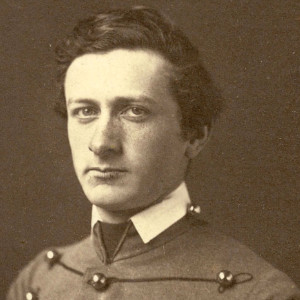
Alfred Mordecai, Jr.
Captain
Union
US Army, US Military Academy; US Army, Corps of Topographical Engineers; US Army, Ordnance Department
Preview
Alfred Mordecai Jr. was born in Philadelphia, PA, to Major Alfred Mordecai Sr., a renowned ordnance officer. Like his father, he graduated from West Point and pursued a distinguished military career in the Ordnance Department, retiring as a Brigadier General in 1904.
Commissioned into the U.S. Army on June 24, 1861—the same day as his classmate George Custer—Mordecai earned recognition during the Civil War. He received honorary ranks for gallant service at the siege of Fort Wagner and meritorious contributions to the Ordnance Department. Post-war, he served at major arsenals, taught at West Point, and contributed significantly to military innovation.
Unlike his father, Mordecai identified less with his Jewish heritage and aligned himself with the Union. He married twice—first to Sally Sanford Maynadier, with whom he had five children, and later to Elma Dora Varney. Mordecai died in Washington, D.C., where a Jewish newspaper acknowledged his heritage, noting the important contributions of Jews to American history. He was laid to rest at Oak Hill Cemetery after services at St. Margaret’s Church.
Commissioned into the U.S. Army on June 24, 1861—the same day as his classmate George Custer—Mordecai earned recognition during the Civil War. He received honorary ranks for gallant service at the siege of Fort Wagner and meritorious contributions to the Ordnance Department. Post-war, he served at major arsenals, taught at West Point, and contributed significantly to military innovation.
Unlike his father, Mordecai identified less with his Jewish heritage and aligned himself with the Union. He married twice—first to Sally Sanford Maynadier, with whom he had five children, and later to Elma Dora Varney. Mordecai died in Washington, D.C., where a Jewish newspaper acknowledged his heritage, noting the important contributions of Jews to American history. He was laid to rest at Oak Hill Cemetery after services at St. Margaret’s Church.
Edward Gratz, Jr.
Major and Additional Paymaster
Union
PA; US Army
121st PA Infantry; US Army, Pay Department
Preview
Edward Gratz Jr. was born in Philadelphia, PA, to Edward Gratz and Caroline Vandever. His cousins Simon, John C., and Frank C. Gratz also served during the Civil War. His family is noted in First American Jewish Families by Malcolm Stern.
Gratz served as 1st Lieutenant with Company H, 121st PA Infantry, repeatedly submitting resignations due to health issues before being commissioned as Major and Additional Paymaster in the U.S. Army. Health concerns led to his resignation from that role as well.
On December 10, 1870, he married Frances Donaldson in New York, NY. A cotton broker by profession, Gratz died of pneumonia in Philadelphia on October 22, 1921 (his tombstone lists October 21). He was buried in Laurel Hill Cemetery and survived by his wife, a daughter, and two sons.
Gratz served as 1st Lieutenant with Company H, 121st PA Infantry, repeatedly submitting resignations due to health issues before being commissioned as Major and Additional Paymaster in the U.S. Army. Health concerns led to his resignation from that role as well.
On December 10, 1870, he married Frances Donaldson in New York, NY. A cotton broker by profession, Gratz died of pneumonia in Philadelphia on October 22, 1921 (his tombstone lists October 21). He was buried in Laurel Hill Cemetery and survived by his wife, a daughter, and two sons.
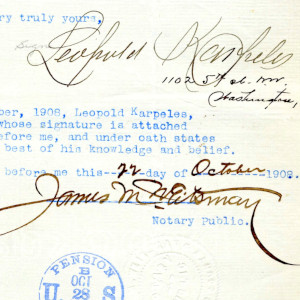
Leopold Karpeles
Sergeant
Union
MA
46th MA Militia Infantry; 57th MA Infantry
Received the Medal of Honor for extraordinary heroism at the Battle of North Anna
Preview
Leopold Karpeles, born in Prague, Bohemia, immigrated to Texas in 1857 before settling in Springfield, MA, shortly before the Civil War. He served with distinction, earning the Congressional Medal of Honor for rallying retreating troops as a Color Bearer, or flagbearer, during the Wilderness Campaign on May 6, 1864.
Karpeles first enlisted as a Private in the 46th MA Militia Infantry on September 24, 1862, was promoted to Corporal, and discharged in July 1863. He re-enlisted with the 57th MA Infantry in March 1864, becoming a Sergeant and Color Bearer. At the Battle of North Anna on May 24, 1864, he was shot in the leg but refused to relinquish the colors until he could no longer stand. He was discharged for disability in May 1865.
Karpeles received the Medal of Honor in 1870 for "extraordinary heroism," credited with rallying retreating troops during the Wilderness Campaign, specifically at the Battle of North Anna.
After recovering at the Mundheim family home, he married two Mundheim sisters—Sarah in 1866, who died in 1870, and Henrietta in 1871. Karpeles died on February 22, 1909, in Washington, DC, and was survived by his wife Henrietta, seven children, and a brother in Texas. He was buried in the Washington Hebrew Congregation Cemetery.
Karpeles first enlisted as a Private in the 46th MA Militia Infantry on September 24, 1862, was promoted to Corporal, and discharged in July 1863. He re-enlisted with the 57th MA Infantry in March 1864, becoming a Sergeant and Color Bearer. At the Battle of North Anna on May 24, 1864, he was shot in the leg but refused to relinquish the colors until he could no longer stand. He was discharged for disability in May 1865.
Karpeles received the Medal of Honor in 1870 for "extraordinary heroism," credited with rallying retreating troops during the Wilderness Campaign, specifically at the Battle of North Anna.
After recovering at the Mundheim family home, he married two Mundheim sisters—Sarah in 1866, who died in 1870, and Henrietta in 1871. Karpeles died on February 22, 1909, in Washington, DC, and was survived by his wife Henrietta, seven children, and a brother in Texas. He was buried in the Washington Hebrew Congregation Cemetery.
Frederick Knefler
Colonel
Union
IN
11th IN Infantry (3 Months, 1861); 11th IN Infantry; US Army; 79th IN Infantry
Preview
Born in Hungary, Frederick Knefler (1833-1901) fled to the U.S. after participating in the 1848 Hungarian Revolution. Settling in Indianapolis, IN, he and his family became pivotal in its Jewish community. His father, Dr. Nathan Knefler was one of the founders of the Indianapolis Hebrew Congregation, the city's first synagogue.
During the Civil War, Knefler's bravery was evident at the Battle of Missionary Ridge. Though ordered to seize rifle pits, his bold leadership enabled Union troops to claim the ridge, a move lauded as miraculous by his contemporary military elites. This victory set the stage for Sherman's pivotal Southern campaign, earning Knefler his brevetted rank of Brigadier General from President Andrew Johnson in 1866.
Post-war, Knefler's influence continued; President Rutherford B. Hayes appointed him head of the pension office in Indianapolis. Additionally, he served as president of the board of regents of the Soldiers and Sailors Monument, constructed to memorialize Indiana’s soldiers who served in American wars from the Revolutionary to the Spanish-American War. Knefler's indelible mark remains in Indianapolis, where he rests in Crown Hill Cemetery.
During the Civil War, Knefler's bravery was evident at the Battle of Missionary Ridge. Though ordered to seize rifle pits, his bold leadership enabled Union troops to claim the ridge, a move lauded as miraculous by his contemporary military elites. This victory set the stage for Sherman's pivotal Southern campaign, earning Knefler his brevetted rank of Brigadier General from President Andrew Johnson in 1866.
Post-war, Knefler's influence continued; President Rutherford B. Hayes appointed him head of the pension office in Indianapolis. Additionally, he served as president of the board of regents of the Soldiers and Sailors Monument, constructed to memorialize Indiana’s soldiers who served in American wars from the Revolutionary to the Spanish-American War. Knefler's indelible mark remains in Indianapolis, where he rests in Crown Hill Cemetery.
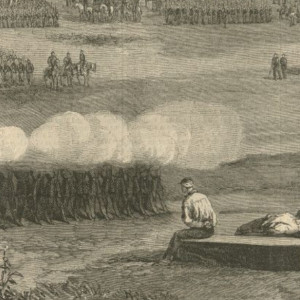
George Kuhne, a private in the 118th PA Infantry, was executed for desertion at Beverly Ford, VA, on August 29, 1863, one of five men shot by firing squad that day. A Prussian immigrant who spoke little English, Kuhne enlisted under the alias “G. Weik” to hide his service from family. Arrested shortly after deserting on August 6, he was tried, found guilty, and sentenced to death. Desertion was rampant at this time, particularly among substitutes like Kuhne, who joined as part of a quota-filling draft measure that allowed wealthier men to hire replacements.
Witnesses reported a somber spectacle at Beverly Ford, with some 25,000 soldiers forced to observe the executions. Three chaplains, Protestant, Catholic, and Jewish were present, with Rabbi Dr. Benjamin Szold leading the procession after his plea for clemency was denied. At 4 p.m., the men were seated on their coffins, eyes bandaged, and executed by musket fire. According to The Jewish Messenger, it was "the first execution of an Israelite... within our recollection."
The event highlighted both the harsh measures taken to curb desertion and an unusual interfaith moment, as clergy from three faiths conducted final rites over the condemned.
Witnesses reported a somber spectacle at Beverly Ford, with some 25,000 soldiers forced to observe the executions. Three chaplains, Protestant, Catholic, and Jewish were present, with Rabbi Dr. Benjamin Szold leading the procession after his plea for clemency was denied. At 4 p.m., the men were seated on their coffins, eyes bandaged, and executed by musket fire. According to The Jewish Messenger, it was "the first execution of an Israelite... within our recollection."
The event highlighted both the harsh measures taken to curb desertion and an unusual interfaith moment, as clergy from three faiths conducted final rites over the condemned.
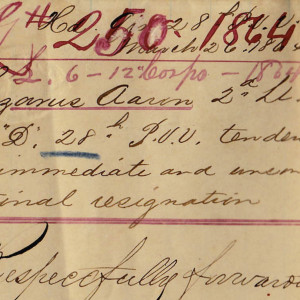
Aaron Lazarus was born in Philadelphia, PA, and served the Union during the Civil War alongside his brother, Henry. He enlisted as a Sergeant in Company D of the 28th PA Infantry on June 6, 1861, and rose to 1st Lieutenant and Acting Adjutant by December 1863. Despite a dishonorable discharge in July 1864 due to a misunderstanding regarding his service status, Lazarus successfully petitioned to have it overturned and was honorably discharged.
Lazarus was the nephew of prominent Jewish philanthropist Moses A. Dropsie, a close associate of General John W. Geary, who commanded the 28th PA Infantry. Dropsie’s inquiry about Lazarus’s welfare after the Chancellorsville Campaign received a reassuring reply from Geary, emphasizing the family's connection to Civil War leadership.
After the war, Lazarus joined the Washington Grays of the PA National Guard, earning the rank of Major, and worked as a bookkeeper in Philadelphia. He suffered from rheumatism caused by typhoid fever, which eventually impaired his ability to work. He married Marie Emma Thiele in 1876; she died in 1904.
Lazarus’s will left his estate to his mother, Elizabeth A. Lazarus, with provisions for charitable donations to Jewish organizations if she predeceased him. His mother died shortly after his passing, and Lazarus was buried at West Laurel Hill Cemetery in Bala Cynwyd, PA.
Lazarus was the nephew of prominent Jewish philanthropist Moses A. Dropsie, a close associate of General John W. Geary, who commanded the 28th PA Infantry. Dropsie’s inquiry about Lazarus’s welfare after the Chancellorsville Campaign received a reassuring reply from Geary, emphasizing the family's connection to Civil War leadership.
After the war, Lazarus joined the Washington Grays of the PA National Guard, earning the rank of Major, and worked as a bookkeeper in Philadelphia. He suffered from rheumatism caused by typhoid fever, which eventually impaired his ability to work. He married Marie Emma Thiele in 1876; she died in 1904.
Lazarus’s will left his estate to his mother, Elizabeth A. Lazarus, with provisions for charitable donations to Jewish organizations if she predeceased him. His mother died shortly after his passing, and Lazarus was buried at West Laurel Hill Cemetery in Bala Cynwyd, PA.
Cherrie Moise Levy
Captain and Assistant Quartermaster
Union
US Army, Quartermaster Department
Lincoln and the Jews; In less than a year, Levy went from receiving a personal appointment from President Abraham Lincoln to being removed by court-martial and banned from government service
Preview
Cherrie Moise Levy experienced a dramatic rise and fall during the Civil War. He was personally appointed by President Abraham Lincoln as a captain and assistant quartermaster on November 26, 1862 after Lincoln wrote to Secretary of War Edwin Stanton: “I believe we have not yet appointed a Hebrew - As Cherie M. Levy, is well vouched, as a capable and faithful man, let him be appointed an Assistant Quarter. [sic] Master, with the rank of Captain.”
Levy was court-martialed less than a year later for fraudulently inflating pay vouchers and pocketing the difference. He was cashiered, barred from government service, and publicly shamed in newspapers. Despite his disgrace, Levy was inexplicably renominated and confirmed by the Senate in 1864, though the War Department refused to issue his commission.
A descendant of Charleston’s prominent Moise family, Levy was the only relative to serve the Union. He married Esther Caroline Raphall in 1851, becoming the son-in-law of Rabbi Morris J. Raphall, a controversial defender of slavery. His connections likely aided his career and efforts to rehabilitate his reputation. In 1869, President Andrew Johnson lifted the ban on his holding office, but Levy’s subsequent claims for back pay were repeatedly denied by Congress, which found his arguments baseless.
Levy died in 1887 and was buried in Washington Hebrew Congregation Cemetery, remembered for his "rotund form and hearty laugh."
Levy was court-martialed less than a year later for fraudulently inflating pay vouchers and pocketing the difference. He was cashiered, barred from government service, and publicly shamed in newspapers. Despite his disgrace, Levy was inexplicably renominated and confirmed by the Senate in 1864, though the War Department refused to issue his commission.
A descendant of Charleston’s prominent Moise family, Levy was the only relative to serve the Union. He married Esther Caroline Raphall in 1851, becoming the son-in-law of Rabbi Morris J. Raphall, a controversial defender of slavery. His connections likely aided his career and efforts to rehabilitate his reputation. In 1869, President Andrew Johnson lifted the ban on his holding office, but Levy’s subsequent claims for back pay were repeatedly denied by Congress, which found his arguments baseless.
Levy died in 1887 and was buried in Washington Hebrew Congregation Cemetery, remembered for his "rotund form and hearty laugh."
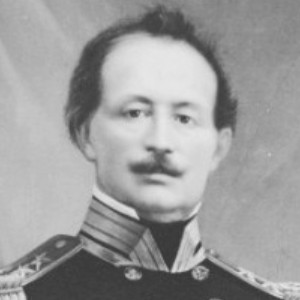
Uriah Phillips Levy
Commodore
Union
US Navy
High Ranking Officer; Sailing Master, appointed by President James Madison during the War of 1812
Preview
Uriah Phillips Levy was an extraordinary figure in US naval history. From his early days as a Sailing Master appointed by President James Madison during the War of 1812, to his later achievements as a decorated officer, Levy's career was marked by resilience and innovation. Despite facing adversity, including imprisonment in England and multiple court-martials, he rose through the ranks, ultimately becoming the first Jewish Commodore in the US Navy.
Levy's impact extended beyond naval tradition. He fiercely advocated for the abolition of corporal punishment, pushing for reforms that would later transform the Navy's disciplinary practices, which earned him both praise and criticism.
In addition to his naval endeavors, Levy was deeply influenced by his admiration for Thomas Jefferson and his commitment to religious freedom. In 1834, Levy commissioned a bronze statue of Jefferson which still stands in the Rotunda of the US Capitol Building today. Levy also acquired Monticello that same year.
Even in death, Levy's legacy endures. His contributions are immortalized in landmarks such as the USS Levy, named in his honor, and the Commodore Uriah P. Levy Center and Jewish Chapel at the US Naval Academy. A statue erected by fellow Jewish naval officers stands as a tribute to his remarkable life.
Portrait courtesy, The Naval History & Heritage Command
Levy's impact extended beyond naval tradition. He fiercely advocated for the abolition of corporal punishment, pushing for reforms that would later transform the Navy's disciplinary practices, which earned him both praise and criticism.
In addition to his naval endeavors, Levy was deeply influenced by his admiration for Thomas Jefferson and his commitment to religious freedom. In 1834, Levy commissioned a bronze statue of Jefferson which still stands in the Rotunda of the US Capitol Building today. Levy also acquired Monticello that same year.
Even in death, Levy's legacy endures. His contributions are immortalized in landmarks such as the USS Levy, named in his honor, and the Commodore Uriah P. Levy Center and Jewish Chapel at the US Naval Academy. A statue erected by fellow Jewish naval officers stands as a tribute to his remarkable life.
Portrait courtesy, The Naval History & Heritage Command
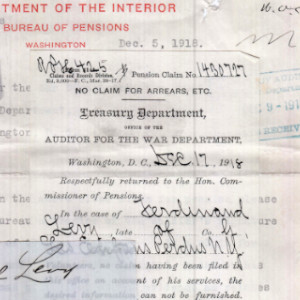
Ferdinand Levy
Captain
Union
NY
Les Enfants Perdus NY Infantry (Independent Battalion)
High Ranking Officer
Preview
Ferdinand Levy joined the Les Enfants Perdus NY Infantry during the Civil War, rising to the rank of Captain. He led a company with a significant Jewish contingent. In August 1863, he wrote a letter to the editor of the The American Israelite claiming that there were 11 officers and 19 privates in the Battalion. As of March 2024, the Shapell Roster has confirmed 30 Jewish soldiers served in the regiment during the Civil War.
His military career, however, was marred by controversy. Accused of knowingly recruiting deserters, falsifying recruiting documents, and even going as far as to assign aliases, Levy was found guilty by court martial and was dishonorably discharged. Despite appeals and relief from President Lincoln, he never returned to active service.
Post-war, Levy pursued public service, nominated for various offices by Tammany Hall. He was also active in veterans' affairs, serving as commander of a Grand Army of the Republic Post. Married to Rachel Fisher, Levy raised a family in New York City.
Levy died in 1923 and is buried in Brooklyn's Salem Fields Cemetery.
His military career, however, was marred by controversy. Accused of knowingly recruiting deserters, falsifying recruiting documents, and even going as far as to assign aliases, Levy was found guilty by court martial and was dishonorably discharged. Despite appeals and relief from President Lincoln, he never returned to active service.
Post-war, Levy pursued public service, nominated for various offices by Tammany Hall. He was also active in veterans' affairs, serving as commander of a Grand Army of the Republic Post. Married to Rachel Fisher, Levy raised a family in New York City.
Levy died in 1923 and is buried in Brooklyn's Salem Fields Cemetery.
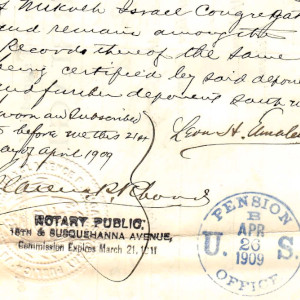
Myer Samuel Levy
Private
Union
PA
5th PA Cavalry
Cameron Dragoons; served during the Bermuda Hundred Campaign
Preview
Myer Samuel Levy was born in Philadelphia, PA in 1839. He enlisted as a Private in Company C, 5th PA Cavalry, also known as the Cameron Dragoons, on January 25, 1864.
The regiment, originally commanded by fellow Jewish comrade Max Friedman, was named for Simon Cameron, Lincoln's Secretary of War. Despite the reclassification of dragoons as cavalry in 1861, the nickname persisted. Levy served during the Bermuda Hundred Campaign (May–June 1864), which aimed to control key Confederate rail connections. On June 2, 1864, he vividly described the surrounding battle in a letter. He was discharged in Richmond, VA, on August 7, 1865.
Levy married Sarah Jane Southwell, who later converted to Judaism. They had two marriage ceremonies, the first on April 21, 1866, in Philadelphia and the second on November 3, 1872, with Rabbi Sabato Morais officiating. They had ten children.
Levy died on April 8, 1909, and is buried in the Mikve Israel Cemetery in Philadelphia, PA.
The regiment, originally commanded by fellow Jewish comrade Max Friedman, was named for Simon Cameron, Lincoln's Secretary of War. Despite the reclassification of dragoons as cavalry in 1861, the nickname persisted. Levy served during the Bermuda Hundred Campaign (May–June 1864), which aimed to control key Confederate rail connections. On June 2, 1864, he vividly described the surrounding battle in a letter. He was discharged in Richmond, VA, on August 7, 1865.
Levy married Sarah Jane Southwell, who later converted to Judaism. They had two marriage ceremonies, the first on April 21, 1866, in Philadelphia and the second on November 3, 1872, with Rabbi Sabato Morais officiating. They had ten children.
Levy died on April 8, 1909, and is buried in the Mikve Israel Cemetery in Philadelphia, PA.
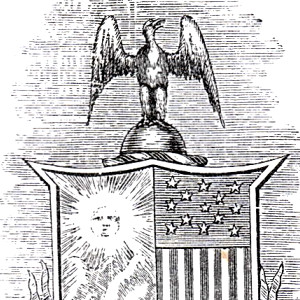
Simon Levy, father of fellow Civil War soldiers Alfred, Ferdinand, and Benjamin Constant Levy, was born in either France or Germany. A lawyer in Wisconsin before the Civil War, he reportedly served in the French Army and was described as a "Frenchman." Levy’s wife was Adelle Bernard, according to Benjamin’s death certificate.
Levy received a commission as Colonel in 1861, though no records confirm active service. On May 9, 1863, he was commissioned as Lieutenant Colonel of the Les Enfants Perdus NY Infantry, a unit with significant Jewish representation. Jewish soldiers in his battalion praised Levy and his son Ferdinand in a letter to The American Israelite.
In August 1863, Levy was detached for recruiting in New York but faced court-martial charges for allegedly recruiting deserters. Major General Quincy Gillmore defended him, attributing the charges to possible antisemitism. Levy was discharged in February 1864 and later confirmed the service record of a fellow soldier.
Levy worked as a lawyer in New York City and was active in Jewish organizations, including the Free Sons of Israel and United Hebrew Charities. He died in 1898 and is buried in Salem Fields Cemetery in Brooklyn, NY.
Levy received a commission as Colonel in 1861, though no records confirm active service. On May 9, 1863, he was commissioned as Lieutenant Colonel of the Les Enfants Perdus NY Infantry, a unit with significant Jewish representation. Jewish soldiers in his battalion praised Levy and his son Ferdinand in a letter to The American Israelite.
In August 1863, Levy was detached for recruiting in New York but faced court-martial charges for allegedly recruiting deserters. Major General Quincy Gillmore defended him, attributing the charges to possible antisemitism. Levy was discharged in February 1864 and later confirmed the service record of a fellow soldier.
Levy worked as a lawyer in New York City and was active in Jewish organizations, including the Free Sons of Israel and United Hebrew Charities. He died in 1898 and is buried in Salem Fields Cemetery in Brooklyn, NY.
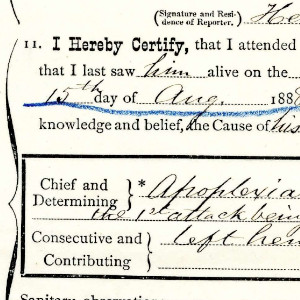
Philip George Lichtenstein
Lieutenant Colonel
Union
NY
52nd NY Infantry
Wounded twice in action - during the Battle of Seven Pines and at Antietam; Honorably discharged
Preview
Philip George Lichtenstein was born in Bavaria, Germany, to Bernhard and Veronika Lichtenstein. He married Ernestine Boufet on March 20, 1853, with Rabbi Max Lilienthal officiating.
Lichtenstein joined the 52nd NY Infantry as a Major on November 1, 1861, and was soon promoted to Lieutenant Colonel. He was wounded twice in action—first at the Battle of Seven Pines and later at Antietam, where a gunshot caused partial paralysis to his right side and disabled his foot. These injuries led to his honorable discharge on November 24, 1862. Furlough requests following each injury detail his wounds and experience in battle—including his horse being killed from under him at Fair Oaks.
Lichtenstein died on August 15, 1888, and is buried in the Woodlawn Cemetery, New York City.
Lichtenstein joined the 52nd NY Infantry as a Major on November 1, 1861, and was soon promoted to Lieutenant Colonel. He was wounded twice in action—first at the Battle of Seven Pines and later at Antietam, where a gunshot caused partial paralysis to his right side and disabled his foot. These injuries led to his honorable discharge on November 24, 1862. Furlough requests following each injury detail his wounds and experience in battle—including his horse being killed from under him at Fair Oaks.
Lichtenstein died on August 15, 1888, and is buried in the Woodlawn Cemetery, New York City.

Sigmund Loeb
1st Lieutenant and Adjutant
Union
U.S. Army, NY
2nd US Artillery; 1st US Artillery; 7th NY Heavy Artillery
Preview
Sigmund Loeb, born in Herxheim, Bavaria, enlisted in the U.S. Army on December 5, 1857, serving in the 2nd and 1st U.S. Artillery before his discharge in 1862. He re-enlisted in the 7th NY Heavy Artillery in 1864, rising from Private to 1st Lieutenant and Adjutant. Loeb was wounded at the Battle of Cold Harbor, receiving a gunshot wound to the leg on June 3, 1864, but returned to duty two months later.
After the war, Loeb married Hannah Harsh on September 23, 1869, in Ohio. To avoid mail confusion due to the commonality of his surname, he alternated between "Loeb" and "Loew." While he signed "Loeb" on his 1903 passport, he was buried as "Loew" in the City Cemetery in Massillon, OH.
After the war, Loeb married Hannah Harsh on September 23, 1869, in Ohio. To avoid mail confusion due to the commonality of his surname, he alternated between "Loeb" and "Loew." While he signed "Loeb" on his 1903 passport, he was buried as "Loew" in the City Cemetery in Massillon, OH.
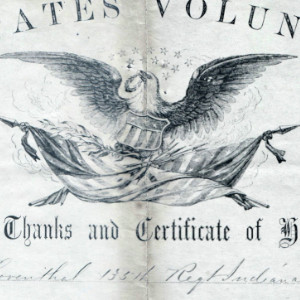
Theodore Loventhal
Private
Union
IN; OH
135th IN Infantry (100 Days, 1864); 81st OH Infantry
First enlisted at age 14 in 1864; received a Certificate of Thanks signed by President Lincoln and Secretary of War Stanton
Preview
Theodore Loventhal, born in Cincinnati, OH, was the son of Solomon Loventhal. At age 14, he enlisted as a Private in Company A, 135th IN Infantry (100 Days, 1864) on May 10, 1864. After his service ended on September 21, 1864, he received a certificate of thanks signed by President Lincoln and Secretary of War Stanton.
On March 23, 1865, Loventhal re-enlisted as a Private in Company I, 81st OH Infantry, claiming to be 17 but was only 15 at the time. His father signed his enlistment contract, providing consent for his under age son to enlist. He was discharged on July 13, 1865, in Louisville, KY.
From 1867 to 1870, Loventhal served in Company H, 21st Infantry Regiment, engaged in campaigns against the Apache. After moving to California in 1870, he worked as a salesman and clerk. He married Theodore “Dora” Harris in Oakland, CA, on February 3, 1884, with Rabbi M. S. Levy officiating.
Loventhal died in San Francisco in 1927 and was survived by his wife and his children, Gertrude and Jule. He was cremated and interred at Cypress Lawn Cemetery in San Mateo County, CA.
On March 23, 1865, Loventhal re-enlisted as a Private in Company I, 81st OH Infantry, claiming to be 17 but was only 15 at the time. His father signed his enlistment contract, providing consent for his under age son to enlist. He was discharged on July 13, 1865, in Louisville, KY.
From 1867 to 1870, Loventhal served in Company H, 21st Infantry Regiment, engaged in campaigns against the Apache. After moving to California in 1870, he worked as a salesman and clerk. He married Theodore “Dora” Harris in Oakland, CA, on February 3, 1884, with Rabbi M. S. Levy officiating.
Loventhal died in San Francisco in 1927 and was survived by his wife and his children, Gertrude and Jule. He was cremated and interred at Cypress Lawn Cemetery in San Mateo County, CA.

Moritz Lowenstein
2nd Lieutenant
Union
NY
29th NY Infantry; NY Light Artillery; 15th NY Heavy Artillery
Enlisted as a Musician in the 29th NY Infantry in May 1861
Preview
Moritz Lowenstein was born in Peckelsheim, Prussia, and enlisted as a Musician in the 29th NY Infantry in May 1861. After transferring to the 2nd Independent Battery, NY Light Artillery, he served until June 1863. Three days later, he re-enlisted in the 15th NY Heavy Artillery, rising to 2nd Lieutenant by 1865.
Wounded at the Battle of White Oak on March 31, 1865, Lowenstein’s right leg was amputated in a field hospital. He was discharged for disability in October 1865. A photo of Lowenstein among Civil War amputees was included in Dr. Phineas Jonathan Horwitz’s treatise on gunshot wounds.
Lowenstein married three times and was a member of Sinai Temple in Mount Vernon, NY. He died on March 25, 1916, in Mount Vernon and is buried in Kensico Cemetery, NY.
Wounded at the Battle of White Oak on March 31, 1865, Lowenstein’s right leg was amputated in a field hospital. He was discharged for disability in October 1865. A photo of Lowenstein among Civil War amputees was included in Dr. Phineas Jonathan Horwitz’s treatise on gunshot wounds.
Lowenstein married three times and was a member of Sinai Temple in Mount Vernon, NY. He died on March 25, 1916, in Mount Vernon and is buried in Kensico Cemetery, NY.

Kaufman Mandell was born in Dauendorf, France, and immigrated to the U.S. in 1854. Before the Civil War, he lived in New York City, working as a butcher boy and coal heaver. In 1861, he enlisted in the 3rd Massachusetts Cavalry under the alias Henry F. Williamson to hide his service from family in Europe.
Mandell quickly advanced, becoming a sergeant and regimental butcher before receiving a commission in the Union 1st Louisiana Cavalry in 1862. He later served as Acting Aide-de-Camp and was promoted to major in the 2nd Louisiana Cavalry in 1864. Though briefly dismissed for declining a board review during unit consolidation, his record was later corrected to an honorable discharge.
After the war, Mandell married Caroline Schwartz in New Orleans and built a successful career as a wholesale merchant, often partnering with his brother-in-law, veteran Herman Munzheimer. Mandell eventually retired to Miami, where he died in 1933, leaving charitable bequests to Jewish organizations in Miami and Atlanta.
Mandell quickly advanced, becoming a sergeant and regimental butcher before receiving a commission in the Union 1st Louisiana Cavalry in 1862. He later served as Acting Aide-de-Camp and was promoted to major in the 2nd Louisiana Cavalry in 1864. Though briefly dismissed for declining a board review during unit consolidation, his record was later corrected to an honorable discharge.
After the war, Mandell married Caroline Schwartz in New Orleans and built a successful career as a wholesale merchant, often partnering with his brother-in-law, veteran Herman Munzheimer. Mandell eventually retired to Miami, where he died in 1933, leaving charitable bequests to Jewish organizations in Miami and Atlanta.
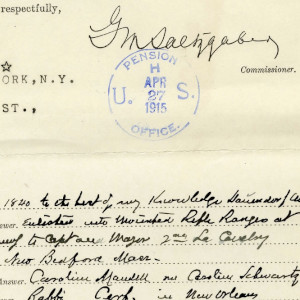
Kaufman Mandell was born in Dauendorf, France, and immigrated to the United States in 1854. He enlisted as a Private in Read’s Company, 3rd MA Cavalry, on September 29, 1861, using the alias Henry F. Williamson to conceal his enlistment from his family.
Mandell rose to Sergeant in 1862, becoming Captain of Company A, 1st LA Cavalry (US) later that year, and was promoted to Major of the 2nd LA Cavalry (US) in 1864. Initially dishonorably dismissed in September 1864 for declining to appear before a review board, his dismissal was revoked in 1865, granting him an honorable discharge retroactively.
Mandell married Caroline Schwartz in New Orleans, and they had seven children. A prominent retired New York exporter, Mandell was a well-known Miami resident later in life. He was cremated following his death in Miami in 1933.
Mandell rose to Sergeant in 1862, becoming Captain of Company A, 1st LA Cavalry (US) later that year, and was promoted to Major of the 2nd LA Cavalry (US) in 1864. Initially dishonorably dismissed in September 1864 for declining to appear before a review board, his dismissal was revoked in 1865, granting him an honorable discharge retroactively.
Mandell married Caroline Schwartz in New Orleans, and they had seven children. A prominent retired New York exporter, Mandell was a well-known Miami resident later in life. He was cremated following his death in Miami in 1933.
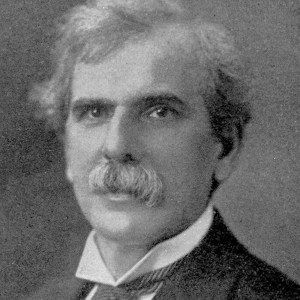
Leopold Markbreit
Captain
Union
OH
28th OH Infantry
Practiced law with future President Rutherford B. Hayes; later served as U.S. Minister to Bolivia and Treasurer of Cincinnati; close friend of Theodore Roosevelt
Preview
Leopold Markbreit, born in Vienna, Austria, was the son of Leopold Markbreit and Jane Abele.
Admitted to the Ohio bar in 1861, Markbreit briefly practiced law with future President Rutherford B. Hayes before enlisting as a 2nd Sergeant in the 28th OH Infantry on June 13, 1861. Despite agreeing to manage their law office, Markbreit joined the war effort, surprising Hayes at the Battle of Carnifex Ferry. Hayes initially objected but relented after witnessing Markbreit’s performance. Markbreit rose to the rank of Captain and was taken prisoner at Craig’s Creek in December 1863, enduring harsh conditions at Libby Prison. His brother-in-law, Frederick Hassaurek, U.S. Minister to Ecuador, helped secure his release. Markbreit was discharged in 1865.
Markbreit later served as U.S. Minister to Bolivia (appointed by President Grant), treasurer of Cincinnati (under President Arthur), and maintained a close friendship with Theodore Roosevelt, even visiting the White House as Roosevelt’s guest. He married Bertha Fieback in 1881 and became Mayor of Cincinnati in 1908, serving until his death in 1909. Markbreit is buried at Spring Grove Cemetery.
Admitted to the Ohio bar in 1861, Markbreit briefly practiced law with future President Rutherford B. Hayes before enlisting as a 2nd Sergeant in the 28th OH Infantry on June 13, 1861. Despite agreeing to manage their law office, Markbreit joined the war effort, surprising Hayes at the Battle of Carnifex Ferry. Hayes initially objected but relented after witnessing Markbreit’s performance. Markbreit rose to the rank of Captain and was taken prisoner at Craig’s Creek in December 1863, enduring harsh conditions at Libby Prison. His brother-in-law, Frederick Hassaurek, U.S. Minister to Ecuador, helped secure his release. Markbreit was discharged in 1865.
Markbreit later served as U.S. Minister to Bolivia (appointed by President Grant), treasurer of Cincinnati (under President Arthur), and maintained a close friendship with Theodore Roosevelt, even visiting the White House as Roosevelt’s guest. He married Bertha Fieback in 1881 and became Mayor of Cincinnati in 1908, serving until his death in 1909. Markbreit is buried at Spring Grove Cemetery.
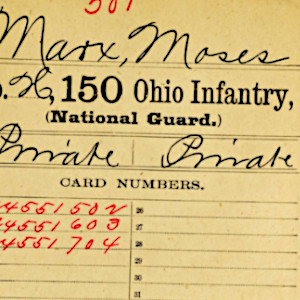
Moses Marx was born in New York City and worked as a baker prior to the Civil War. He enlisted as a Private in Battery B, 1st Ohio Light Artillery, on August 5, 1862, but was discharged in March 1863 due to inflammatory rheumatism, likely from exposure during the Battle of Stones River. He applied for an invalid pension that June. Marx re-enlisted on May 2, 1864, joining Company H, 150th Ohio Infantry (National Guard), alongside his brother Edward. Both were discharged on August 23, 1864, in Cleveland, OH.
Marx was married to Caroline (Carrie) Strauss by Rabbi G. M. Cohen on January 29, 1872, in Cleveland, where they raised two sons, Joseph and Sidney. By 1880, they lived with Edward and his family. Marx died on May 18, 1882, at age 37 and was buried in the Willet Street Cemetery, a Jewish cemetery in Cleveland. A member of Montefiore Lodge of B’nai B’rith, his death was noted in The American Israelite.
Marx was married to Caroline (Carrie) Strauss by Rabbi G. M. Cohen on January 29, 1872, in Cleveland, where they raised two sons, Joseph and Sidney. By 1880, they lived with Edward and his family. Marx died on May 18, 1882, at age 37 and was buried in the Willet Street Cemetery, a Jewish cemetery in Cleveland. A member of Montefiore Lodge of B’nai B’rith, his death was noted in The American Israelite.

Jewish Soldier Leopold Masius faced a life-altering moment during the Civil War. At the Second Battle of Ream's Station on August 24, 1864, he endured a gunshot wound to his right forearm. Because army surgeons could not repair the damage, the majority of his lower arm had to be removed. Despite this profound loss, Masius demonstrated resilience, receiving an artificial limb from the US government after submitting this tintype along with his artificial limb application.
He continued to persevere post-war, becoming a merchant and an active member of the Hebrew Union Veterans Association. His life, marked by the physical toll of war, tells a story of overcoming adversity and adapting to new challenges. Masius, who died in 1897, rests in Mount Zion Cemetery in Maspeth, NY.
He continued to persevere post-war, becoming a merchant and an active member of the Hebrew Union Veterans Association. His life, marked by the physical toll of war, tells a story of overcoming adversity and adapting to new challenges. Masius, who died in 1897, rests in Mount Zion Cemetery in Maspeth, NY.
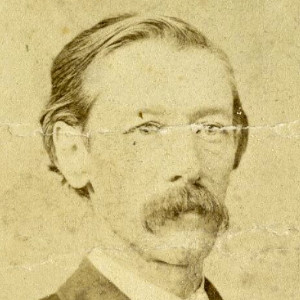
Adolph Henry Mayer was born in Philadelphia, PA, to Elias Mayer and Abby Ancker. He married Rose Adelaide Phillipson in Cincinnati, OH, on November 1, 1848. His brother, Louis H. Mayer, also a Union veteran, provided critical support for Rose's widow’s pension claim.
Mayer served as a major in the 4th New Mexico Infantry and the 1st New Mexico Cavalry. His health declined during his second enlistment, leading to a furlough. On May 1, 1863, he was assigned to temporary duty in Philadelphia's Assistant Provost Marshal General's Office, reportedly at President Lincoln's personal direction to ensure access to skilled medical care. Correspondence from John Hay, Lincoln’s secretary, confirms the President’s endorsement of Mayer's extended leave due to his poor health.
After the war, Mayer headed the Freedmen's Bureau in Liberty, TX, and later worked for the IRS in Bryan, TX—the only employer willing to hire a former Union soldier. Suffering from advanced consumption, Mayer took his own life on April 19, 1869, in Bryan, TX, to escape his terminal illness.
Mayer was buried in the Dispersed of Judah Cemetery in New Orleans, LA, after his remains were moved from Bryan. His death reflects the personal toll of service and postwar hardship faced by many veterans.
Mayer served as a major in the 4th New Mexico Infantry and the 1st New Mexico Cavalry. His health declined during his second enlistment, leading to a furlough. On May 1, 1863, he was assigned to temporary duty in Philadelphia's Assistant Provost Marshal General's Office, reportedly at President Lincoln's personal direction to ensure access to skilled medical care. Correspondence from John Hay, Lincoln’s secretary, confirms the President’s endorsement of Mayer's extended leave due to his poor health.
After the war, Mayer headed the Freedmen's Bureau in Liberty, TX, and later worked for the IRS in Bryan, TX—the only employer willing to hire a former Union soldier. Suffering from advanced consumption, Mayer took his own life on April 19, 1869, in Bryan, TX, to escape his terminal illness.
Mayer was buried in the Dispersed of Judah Cemetery in New Orleans, LA, after his remains were moved from Bryan. His death reflects the personal toll of service and postwar hardship faced by many veterans.

Dr. Nathan Mayer was a trailblazing figure in multiple realms. A graduate of the Cincinnati Medical College and an early Jewish novelist in America, Mayer became a prominent doctor, writer, and orator.
During the Civil War, Mayer's medical prowess shone as he served as a field surgeon in notable battles, even turning a farmhouse into a makeshift hospital at Antietam. His dedication led to promotions, but he also endured imprisonment and contracted yellow fever.
Post-war, Mayer practiced medicine in Hartford, CT, while also becoming a respected dramatic and musical critic for The Hartford Times for over four decades. Renowned for his eloquent speeches on loyalty and patriotism, he left a lasting impact, highlighted by a poem he performed at the dedication of a monument for his regiment.
Upon his death, Dr. Mayer's funeral, though adhering to Jewish traditions, featured an abundance of flowers, symbolizing his love for nature. A multifaceted individual, he left behind a legacy as a medical professional, writer, and influential community leader, buried in Beth Israel Cemetery in Hartford, CT.
During the Civil War, Mayer's medical prowess shone as he served as a field surgeon in notable battles, even turning a farmhouse into a makeshift hospital at Antietam. His dedication led to promotions, but he also endured imprisonment and contracted yellow fever.
Post-war, Mayer practiced medicine in Hartford, CT, while also becoming a respected dramatic and musical critic for The Hartford Times for over four decades. Renowned for his eloquent speeches on loyalty and patriotism, he left a lasting impact, highlighted by a poem he performed at the dedication of a monument for his regiment.
Upon his death, Dr. Mayer's funeral, though adhering to Jewish traditions, featured an abundance of flowers, symbolizing his love for nature. A multifaceted individual, he left behind a legacy as a medical professional, writer, and influential community leader, buried in Beth Israel Cemetery in Hartford, CT.
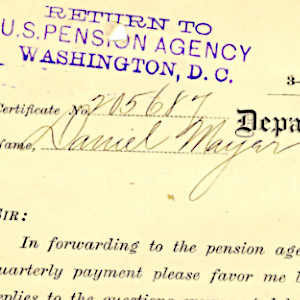
Dr. Daniel Mayer was born in Germany and immigrated to the United States before the Civil War. A medical doctor and publisher of a German-language newspaper in Pomeroy, Ohio, Mayer joined the Union Army in 1861 as Assistant Surgeon with the 5th WV Infantry. He served until 1864, expressing pride in his military service and disdain for those who avoided their patriotic duty, as noted in a letter he wrote to the American Israelite.
After the war, Mayer settled in Charleston, WV, where he married Addie Walker, a Jewish convert, and had ten children. He earned a law degree, becoming a county prosecutor, civil commissioner, and Commissioner of Immigration, helping European Jews settle in the Charleston area. In the 1880s, he was elected twice to the West Virginia legislature as a Republican, becoming the first Jewish representative in the state’s history. The American Israelite praised his integrity and noted his early studies under Rabbi Isaac Wise.
In 1896, President William McKinley, a wartime friend, appointed Mayer U.S. Consul to Argentina, a role he held under McKinley and Theodore Roosevelt. His wife, Addie, died on their return voyage in 1904 and was buried at sea. Mayer later married Olive Brumbach in 1907.
Mayer’s accomplishments also included serving as president of the West Virginia State Medical Association and State Commander of the Grand Army of the Republic of West Virginia. He died in 1910 at Cincinnati’s Jewish Hospital and was buried in Charleston’s Spring Hill Cemetery in his Union uniform, as he had requested.
After the war, Mayer settled in Charleston, WV, where he married Addie Walker, a Jewish convert, and had ten children. He earned a law degree, becoming a county prosecutor, civil commissioner, and Commissioner of Immigration, helping European Jews settle in the Charleston area. In the 1880s, he was elected twice to the West Virginia legislature as a Republican, becoming the first Jewish representative in the state’s history. The American Israelite praised his integrity and noted his early studies under Rabbi Isaac Wise.
In 1896, President William McKinley, a wartime friend, appointed Mayer U.S. Consul to Argentina, a role he held under McKinley and Theodore Roosevelt. His wife, Addie, died on their return voyage in 1904 and was buried at sea. Mayer later married Olive Brumbach in 1907.
Mayer’s accomplishments also included serving as president of the West Virginia State Medical Association and State Commander of the Grand Army of the Republic of West Virginia. He died in 1910 at Cincinnati’s Jewish Hospital and was buried in Charleston’s Spring Hill Cemetery in his Union uniform, as he had requested.
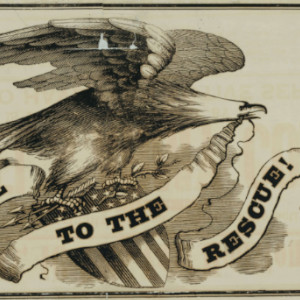
William Mayer
Lieutenant Colonel
Union
NY
175th NY Infantry
High Ranking Officer; Praised by President Abraham Lincoln for "Acting Commander at the Arsenal" during the New York City Draft Riots
Preview
William Mayer, born in Vienna, Austria, arrived in New York City after serving in the Austrian Navy. Settling with his family in New York City, Mayer became and officer during the Civil War.
Despite initially planning to raise the 171st NY Infantry, Mayer ended up serving as Lieutenant Colonel in the 175th NY Infantry. His notable actions during the New York City Draft Riots earned him praise from President Lincoln, who lauded Mayer as a key figure in suppressing the violence.
Post-war, Mayer transitioned into a successful German-language newspaper publisher, acquiring and consolidating several publications. His ventures extended to Germany, where he became involved in linotype machine patents. Mayer maintained ties to America, returning regularly to New York City. Mayer died in Berlin in 1906.
Despite initially planning to raise the 171st NY Infantry, Mayer ended up serving as Lieutenant Colonel in the 175th NY Infantry. His notable actions during the New York City Draft Riots earned him praise from President Lincoln, who lauded Mayer as a key figure in suppressing the violence.
Post-war, Mayer transitioned into a successful German-language newspaper publisher, acquiring and consolidating several publications. His ventures extended to Germany, where he became involved in linotype machine patents. Mayer maintained ties to America, returning regularly to New York City. Mayer died in Berlin in 1906.
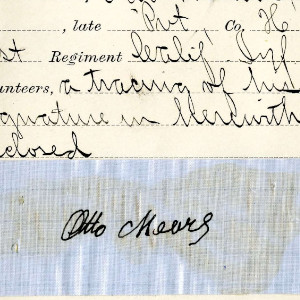
Otto Mears, born in Russia, was orphaned as a child and sent to the United States to live with relatives. When he failed to locate his uncle in California, he became homeless and destitute at a young age. Mears enlisted in the 1st CA Infantry in May of 1861. He was later remembered by a comrade as one of the four Jews that served in company H.
Mears gained prominence in Colorado after the war, becoming a presidential elector in 1876 and as a member of Colorado's first state legislator. He played a role as a negotiator with the Ute Indians, ultimately leading to their removal from Colorado following the Meeker Incident—a deadly uprising in which Nathan Meeker, an Indian Agent who tried to force the Utes to change their traditional way of life, was killed in 1879.
Mears went on to play a crucial role in the construction of roads and railroads in Colorado, serving as the president of the Denver & Rio Grande Western Railroad (D&RGW) for several years. In recognition of his achievements, the Colorado legislature unanimously voted to hang a portrait of Mears in the dome of the State Capitol and he was appointed as a state capitol commissioner.
In death, Mears was remembered for his philanthropy and generosity. A 1931 obituary in the Wisconsin Jewish Chronicle described him as a liberal contributor to Jewish causes. He was cremated but has a cenotaph at the Hillside Cemetery in Silverton, CO.
Mears gained prominence in Colorado after the war, becoming a presidential elector in 1876 and as a member of Colorado's first state legislator. He played a role as a negotiator with the Ute Indians, ultimately leading to their removal from Colorado following the Meeker Incident—a deadly uprising in which Nathan Meeker, an Indian Agent who tried to force the Utes to change their traditional way of life, was killed in 1879.
Mears went on to play a crucial role in the construction of roads and railroads in Colorado, serving as the president of the Denver & Rio Grande Western Railroad (D&RGW) for several years. In recognition of his achievements, the Colorado legislature unanimously voted to hang a portrait of Mears in the dome of the State Capitol and he was appointed as a state capitol commissioner.
In death, Mears was remembered for his philanthropy and generosity. A 1931 obituary in the Wisconsin Jewish Chronicle described him as a liberal contributor to Jewish causes. He was cremated but has a cenotaph at the Hillside Cemetery in Silverton, CO.
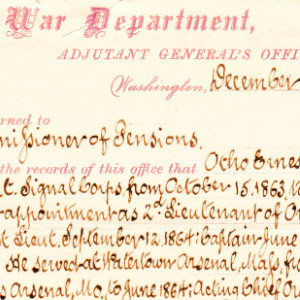
Otho Ernest Michaelis
1st Lieutenant
Union
NY; US Army
23rd NY National Guard (30 Days, 1863); US Army, Signal Corps; US Army, Ordnance Department
Preview
Otho Ernest Michaelis Sr. was born in Dessau, Duchy of Anhalt-Dessau (now Germany). A career military officer, he served in the Union Army during the Civil War alongside his father, Sergeant Emil M. Michaelis, and remained in service until his death.
Michaelis enlisted as a 2nd Lieutenant in the US Signal Corps on October 15, 1863, and transferred to the Ordnance Department the same year. He rose steadily through the ranks, serving at arsenals in Watertown, St. Louis, Watervliet, and Detroit, and as Assistant Chief of Ordnance for the Department of the Cumberland in 1864. He was promoted to 1st Lieutenant (1864), Captain (1874), and Major (1889). His career earned him mention in an 1890 article, "Jews in Army and Navy."
Michaelis married Kate Kercheval Woodbridge in 1868 and they had nine children. Their son Francis was a godchild of Professor Samuel Pierpont Langley, a renowned astrophysicist who served as Secretary of the Smithsonian Institute and founded the Smithsonian Astrophysical Observatory. Another son, Otho Jr., was nominated to be a second lieutenant of infantry in 1902.
Michaelis died on May 1, 1890, while commanding the US Kennebec Arsenal in Augusta, ME, only a few short months after attempting to rescue two of his children after they fell through ice on a pond. He was able to reach and save his son Frank before falling in himself and becoming unconscious. His daughter Margaret drowned. He was rescued and recovered, but his death was attributed to complications from that incident. He is buried in the Forest Grove Cemetery in Augusta, ME.
Michaelis enlisted as a 2nd Lieutenant in the US Signal Corps on October 15, 1863, and transferred to the Ordnance Department the same year. He rose steadily through the ranks, serving at arsenals in Watertown, St. Louis, Watervliet, and Detroit, and as Assistant Chief of Ordnance for the Department of the Cumberland in 1864. He was promoted to 1st Lieutenant (1864), Captain (1874), and Major (1889). His career earned him mention in an 1890 article, "Jews in Army and Navy."
Michaelis married Kate Kercheval Woodbridge in 1868 and they had nine children. Their son Francis was a godchild of Professor Samuel Pierpont Langley, a renowned astrophysicist who served as Secretary of the Smithsonian Institute and founded the Smithsonian Astrophysical Observatory. Another son, Otho Jr., was nominated to be a second lieutenant of infantry in 1902.
Michaelis died on May 1, 1890, while commanding the US Kennebec Arsenal in Augusta, ME, only a few short months after attempting to rescue two of his children after they fell through ice on a pond. He was able to reach and save his son Frank before falling in himself and becoming unconscious. His daughter Margaret drowned. He was rescued and recovered, but his death was attributed to complications from that incident. He is buried in the Forest Grove Cemetery in Augusta, ME.
Israel Moses
Lieutenant Colonel
Union
NY; US Army
72nd NY Infantry; US Army, Medical Department
Promoted to Lieutenant Colonel in 1865 for meritorious service; Invented an ambulance wagon and a bullet extractor
Preview
Dr. Israel Moses was born in New York City to Joshua Moses and Sarah Rodriguez Brandon. A graduate of Columbia College (1841) and the College of Physicians and Surgeons (1845), he served as an Assistant Surgeon in the US Army during the Mexican-American War, resigning in 1855 due to health issues. He later became an Attending Surgeon at the newly opened "Jews' Hospital in New York," now Mount Sinai.
During the Civil War, Moses joined the 72nd NY Infantry as a Lieutenant Colonel in June 1861 and was wounded at Williamsburg in May 1862. In October 1862, he was commissioned a Major Surgeon in the US Army, later receiving a brevet promotion to Lieutenant Colonel in 1865 for meritorious service. He also invented a surgical instrument for bullet extraction.
In 1864, Moses faced court martial over a dispute regarding a patient’s discharge but was ultimately reprimanded and allowed to continue his service.
Moses died in Philadelphia in 1870 and was buried in Cypress Hills Cemetery, Brooklyn, NY.
During the Civil War, Moses joined the 72nd NY Infantry as a Lieutenant Colonel in June 1861 and was wounded at Williamsburg in May 1862. In October 1862, he was commissioned a Major Surgeon in the US Army, later receiving a brevet promotion to Lieutenant Colonel in 1865 for meritorious service. He also invented a surgical instrument for bullet extraction.
In 1864, Moses faced court martial over a dispute regarding a patient’s discharge but was ultimately reprimanded and allowed to continue his service.
Moses died in Philadelphia in 1870 and was buried in Cypress Hills Cemetery, Brooklyn, NY.
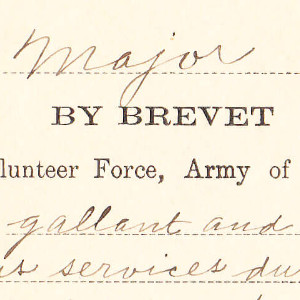
Isaac Moses
Major and Assistant Adjutant General
Union
US Army
Endorssed by President Abraham Lincoln as “a most competent & worthy man.”
Preview
Isaac Moses was born in New York into a prominent Jewish family. His grandfather, Isaac Moses (1742–1818), was a Revolutionary War patriot who helped fund and supply U.S. forces. Moses and his twin brother, along with their sibling Dr. Israel Moses, served the Union during the Civil War. Both Isaac and Israel achieved the rank of Lieutenant Colonel by Brevet.
Moses’s connections included Francis P. Blair Sr., a powerful political advisor who recommended him to President Lincoln for a paymaster position. Although not appointed, Lincoln endorsed Moses, calling him “a most competent & worthy man.” This led to Moses’s commission as Captain and Assistant Adjutant General in the Army of the Potomac in September 1861, specifically requested by General Samuel P. Heintzelman.
Moses earned commendations during the 1862 Peninsular Campaign and was brevetted Major and Lieutenant Colonel for his gallantry at the Battle of Glendale, Virginia. After resigning from the army, he worked as a cotton broker in Galveston and New York.
Moses died in New York City on December 15, 1889, and is buried at Beth Olam Cemetery in Queens.
Moses’s connections included Francis P. Blair Sr., a powerful political advisor who recommended him to President Lincoln for a paymaster position. Although not appointed, Lincoln endorsed Moses, calling him “a most competent & worthy man.” This led to Moses’s commission as Captain and Assistant Adjutant General in the Army of the Potomac in September 1861, specifically requested by General Samuel P. Heintzelman.
Moses earned commendations during the 1862 Peninsular Campaign and was brevetted Major and Lieutenant Colonel for his gallantry at the Battle of Glendale, Virginia. After resigning from the army, he worked as a cotton broker in Galveston and New York.
Moses died in New York City on December 15, 1889, and is buried at Beth Olam Cemetery in Queens.
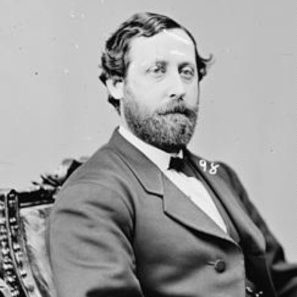
Leonard Myers
Major
Union
PA
9th PA Militia Infantry (1862)
One of the first American Jews in Congress; Close correspondence with President Abraham Lincoln
Preview
Leonard Myers briefly served as a Major in the 9th PA Militia Infantry in 1862. Elected as a Republican to the US House of Representatives in 1862, Myers served five terms during the Civil War and Reconstruction, also acting as a presidential elector in 1896.
A pioneering figure, Myers was one of the first American Jews in Congress, dedicated to safeguarding the rights of various groups including laborers, immigrants, and formerly enslaved people. His close correspondence with President Lincoln included advocating for appointments, supporting appeals, and even receiving a pass to travel to Richmond on the day Lincoln was shot. Myers also championed Jewish soldiers, seeking furloughs and commissions for them.
Post-Congress, Myers specialized in patent law. He died in 1905 and is buried in Philadelphia's De Benneville Family Burial Grounds with his wife, Esther DeBenneville Keim.
A pioneering figure, Myers was one of the first American Jews in Congress, dedicated to safeguarding the rights of various groups including laborers, immigrants, and formerly enslaved people. His close correspondence with President Lincoln included advocating for appointments, supporting appeals, and even receiving a pass to travel to Richmond on the day Lincoln was shot. Myers also championed Jewish soldiers, seeking furloughs and commissions for them.
Post-Congress, Myers specialized in patent law. He died in 1905 and is buried in Philadelphia's De Benneville Family Burial Grounds with his wife, Esther DeBenneville Keim.

Gabriel Netter
Lieutenant Colonel
Union
KY
26th KY Infantry; 15th KY Cavalry
One of Netter’s soldiers, described him as “a French Jew” and praised his calm bravery in battle, calling himself a member of the "Netter Battalion."
Preview
Gabriel Netter, born in Bergheim, France in 1836, was killed in action at Owensboro, KY, on September 19, 1862. He served as a captain in the 26th KY Infantry before becoming a lieutenant colonel in the 15th KY Cavalry. While records exist for his time in the 26th KY, none were found for his service in the 15th KY due to his death before the regiment was officially mustered.
Netter resigned from the 26th KY in June 1862 after a conflict with his superiors, citing a "personal enmity" against him. This coincided with charges of "Insubordinate and Mutinous Language to a Superior Officer" against him. However, Netter was soon tasked with helping to raise the 15th KY Cavalry, where he was killed before his service was officially recorded.
C. B. Mitchell, one of Netter’s soldiers, described him as “a French Jew” and praised his calm bravery in battle, calling himself a member of the "Netter Battalion." Netter was buried in Oak Hill Cemetery, Evansville, IN, by his sister and brother-in-law who lived there.
Netter resigned from the 26th KY in June 1862 after a conflict with his superiors, citing a "personal enmity" against him. This coincided with charges of "Insubordinate and Mutinous Language to a Superior Officer" against him. However, Netter was soon tasked with helping to raise the 15th KY Cavalry, where he was killed before his service was officially recorded.
C. B. Mitchell, one of Netter’s soldiers, described him as “a French Jew” and praised his calm bravery in battle, calling himself a member of the "Netter Battalion." Netter was buried in Oak Hill Cemetery, Evansville, IN, by his sister and brother-in-law who lived there.
Charles Newburgh led a multifaceted life, but it was his role as a translator for the US Bureau of Pensions that left an enduring mark. Born in Oettingen, Bavaria, he enlisted in the Union Army under the alias "Otto Zoeller" and served with distinction, despite sustaining a debilitating injury.
Post-war, Newburgh embarked on a career that spanned over three decades as a translator for the Bureau of Pensions. His unique expertise as the sole Hebrew translator proved invaluable, assisting Jewish soldiers in navigating the intricacies of Civil War pension claims.
Amid bureaucratic duties, Newburgh assumed the title of "Professor," captivating audiences with lectures on comparative religions, often in collaboration with the Washington Secular League.
Newburgh died in 1930 and is buried in the Glenwood Cemetery in Washington, DC. In death, Newburgh's legacy endures, his contributions as a translator immortalized in the annals of history. To date, the Shapell Roster has discovered more than twenty documents Newburgh translated or assisted with while aiding Jewish soldiers in applying for a pension.
Post-war, Newburgh embarked on a career that spanned over three decades as a translator for the Bureau of Pensions. His unique expertise as the sole Hebrew translator proved invaluable, assisting Jewish soldiers in navigating the intricacies of Civil War pension claims.
Amid bureaucratic duties, Newburgh assumed the title of "Professor," captivating audiences with lectures on comparative religions, often in collaboration with the Washington Secular League.
Newburgh died in 1930 and is buried in the Glenwood Cemetery in Washington, DC. In death, Newburgh's legacy endures, his contributions as a translator immortalized in the annals of history. To date, the Shapell Roster has discovered more than twenty documents Newburgh translated or assisted with while aiding Jewish soldiers in applying for a pension.

Leopold C. Newmann was born in Brooklyn, NY, to Charles Newman and Eliza Morange. Commissioned as a captain on May 2, 1861, Newmann joined Company B, 31st NY Infantry. Promoted to lieutenant colonel on July 6, 1862, he was wounded at the Second Battle of Fredericksburg on May 3, 1863, suffering a foot injury that required amputation. Discharged for disability on June 4, he died three days later.
A legend claims President Lincoln visited Newmann on his deathbed, commissioning him as a brigadier general. However, no official records confirm this. Congressman Emanuel Celler's 1930 inquiry to the Bureau of Pensions yielded no evidence of Lincoln’s involvement or a promotion.
Newmann’s funeral, officiated by Rabbi Joel Alexander, was reported in The Israelite. He was buried in Union Field Cemetery, a Jewish cemetery in Queens, NY.
A legend claims President Lincoln visited Newmann on his deathbed, commissioning him as a brigadier general. However, no official records confirm this. Congressman Emanuel Celler's 1930 inquiry to the Bureau of Pensions yielded no evidence of Lincoln’s involvement or a promotion.
Newmann’s funeral, officiated by Rabbi Joel Alexander, was reported in The Israelite. He was buried in Union Field Cemetery, a Jewish cemetery in Queens, NY.
Moritz Pinner
Captain and Assistant Quartermaster
Union
US Army
High Ranking Officer; Appointed by President Abraham Lincoln; Associate of Wendell Phillips; Featured in The New York Times
Preview
Moritz Pinner, a Prussian immigrant and prominent abolitionist editor, diverged from conventional paths during the Civil War by channeling his efforts into a groundbreaking invention. After being recommended by General Philip Kearny and receiving a commission as Captain Assistant Quartermaster in 1861, Pinner resigned to focus on inventing an Ambulance Kitchen.
Pinner explained his dedication to "lessen the sufferings of the wounded on the battlefield and in field hospitals." His invention, as described by The New York Times, featured a versatile wagon with a provision-wagon, a movable cooking-range and baking-oven, ambulance accommodations, a medicine chest, and a dining and amputating table. Praised for its simplicity and compactness, Pinner's invention aimed to be a blessing to the army, especially aiding sick and wounded soldiers in hospitals and on the battlefield. Despite gathering high-ranking officer testimonials and a patent, his plans did not get off the ground.
After the war, Pinner claimed (perhaps tongue in cheek) to have played a role in creating the eight-hour workday. His famous longtime associate, abolitionist Wendell Philips was allegedly pushing for a nine hour workday, but settled on eight after being convinced otherwise by Pinner.
Pinner explained his dedication to "lessen the sufferings of the wounded on the battlefield and in field hospitals." His invention, as described by The New York Times, featured a versatile wagon with a provision-wagon, a movable cooking-range and baking-oven, ambulance accommodations, a medicine chest, and a dining and amputating table. Praised for its simplicity and compactness, Pinner's invention aimed to be a blessing to the army, especially aiding sick and wounded soldiers in hospitals and on the battlefield. Despite gathering high-ranking officer testimonials and a patent, his plans did not get off the ground.
After the war, Pinner claimed (perhaps tongue in cheek) to have played a role in creating the eight-hour workday. His famous longtime associate, abolitionist Wendell Philips was allegedly pushing for a nine hour workday, but settled on eight after being convinced otherwise by Pinner.
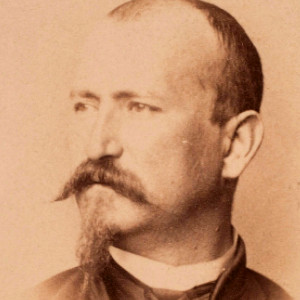
Alfred Morris Raphall, born in England, was the son of Rabbi Morris Jacob Raphall, one of the most prominent rabbis of his time. He was the first rabbi to ever deliver an opening prayer to Congress and was one of only four rabbis to meet with Lincoln in the White House. Alfred enlisted in the 40th NY Infantry during the first months of the Civil War.
Raphall enlisted as a 2nd Lieutenant and was promoted through the ranks. He fought at Gettysburg, where he lost his arm, later earning him the rank of Captain by Brevet "for gallant services" at the battle. He was also later awarded the rank of Major by Brevet "for highly meritorious services while in the field and on detached duty with General Sickles in South America." Post-war, he continued in military service, retiring as a 1st Lieutenant in 1886.
Beyond his military career, Raphall ventured into commerce, serving as a US commercial agent in Mexico. He died in Aguascalientes, Mexico, as reported by The American Israelite.
Raphall enlisted as a 2nd Lieutenant and was promoted through the ranks. He fought at Gettysburg, where he lost his arm, later earning him the rank of Captain by Brevet "for gallant services" at the battle. He was also later awarded the rank of Major by Brevet "for highly meritorious services while in the field and on detached duty with General Sickles in South America." Post-war, he continued in military service, retiring as a 1st Lieutenant in 1886.
Beyond his military career, Raphall ventured into commerce, serving as a US commercial agent in Mexico. He died in Aguascalientes, Mexico, as reported by The American Israelite.
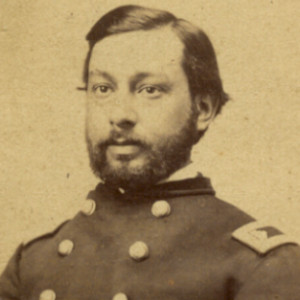
Adolph George Rosengarten
Major
Union
PA; KY
PA Cavalry (Anderson Troop); 4th KY Cavalry; 15th PA Cavalry
Preview
Adolph George Rosengarten was born in Philadelphia, PA and enlisted there, as a 1st Sergeant in the PA Cavalry in October of 1861. He rose through the ranks, accepting commissions in the 4th KY Cavalry and the 15th PA Infantry, ultimately achieving the rank of Major during his service.
Rosengarten was killed in action on December 29, 1862, near Stones River during a skirmish at Wilkinson's Cross Roads. Posthumously, he was awarded the rank of Lieutenant Colonel and later Colonel by Brevet "for gallant and meritorious services in charging and defeating with his battalion of Cavalry a superior force of rebel Cavalry, and for having in a personal rencontre, disarmed and captured a Captain of Texas Rangers."
His brother and fellow soldier, Joseph George Rosengarten, campaigned for him to receive these honorary commissions, which were endorsed by President Ulysses S. Grant and Secretary of War Edwin Stanton.
Rosengarten was killed in action on December 29, 1862, near Stones River during a skirmish at Wilkinson's Cross Roads. Posthumously, he was awarded the rank of Lieutenant Colonel and later Colonel by Brevet "for gallant and meritorious services in charging and defeating with his battalion of Cavalry a superior force of rebel Cavalry, and for having in a personal rencontre, disarmed and captured a Captain of Texas Rangers."
His brother and fellow soldier, Joseph George Rosengarten, campaigned for him to receive these honorary commissions, which were endorsed by President Ulysses S. Grant and Secretary of War Edwin Stanton.
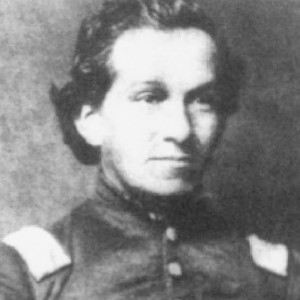
Abraham Rothchild
Captain
Union
KY
15th KY Infantry
Known for his open-mindedness and charity, Rothchild was respected by both Union and Confederate veterans. He was an active member of the Grand Army of the Republic (GAR.)
Preview
Abraham Rothchild, born in Württemberg, Germany, in 1835, immigrated to the U.S. at 16. His family settled in Shelby County, KY, where he enlisted in the Union’s 15th KY Infantry during the Civil War, helping to raise Company B. Starting as a 2nd Corporal, Rothchild rose to Captain after displaying "distinguished gallantry" at the Battle of Stones River.
Rothchild was wounded at Peachtree Creek in 1864 but returned to his regiment after recovering. After the war, he opened a clothing business in Shelbyville and married Sallie M. Kiefer. Known for his open-mindedness and charity, Rothchild was respected by both Union and Confederate veterans. He was an active member of the Grand Army of the Republic (GAR) and promoted tolerance and goodwill throughout his life.
Rothchild was wounded at Peachtree Creek in 1864 but returned to his regiment after recovering. After the war, he opened a clothing business in Shelbyville and married Sallie M. Kiefer. Known for his open-mindedness and charity, Rothchild was respected by both Union and Confederate veterans. He was an active member of the Grand Army of the Republic (GAR) and promoted tolerance and goodwill throughout his life.
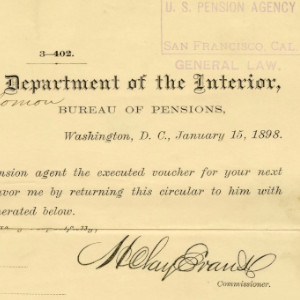
Wounded on the first day of the Battle of Gettysburg, Lieutenant Colonel Edward Selig Salomon was pinned beneath his horse when it was shot down on the battlefield. After being helped off the field and resting for a few hours, he continued to command his regiment for the rest of the battle, despite “several hemorhages [sic], spitting a great deal of blood.” Salomon had an impressive military career that included promotions all the way to Brigadier General.
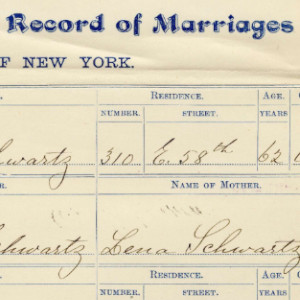
Bernard Schwartz
Lieutenant Colonel
Union
NY
6th NY State Militia (3 Months, 1861); 6th NY National Guard (30 Days, 1863)
Preview
Bernard Schwartz was born in the Austrian Empire to Frederick and Lena Schwartz. He served as an officer in the 6th New York State Militia (later the 6th NY National Guard) before and during the Civil War. Schwartz commanded Company H as a captain during the regiment's three-month service in 1861 and later served as lieutenant colonel during its 30-day federal service in 1863.
Listed among "Jewish officers" by The Jewish Messenger, Schwartz was connected to several Jewish soldiers during the war, including Albert M. Gans, whom he enlisted and supported postwar with employment and an armory position. Soldiers who served under him, including Isaac Kohn, Solomon Simon, Julius Bacharach, and Abraham Shenfield, provided affidavits for his later pension claim.
Schwartz married twice, first to an unnamed spouse who died in 1868, and later to Anna Schick in 1884. Through this marriage, he became the brother-in-law of fellow officer Adolph Wisel.
Schwartz died in Manhattan in 1888. His funeral, attended by former comrades and Jewish community leaders, was noted in The American Hebrew. He is buried in Mount Neboh Cemetery in Queens, NY.
Listed among "Jewish officers" by The Jewish Messenger, Schwartz was connected to several Jewish soldiers during the war, including Albert M. Gans, whom he enlisted and supported postwar with employment and an armory position. Soldiers who served under him, including Isaac Kohn, Solomon Simon, Julius Bacharach, and Abraham Shenfield, provided affidavits for his later pension claim.
Schwartz married twice, first to an unnamed spouse who died in 1868, and later to Anna Schick in 1884. Through this marriage, he became the brother-in-law of fellow officer Adolph Wisel.
Schwartz died in Manhattan in 1888. His funeral, attended by former comrades and Jewish community leaders, was noted in The American Hebrew. He is buried in Mount Neboh Cemetery in Queens, NY.
Herman Arthur Seligson
Lieutenant Colonel
Union
VT
1st VT Infantry (3 Months, 1861); 9th VT Infantry
Had an impressive military career that included promotions up to Lieutenant Colonel
Preview
Herman Arthur Seligson was born in Potsdam, Prussia, where he attended a military academy and briefly served in the Prussian artillery. He later immigrated to the United States, settling in Burlington, VT, before the Civil War.
Seligson's military career was notable, rising through the ranks to Lieutenant Colonel. He enlisted as a Private in the 1st VT Infantry (3 Months) on May 2, 1861, and later joined the 9th VT Infantry as a 1st Lieutenant in May 1862. He commanded a Mountain Howitzer Battery, was captured and paroled at Harpers Ferry, and was promoted to Captain in 1863 and Lieutenant Colonel in 1865. He served as Assistant Provost Marshal and Acting Assistant Inspector General before his discharge on December 20, 1865.
On November 8, 1873, Seligson married Alice Kate Hood at Trinity Church in Washington, DC. They had no children. He lived in Washington, DC, working for a Philadelphia liquor house and as a division chief for the 1890 census.
Seligson died of apoplexy on August 18, 1891, in Baltimore, MD. He was buried with military honors at Arlington National Cemetery.
Seligson's military career was notable, rising through the ranks to Lieutenant Colonel. He enlisted as a Private in the 1st VT Infantry (3 Months) on May 2, 1861, and later joined the 9th VT Infantry as a 1st Lieutenant in May 1862. He commanded a Mountain Howitzer Battery, was captured and paroled at Harpers Ferry, and was promoted to Captain in 1863 and Lieutenant Colonel in 1865. He served as Assistant Provost Marshal and Acting Assistant Inspector General before his discharge on December 20, 1865.
On November 8, 1873, Seligson married Alice Kate Hood at Trinity Church in Washington, DC. They had no children. He lived in Washington, DC, working for a Philadelphia liquor house and as a division chief for the 1890 census.
Seligson died of apoplexy on August 18, 1891, in Baltimore, MD. He was buried with military honors at Arlington National Cemetery.
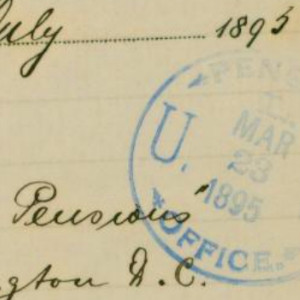
Charles Mayer Sonnenberg, born in Flörsheim, Duchy of Nassau in 1842, ventured to New York at sixteen with just a dollar in his pocket. He enlisted in the 70th NY Infantry in April 1861. In his memoir, he described witnessing the tragic death of comrade and coreligionist Jacob Brunn (1458) at the Battle of Williamsburg.
Following his discharge and a brief return to Germany, he embarked on a journey to South Africa, where he prospered in the diamond trade. Despite initial skepticism, he turned seemingly worthless diamond mines into a fortune, catching the eye of mining magnate and politician Cecil Rhodes. Sonnenberg went on to become one of the few multi-millionaires of his age.
Sonnenberg's success extended to politics and land ownership, becoming a prominent figure in South Africa. His adventures also brought him back to the United States, where he met President McKinley and reunited with his former commander, General Daniel Sickles.
Sonnenberg died in 1912. His family continued his tradition of service, with his grandson serving in the Royal Air Force during World War I.
Following his discharge and a brief return to Germany, he embarked on a journey to South Africa, where he prospered in the diamond trade. Despite initial skepticism, he turned seemingly worthless diamond mines into a fortune, catching the eye of mining magnate and politician Cecil Rhodes. Sonnenberg went on to become one of the few multi-millionaires of his age.
Sonnenberg's success extended to politics and land ownership, becoming a prominent figure in South Africa. His adventures also brought him back to the United States, where he met President McKinley and reunited with his former commander, General Daniel Sickles.
Sonnenberg died in 1912. His family continued his tradition of service, with his grandson serving in the Royal Air Force during World War I.
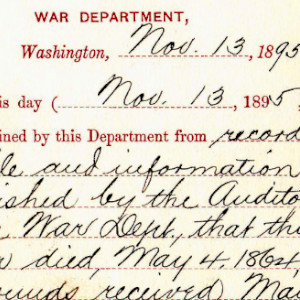
Marcus M. Spiegel
Colonel
Union
OH
67th OH Infantry; 120th OH Infantry
One of the highest-ranking Jewish officers in the Union Army
Preview
Marcus M. Spiegel, born in Worms, Hesse, was the son of Rabbi Moses Spiegel and Regina Herz. He fought in the 1848 revolution against Prussian rule and then fled to the United States, joining his family in Manhattan before settling in Ohio. In 1853, he married Caroline Hamlin, a Quaker who converted to Judaism. Spiegel worked as a peddler before entering military service during the Civil War.
Spiegel rose from 2nd Lieutenant to Colonel of the 120th Ohio Infantry. His letters home reveal his evolving views on abolition during the war. Wounded at the Siege of Jackson in 1863, he continued to serve, aiding recruitment efforts while recovering.
On May 3, 1864, Spiegel was mortally wounded during an ambush aboard the steamboat City Belle on the Red River. He died the next day and was reportedly buried near Wilson's Landing, LA, though his remains were never recovered.
Marcus Spiegel died as one of the highest-ranking Jewish officers in the Union Army. He is memorialized at Chicago’s Jewish Graceland Cemetery.
Spiegel rose from 2nd Lieutenant to Colonel of the 120th Ohio Infantry. His letters home reveal his evolving views on abolition during the war. Wounded at the Siege of Jackson in 1863, he continued to serve, aiding recruitment efforts while recovering.
On May 3, 1864, Spiegel was mortally wounded during an ambush aboard the steamboat City Belle on the Red River. He died the next day and was reportedly buried near Wilson's Landing, LA, though his remains were never recovered.
Marcus Spiegel died as one of the highest-ranking Jewish officers in the Union Army. He is memorialized at Chicago’s Jewish Graceland Cemetery.

Joseph Henry Stiner was born in Manhattan, NYC, where he began his career as a reporter for the New York Sun. During the Civil War, he served as a Captain in the 9th and 59th NY Infantry regiments.
Post-war, Stiner received a handwritten note from President Abraham Lincoln, recommending him to Secretary of the Treasury William P. Fessenden. This interaction with Lincoln clearly left a lasting impression, as Steiner kept the treasured letter, adding the date when he received it personally from Lincoln in 1864.
Later, Stiner played a pivotal role in establishing the Hebrew Union Veterans Association (HUVA), uniting Jewish veterans of the Civil War era. As its first chairman, he championed honoring fallen comrades and supporting their families. His influence also extended to other veterans' circles as the Commander of the Philip Kearny Post, G.A.R., Post No. 8.
Transitioning into law, Stiner's ties to Tammany Hall propelled him to become a justice in the Eighth Municipal Court. He retained his position as justice and a member of the Tammany Hall General Committee until his death in 1902. Steiner is buried in the Machpelah Cemetery in Queens, NY.
Post-war, Stiner received a handwritten note from President Abraham Lincoln, recommending him to Secretary of the Treasury William P. Fessenden. This interaction with Lincoln clearly left a lasting impression, as Steiner kept the treasured letter, adding the date when he received it personally from Lincoln in 1864.
Later, Stiner played a pivotal role in establishing the Hebrew Union Veterans Association (HUVA), uniting Jewish veterans of the Civil War era. As its first chairman, he championed honoring fallen comrades and supporting their families. His influence also extended to other veterans' circles as the Commander of the Philip Kearny Post, G.A.R., Post No. 8.
Transitioning into law, Stiner's ties to Tammany Hall propelled him to become a justice in the Eighth Municipal Court. He retained his position as justice and a member of the Tammany Hall General Committee until his death in 1902. Steiner is buried in the Machpelah Cemetery in Queens, NY.
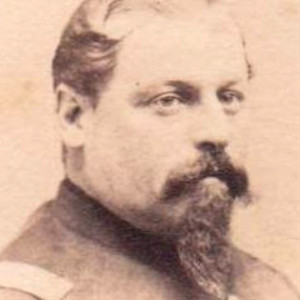
Max A. Thoman
Lieutenant Colonel
Union
NY
59th NY Infantry
One of the highest ranking Jewish soldiers of the Civil War, attaining the rank of Lieutenant Colonel
Preview
Max A. Thoman rose to become one of the highest ranking Jewish soldiers of the Civil War, attaining the rank of Lieutenant Colonel before his untimely death at the Battle of Gettysburg.
Before joining the Union cause, Thoman had already seen extensive military action, with a colorful history of service in various conflicts across Europe and Central America. His expertise and multilingual abilities set him apart, earning him rapid promotions and recognition among his peers.
Thoman's determination to remain in service led him to write compelling letters to General Daniel Butterfield, highlighting his remarkable experiences and skills. These efforts secured his position and eventual promotion to Lieutenant Colonel.
Tragically, Thoman met his end on the battlefield at Gettysburg, succumbing to wounds sustained in the line of duty. His final wish to be buried near where he fell was honored, with his resting place in the Gettysburg National Cemetery, a testament to his bravery and sacrifice as one of the highest-ranking soldiers interred at the site.
Before joining the Union cause, Thoman had already seen extensive military action, with a colorful history of service in various conflicts across Europe and Central America. His expertise and multilingual abilities set him apart, earning him rapid promotions and recognition among his peers.
Thoman's determination to remain in service led him to write compelling letters to General Daniel Butterfield, highlighting his remarkable experiences and skills. These efforts secured his position and eventual promotion to Lieutenant Colonel.
Tragically, Thoman met his end on the battlefield at Gettysburg, succumbing to wounds sustained in the line of duty. His final wish to be buried near where he fell was honored, with his resting place in the Gettysburg National Cemetery, a testament to his bravery and sacrifice as one of the highest-ranking soldiers interred at the site.
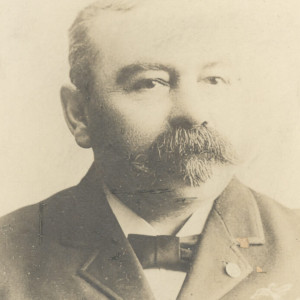
Joseph Unger
Sergeant
Union
NY
20th NY Infantry
Co-founder of the Hebrew Union Veterans Association (HUVA); Was pardoned by President Abraham Lincoln
Preview
Joseph Unger enlisted as a Corporal in Company F of the 20th NY Infantry in 1861. He was one of 202 members of his regiment charged with mutiny in 1863. His defiance against unjust orders led to a historic pardon by President Lincoln, securing honorable discharges for him and his comrades.
Beyond his military service, Unger was a co-founder of the Hebrew Union Veterans Association (HUVA), dedicated to honoring Jewish veterans of the Civil War. He also presided over the League of German Veterans of the Union Army.
Despite personal trials, including three marriages and the deaths of his wives, Unger's commitment to his community endured. He died in 1909 and is buried in the Machpelah Cemetery in New York.
Beyond his military service, Unger was a co-founder of the Hebrew Union Veterans Association (HUVA), dedicated to honoring Jewish veterans of the Civil War. He also presided over the League of German Veterans of the Union Army.
Despite personal trials, including three marriages and the deaths of his wives, Unger's commitment to his community endured. He died in 1909 and is buried in the Machpelah Cemetery in New York.
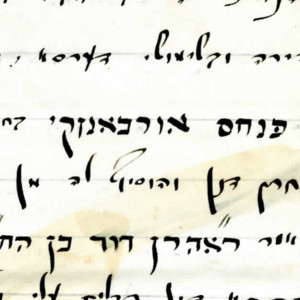
David Urbansky earned the Congressional Medal of Honor for gallantry at Shiloh and Vicksburg. At Vicksburg, he risked his life to rescue his wounded commanding officer from the perilous "no-man’s land." The decision to award him the Medal of Honor was a twist of fate, stemming from a lost, less-prestigious medal. His inscription read, “The Congress to Pvt. David Orbanski… for gallantry at Shilo and Vicksburg.”
Post-service, Urbansky married and worked as a clothing dealer. His wife Rachel sumbmitted a Ketubah to the Bureau of Pensions that recorded their marriage. He died in 1897, and after being initially buried in Piqua, OH, he was later moved to the family plot in Walnut Hills United Jewish Cemetery. In 2000, the US Government honored him with a new headstone, commemorating his distinguished service.
Post-service, Urbansky married and worked as a clothing dealer. His wife Rachel sumbmitted a Ketubah to the Bureau of Pensions that recorded their marriage. He died in 1897, and after being initially buried in Piqua, OH, he was later moved to the family plot in Walnut Hills United Jewish Cemetery. In 2000, the US Government honored him with a new headstone, commemorating his distinguished service.
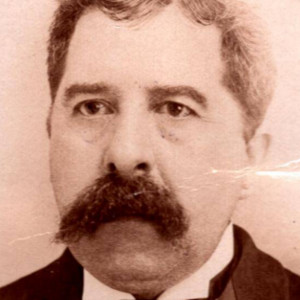
Marcus W. Waterman, born in Bohemia, enlisted at age 16 in the 11th NH Infantry on December 22, 1863. He was reported missing in action at the Battle of Spotsylvania Court House on May 12, 1864, his NH service record contains no further service details.
On March 6, 1865, Waterman re-enlisted under the alias John Miller as a substitute in the 3rd US Infantry, serving honorably for a year before discharge in St. Louis, MO. In an 1892 pension declaration, he claimed a head injury at Spotsylvania caused memory loss, leading to his care by a farmer’s family near Washington, D.C. He said he later enlisted as a substitute for the farmer’s son out of gratitude. However, a War Department investigation found no evidence of a wound and ruled him a deserter.
Waterman married Josephine Ehrlich around 1874. He died in 1914 and is buried in the Mayfield Jewish Cemetery in Cleveland Heights, OH.
On March 6, 1865, Waterman re-enlisted under the alias John Miller as a substitute in the 3rd US Infantry, serving honorably for a year before discharge in St. Louis, MO. In an 1892 pension declaration, he claimed a head injury at Spotsylvania caused memory loss, leading to his care by a farmer’s family near Washington, D.C. He said he later enlisted as a substitute for the farmer’s son out of gratitude. However, a War Department investigation found no evidence of a wound and ruled him a deserter.
Waterman married Josephine Ehrlich around 1874. He died in 1914 and is buried in the Mayfield Jewish Cemetery in Cleveland Heights, OH.
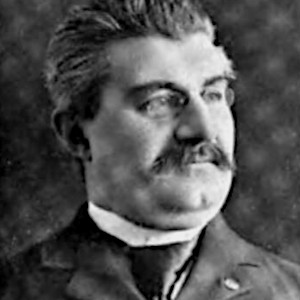
Solomon Baird Wolfe
Major Surgeon
Union
KY, OH, US
US Army; Medical Department; 7th KY Cavalry; 165th OH Infantry (National Guard); 181st OH Infantry
Preview
"Dr. Solomon Baird Wolff, born in Baltimore in 1845, grew up in Cincinnati and briefly attended Shelby Medical College before enlisting as a Hospital Steward in the US Army in Kentucky. After two years in military hospitals, he was appointed Assistant Surgeon in the 7th KY Cavalry in 1863. However, Wolff resigned just four months later due to the deaths of his mother, sister, and bride, citing the need to care for his younger siblings. Interestingly, a letter from 1865 suggests his mother was still alive at that time.
Wolff soon returned to service as an Acting Assistant Surgeon with the US Army and later served as a surgeon with the 165th and 181st OH Infantry. Aged just 19, Wolff was responsible for overseeing amputations and medical care, notably as Post Surgeon in Paducah, KY, in 1865. After the war, he practiced medicine in Baltimore, joined the King David Lodge of B’nai B’rith, and eventually moved to New York. In an odd twist, Wolff died in 1905 in the offices of the Connecticut Mutual Life Insurance Company, not as an employee but as an applicant.
His son, S. Herbert Wolfe, mirrored his father’s paths in both the military and insurance fields. A well-known actuary before World War I, Herbert played a key role in including life insurance in the War Risk Insurance Act. He later became a Colonel and received the Distinguished Service Cross and the French Legion of Honor. After the war, President Harding appointed him Brigadier General of the Finance Reserve Corps. In 1922, Herbert wrote In Service, reflecting on his military experiences and his father’s Civil War legacy, lamenting the loss of his father’s service records in a shipwreck."
Wolff soon returned to service as an Acting Assistant Surgeon with the US Army and later served as a surgeon with the 165th and 181st OH Infantry. Aged just 19, Wolff was responsible for overseeing amputations and medical care, notably as Post Surgeon in Paducah, KY, in 1865. After the war, he practiced medicine in Baltimore, joined the King David Lodge of B’nai B’rith, and eventually moved to New York. In an odd twist, Wolff died in 1905 in the offices of the Connecticut Mutual Life Insurance Company, not as an employee but as an applicant.
His son, S. Herbert Wolfe, mirrored his father’s paths in both the military and insurance fields. A well-known actuary before World War I, Herbert played a key role in including life insurance in the War Risk Insurance Act. He later became a Colonel and received the Distinguished Service Cross and the French Legion of Honor. After the war, President Harding appointed him Brigadier General of the Finance Reserve Corps. In 1922, Herbert wrote In Service, reflecting on his military experiences and his father’s Civil War legacy, lamenting the loss of his father’s service records in a shipwreck."

Joseph C. Wolff
Bugler
Union
NY
2nd NY Cavalry
Founding member of Hebrew Union Veterans' Association (HUVA); Active member of Tammany Hall and in Democratic Party
Preview
Joseph C. Wolff led a remarkable life that spanned military service, legal practice, and political activism. At just fifteen years old, Wolff enlisted as a Private in Company I of the 2nd NY Cavalry during the Civil War. Convincing his mother to sign his enlistment contract, she gave her consent to his service as a minor. He was promoted to Bugler, and served as such until the end of the war.
Following his military service, Wolff pursued higher education at Columbia Law School, graduating in 1874. He then established a successful law practice, championing the causes of various professional groups and unions, including butchers' associations and cigar makers during strikes.
Wolff's legal expertise propelled him into politics, where he became a prominent figure within Tammany Hall and the Democratic Party. Elected to the New York State Assembly and later to the State Senate, he used his position to advocate for social causes, including securing the charter for the Hebrew Infant Asylum of New York City.
In addition to his legal and political endeavors, Wolff was a passionate advocate for Jewish Civil War veterans. He was a co-founder of the Hebrew Union Veterans Association (HUVA), which was dedicated to honoring fallen comrades and supporting their families. Tragically, Wolff's life was cut short by stomach cancer at the age of 47, just months after the founding of HUVA. He was laid to rest in Linden Hill Jewish Cemetery in Queens, NY.
Following his military service, Wolff pursued higher education at Columbia Law School, graduating in 1874. He then established a successful law practice, championing the causes of various professional groups and unions, including butchers' associations and cigar makers during strikes.
Wolff's legal expertise propelled him into politics, where he became a prominent figure within Tammany Hall and the Democratic Party. Elected to the New York State Assembly and later to the State Senate, he used his position to advocate for social causes, including securing the charter for the Hebrew Infant Asylum of New York City.
In addition to his legal and political endeavors, Wolff was a passionate advocate for Jewish Civil War veterans. He was a co-founder of the Hebrew Union Veterans Association (HUVA), which was dedicated to honoring fallen comrades and supporting their families. Tragically, Wolff's life was cut short by stomach cancer at the age of 47, just months after the founding of HUVA. He was laid to rest in Linden Hill Jewish Cemetery in Queens, NY.
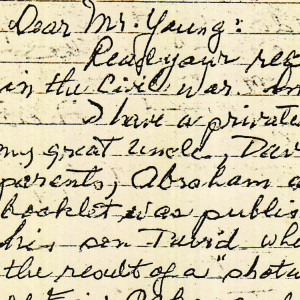
David Zehden was born in Schwerin, Grand Duchy of Mecklenburg-Schwerin, and at fifteen, immigrated to the United States with little money. After brief stints as a peddler, financial pressures led him to enlist in the Union Army. He joined the 52nd NY Infantry in August of 1861.
Zehden sustained gunshot wounds to both legs at the Battle of Seven Pines on June 1, 1862, leading to his death in Philadelphia on July 6, 1862. His letters home, later published by his father "as a memorial to his son," offer insights into both his personal experiences and what it was like to be a soldier in the Union Army. He was buried in Mount Sinai Cemetery, Philadelphia, with services conducted by Rabbi Sabato Morais.
Zehden sustained gunshot wounds to both legs at the Battle of Seven Pines on June 1, 1862, leading to his death in Philadelphia on July 6, 1862. His letters home, later published by his father "as a memorial to his son," offer insights into both his personal experiences and what it was like to be a soldier in the Union Army. He was buried in Mount Sinai Cemetery, Philadelphia, with services conducted by Rabbi Sabato Morais.